


Good fences make good fisheries: Alaska flatfish fleet mitigates orca bycatch via innovation

The ‘orca fence,’ a collaborative project between industry and science, drastically reduced whale entanglements in its first year of use
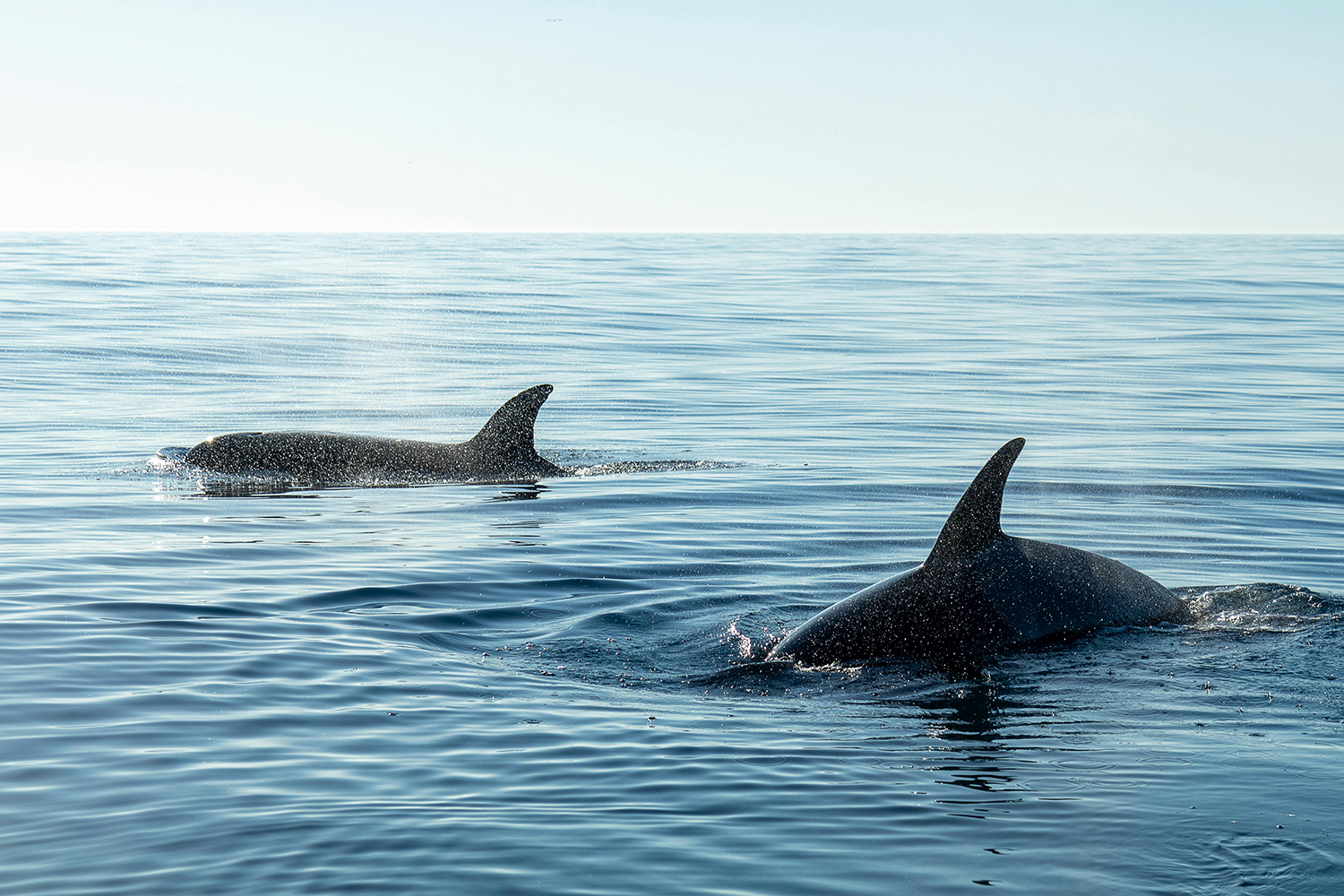
Killer whales, or orcas, are iconic keystone ocean predators with lifespans of 50 to 80 years in the wild. So when there’s a whale mortality, especially one caused by humans, it can be devastating to fishing crews.
Between 1991 and 2024 NOAA reported 28 killer whale mortalities or serious injuries in Alaska due to entanglements in the fishing nets of flatfish and pollock vessels. Fourteen of those mortalities, all caused by entanglements in the nets of flatfish industry vessels, occurred between 2020 and 2024.
“I’ve spoken to captains who experienced a whale entanglement, and it was an extremely upsetting event for them,” said Sarah Webster, science projects director for the Alaska Seafood Cooperative. “Because entanglements were previously so rare, it created stress onboard and negatively impacted crew morale.”
“Whales aren’t a nuisance for our fishery, they’re part of our daily environment,” she continued. “Crews see them day after day and year after year and often recognize individual animals. No one wants entanglements to happen, and that concern reinforces the industry’s responsibility to reduce the risk going forward, for the animals, for the people involved, and for the long-term sustainability of the fishery.”
![Ad for [BSP]](https://www.globalseafood.org/wp-content/uploads/2025/07/BSP_B2B_2025_1050x125.jpg)
In December 2023 the National Oceanic and Atmospheric Administration noted that 11 killer whales were incidentally caught by fishing gear in the Alaska Bering Sea/Aleutian Islands in 2023. Seven died as a result of entanglement, one was released alive and three were determined to have died prior to being caught in the gear. “It is still below the annual level that would pose a risk to the long-term health for any of the three killer whale stocks found in the region where the incidental takes occurred,” NOAA stated.
The spate of orca fatalities in the Bering Sea deepwater flatfish fishery spurred the industry to collaborate with scientists, gear manufacturers and marine mammal experts in 2022 to develop a “killer whale fence” that deters orcas from following fish into the trawler nets.
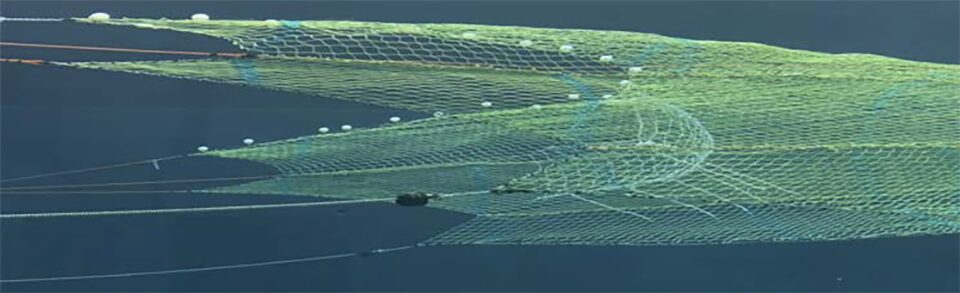
The prototype fence, which launched in 2023, is a large mesh panel secured to the net’s headrope and wings that expand and contract with the net and are scaled to allow target fish to enter while deterring whales. The fence’s materials are detectable via echolocation, ensuring it is effective in dark or turbid conditions. Ranging between $3,500–$4,800, the fence is a cost-accessible adaptation with potential usage across a wide variety of fleets.
By 2024, all the vessels in the Bering Sea deepwater flatfish fishery had adopted the fence and there was only one entanglement that year, representing an 89 percent reduction. Refinements to the fence and behavioral research are continuing, expanding its potential versatility.
“This was a truly successful, industry-led collaboration with scientists,” Webster said. “A group of people were super-motivated to solve a problem and reached out to folks in science to solve it. We could never have solved the problem as rapidly if not for this collaboration.”
Dr. Hannah Myers, assistant professor in the University of Alaska Fairbanks Department of Fisheries and Ocean Sciences, was one of the team members involved in the collaboration. The fence, she said, acts as a physical barrier that closes the space. “Could a whale blow through it? Yes. But it appears that they choose not to enter it.”
The nets fish at a depth of 1,200 feet, making human observation impossible, but all evidence suggests the whales are choosing not to interact with the fence. “Essentially, the goal of the fence is not to prevent killer whales from spending time around our boats, but to mitigate the risk of entanglement,” Webster said.
“We’ve been putting hydrophones around the nets so we can listen to the whales, and we know they continue to forage around the nets at all stages of fishing. One would suspect that the fences have played a key role in keeping them out of the nets, but we don’t know if whales have decided not to go into the net because of the fence, or if they’ve changed their behavior.”
Entanglements almost always end in a mortality, Myers said. “Entanglement triggers a panic response. An animal will try and swim up for air, and will get further entangled in the process, so there’s no room to maneuver. And the netting materials are pretty strong.”
“We’re really interested in whether this fence could be useful to other trawl fisheries,” she added. “The flatfish fishery is not the only one that experiences entanglements of marine mammals, so it’s worth exploring the usefulness of the fence in other contexts, for example, for fisheries that have high bycatch of dolphins and porpoises, in part because it is so simple an innovation.”
Webster agreed. “It took a lot of cooperative research and testing to get the fence right, but the end result is pretty straightforward. It’s easy to build, easy to use, and practical for vessels where cost or complexity are real constraints. As whale-fishery interactions increase worldwide, this shows how collaborative, science-based work can reduce entanglements without disrupting fishing operations, and offers a pathway other fisheries could follow.”
Now that you've reached the end of the article ...
… please consider supporting GSA’s mission to advance responsible seafood practices through education, advocacy and third-party assurances. The Advocate aims to document the evolution of responsible seafood practices and share the expansive knowledge of our vast network of contributors.
By becoming a Global Seafood Alliance member, you’re ensuring that all of the pre-competitive work we do through member benefits, resources and events can continue. Individual membership costs just $50 a year.
Not a GSA member? Join us.
Author
-

Vancouver-based correspondent Lauren Kramer has written about the seafood industry for nearly 20 years.
Related Posts
Innovation & Investment
Global Aquaculture Innovation Award 2019 finalist: Ace Aquatec
Global Aquaculture Innovation Award finalist Ace Aquatec’s Humane Stunner Universal easily renders fish unconscious for a more humane slaughter process.
Fisheries
‘A world down below’ – Deeper fishing insights lead to better tools for bycatch reduction
High-tech bycatch reduction devices – data analytics, cameras and sensors – are in play but SafetyNet Technologies says the secret is collaboration.
Fisheries
‘We were just looking for a way to fish better’: How one partnership is reinventing commercial fishing nets to reduce bycatch and improve animal welfare
Precision Seafood Harvesting’s novel reimagining of commercial fishing nets provides innovative solutions to both bycatch and animal welfare issues.
Fisheries
Can solar-powered net lights cut sea turtle bycatch without reducing target catch?
Solar-powered net lights cut sea turtle bycatch without reducing target catch, offering a practical, scalable fix for sustainable fisheries.