


Fish-rich Mediterranean diet associated with lower risk of all stroke types in women

Women who follow a Mediterranean diet rich in fish, fruits, vegetables and olive oil have a lower risk of stroke, study finds
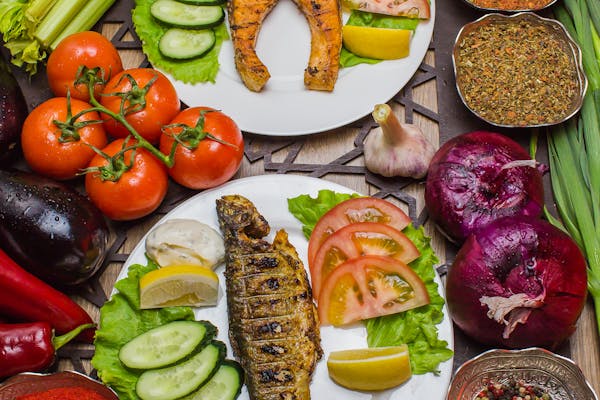
Women who closely follow a Mediterranean-style diet have a lower risk of stroke, including both major types of the condition, according to a recent study that highlights a strong association between diet and long-term brain health.
The research, published in Neurology Open Access, found that women with the highest adherence to a Mediterranean-style eating pattern were less likely to experience any stroke, as well as ischemic and hemorrhagic strokes. The researchers stressed that the findings show an association, not proof that the diet itself prevents stroke.
The Mediterranean diet emphasizes vegetables, legumes, fruits, fish and olive oil, while limiting red meat, dairy products and saturated fats.
“Our findings support the mounting evidence that a healthy diet is critical to stroke prevention,” said Sophia S. Wang, study author and professor at City of Hope Comprehensive Cancer Center in Duarte, California. “We were especially interested to see that this finding applies to hemorrhagic stroke, as few large studies have looked at this type of stroke.”
![Ad for [membership]](https://www.globalseafood.org/wp-content/uploads/2025/07/membership_web2025_1050x125.gif)
The study followed 105,614 women, with an average age of 53 at the start, none of whom had a history of stroke. Participants completed dietary questionnaires and were scored from zero to nine based on how closely their eating habits matched a Mediterranean diet.
Points were awarded for higher-than-average consumption of whole grains, fruits, vegetables, legumes, olive oil and fish, as well as moderate alcohol intake, and for lower-than-average consumption of red meat and dairy. About 30 percent of participants scored between six and nine, the highest adherence group, while 13 percent scored between zero and two, the lowest.
Global omega-3 fatty acid shortage puts public health at risk, study warns
Participants were followed for an average of 21 years, during which 4,083 strokes occurred, including 3,358 ischemic strokes and 725 hemorrhagic strokes. Among women with the highest adherence to the Mediterranean diet, 1,058 ischemic strokes were recorded, compared with 395 among those with the lowest adherence.
After accounting for factors such as smoking, physical activity and high blood pressure, the researchers found that women in the highest adherence group had an 18 percent lower risk of stroke overall. Their risk of ischemic stroke was 16 percent lower, while the risk of hemorrhagic stroke was 25 percent lower, compared with women in the lowest adherence group.
“Stroke is a leading cause of death and disability, so it’s exciting to think that improving our diets could lessen our risk for this devastating disease,” said Wang. “Further studies are needed to confirm these findings and to help us understand the mechanisms behind them so we can identify new ways to prevent stroke.”
Now that you've reached the end of the article ...
… please consider supporting GSA’s mission to advance responsible seafood practices through education, advocacy and third-party assurances. The Advocate aims to document the evolution of responsible seafood practices and share the expansive knowledge of our vast network of contributors.
By becoming a Global Seafood Alliance member, you’re ensuring that all of the pre-competitive work we do through member benefits, resources and events can continue. Individual membership costs just $50 a year.
Not a GSA member? Join us.
Author

Related Posts

Intelligence
Study finds Chicago parents lack omega-3s in their diets, raising risks for children’s health
A Northwestern study found that parents in Chicago don't consume enough omega-3s, raising risks preterm birth and other negative outcomes.

Responsibility
Study reveals dried fish’s vital role in nutrition and food security across Africa
Dried fish can provide key nutrients for millions across Africa, reducing malnutrition and improving food security, researchers say.
Intelligence
Diet rich in omega-3 fatty acids linked to eye and brain health, studies suggest
Recent studies show omega-3 fatty acids help protect against childhood myopia and Alzheimer’s in women, highlighting fish’s health benefits.

Intelligence
Plant- and fish-based diets tied to healthier aging, study finds
A new study links plant-based diets with some fish and low-processed foods to higher odds of reaching 70 in good physical and mental health.