


Closing the gender gap: How new initiatives are transforming traditional roles in fisheries and aquaculture

‘If women are given a platform, there is much that they can do’: Women’s vital roles in fisheries and aquaculture are gaining recognition as new programs in Indonesia and Zambia drive inclusion and equality
Many communities rely on natural resources for food security and livelihoods. However, threats such as overfishing, rural development, rising temperatures and pollution have significant impacts – causing depletion, coastline degradation and in some cases, gender disparities. Achieving gender equality in sectors like fisheries and aquaculture requires a clear path to effective management. That involves hearing all voices equally, including those of women who make up a large part of the workforce.
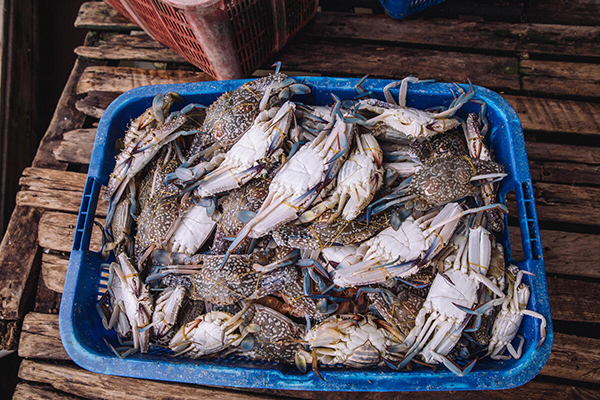
In Indonesia, the Environmental Defense Fund (EDF) is helping women gain leadership roles in a blue swimming crab (Portunus pelagicus) fishery in Lampung. Although women are involved throughout the supply chain – preparing for fishing trips, mending gillnets and removing crabs from nets after landing – their work has often gone unrecognized, and their voices excluded from decisions that shape their community’s future.
“Women in the fishery lack recognition as key stakeholders,” Onesya Damayanti, manager at EDF in Indonesia, told the Advocate. “Their contributions are not often considered primary to the fishery, and they can be under-represented or even excluded from decision-making processes. They also often face a lack of support to participate in meetings. Limited encouragement from immediate family members, particularly spouses, as well as the burden of domestic responsibilities, frequently constrain their ability to engage.”
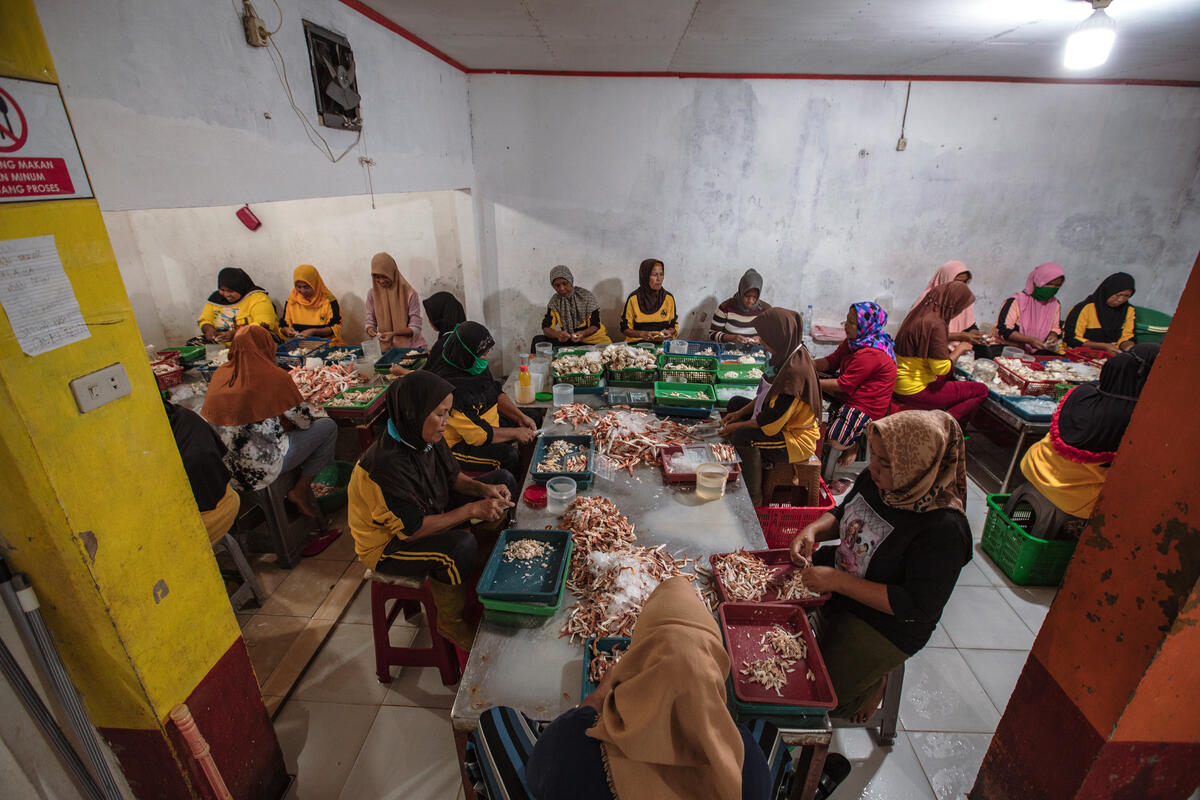
To address these challenges, EDF launched a program in 2021 with the local NGO Mitra Mentala. The initiative began with a gender analysis of the blue swimming crab supply chain, as well as exploring alternative livelihoods, like crab shell processing, and providing hands-on training. Between 2021 and 2024, this resulted in the formation of eight women’s groups across five villages. The program aims to strengthen women’s roles while enhancing household economies in each village. This work builds on EDF’s broader efforts to advance climate-resilient, community-based fisheries management initiatives.
![Ad for [Aquademia]](https://www.globalseafood.org/wp-content/uploads/2025/07/aquademia_web2025_1050x125.gif)
The program focuses on group strengthening, capacity building through training sessions and learning exchanges, and fostering independence among women’s groups. It also includes practical training on turning crab shell waste into valuable food products, like crackers and cookies, enabling the women’s groups to launch small-scale businesses and connect their products to wider markets.
In 2023, the groups were officially recognized by the governor of Lampung as members of the provincial fishery management team. This gave them voting rights on blue swimming crab management and its economic development strategies.
“The groups facilitated a structure for shared learning and knowledge exchange, which we call learning networks,” said Dr. Jacob Eurich, fisheries scientist at EDF. “This makes it easier to learn about and access training and resources. We also focus on advocacy and public speaking. As confidence increased, women’s participation in co-management meetings, particularly on contentious topics, also went up, which influenced decision-making in the forums.”
“When women are recognized and supported, they can bring real innovation to fisheries,” Eurich continued. “Building their financial and leadership skills has improved household wellbeing and helped elevate their voices in policy. This has led to a more resilient, sustainable and inclusive management system. The formal recognition in 2023 was a big milestone.”
Meanwhile, in the community of Nyawa chiefdom in Zambia’s Kazungula district, hunting has been a tradition for many years. However, with illegal hunting on the rise amidst pressures, such as habitat loss causing animals to move further away from communities, the village became part of an EU-funded initiative called the Sustainable Wildlife Management (SWM) Programme to farm tilapia. At the heart of the program is the Sianyongo Fish Farming Cooperative (SFFC).
“The goal of the initiative is to provide an alternative source of protein to wild meat and promote ecological sustainability,” said Lydia Amanzi, communications administrator at the Center for International Forestry Research and World Agroforestry (CIFOR-ICRAF), a partner in the SWM Programme. “However, we felt that if it took off, it would be a significant livelihood for the people of Nyawa.”
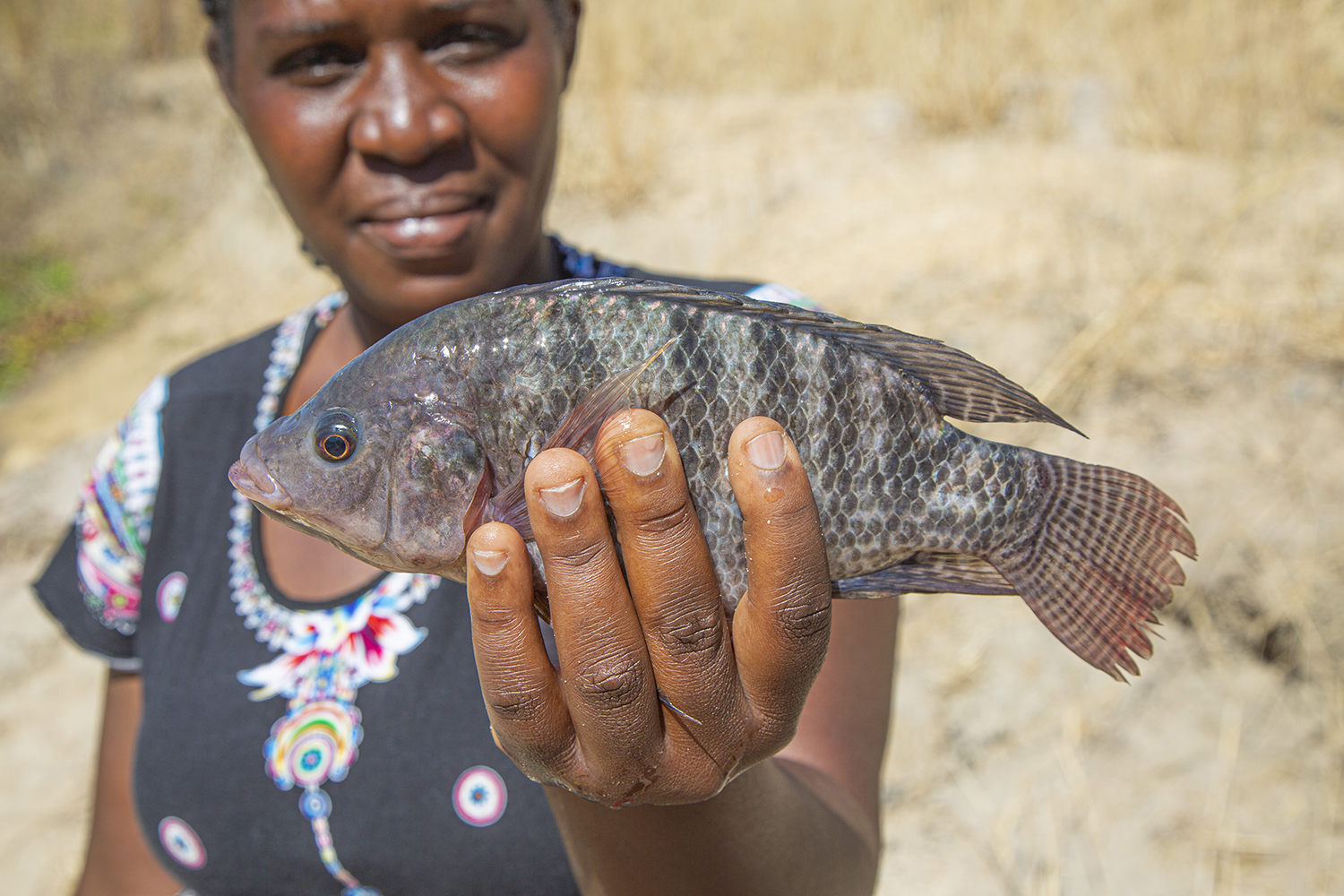
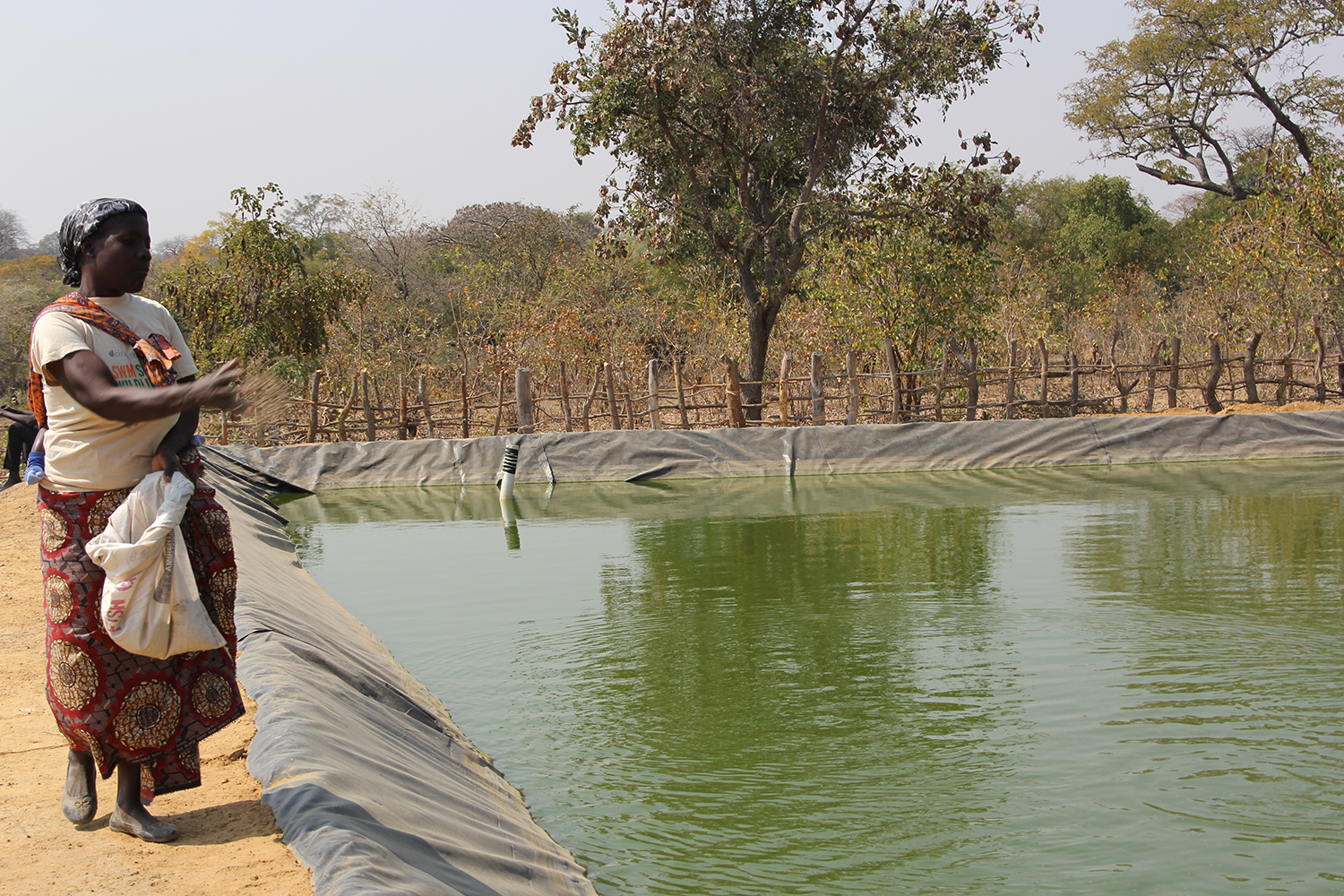
Work began in 2022 with the construction of two tilapia ponds, followed by two additional ponds in 2023 – each stocked with an average of 3,000 fingerlings. By 2024, two ponds yielded over 860 kilograms (~1895 lbs) of fish, generating approximately ZMW60,200 (USD $2,600.00). In 2025, production increased significantly, with total harvests reaching 1,279 kilograms (~2819 lbs) across all ponds.
“We have seen increased fish production per pond over the last year or so, thanks to improved management of the ponds by the SFFC, and the provision of fresh water from a solar-powered borehole,” said Penias Banda, field operations manager at CIFOR-ICRAF.
One driving force behind the program is gender equality. Women play a crucial role in the production process from pond construction and management, preparing and stocking fingerlings, selling, accounting, bookkeeping and leadership. Breaking barriers in a traditionally male-dominated sector, the SFFC has taken active steps to ensure that women are always included, enabling them to contribute to food security and economic empowerment.
“The program is helping communities shift from relying on wild meat to farmed fish, which provides an income and a sustainable source of protein,” said Griffin Shanungu, SWM Zambia coordinator. “Crucially, women are leading this transformation, ensuring that it is not only viable but lasting.”
“When their work is made visible and valued – when they are able to speak up, be heard, make and influence choices – changes start to take place,” said Amanzi. “Seeing the positive impacts of their work makes them want to participate even more.”
“Farming tilapia is creating a strong business acumen in the women involved,” said Banda. “They understand the production, marketing and pricing of tilapia, who to sell to and have a sense of independence and motivation knowing the extent to which they can contribute.”
However, while acknowledging the initiative’s positive impacts, Amanzi and Banda say that there are still areas to address, such as climate change.
“Droughts are more frequent, which makes it harder to source adequate water, while it’s difficult to store fish for over a day due to the hotter weather,” said Amanzi. “We also need ways to add value, for example drying the fish and storing it for later consumption and sale.”
“We need to produce our own feed to avoid the high cost of procuring it,” said Banda. “On average, a 25-kilogram (55 pounds) bag of feed is around $25, and we need no less than 20 bags for six months. The feed also comes from areas that are three hours away, which increases transportation costs. We could produce local feed from the husks from maize grinding and combine this with soya beans or other ingredients, but it’s unclear what impact this will have on tilapia growth rate, taste or flesh quality.”
In Lampung, a key challenge lies in raising awareness about the vital role women play in the fisheries sector. Efforts to provide business support to women also face persistent obstacles, particularly in product marketing and financial backing. There’s also a pressing need for market-based approaches and targeted interventions that strengthen and sustain ongoing community-led initiatives, especially those led by women, at the grassroots level.
“Attention and recognition from the market or industry are crucial to sustaining and advancing the momentum of these women in managing their fisheries,” said Damayanti. “This support can serve as a vital driver for the continued empowerment and resilience of community-based fisheries management efforts.”
“There is still a big gap in valuing women’s contributions in fisheries,” said Eurich. “Most research and engagement focus on the fishers, who are usually men, while women, who are more typically involved in the post-harvest processing, trade and fishery economics, are less featured. In addition to more gender-focused supply chain research, we need more practical evidence of ways to reduce gender disparities.”
Back in Nyawa chiefdom, women are having a greater agency in a key sector by making the most of the opportunities available to them. Their example shows that, with the right support, small-scale initiatives can lead to more secure livelihoods.
“If we see past the gender lens, the chances of success are high,” said Amanzi. “And if women are given a platform, there is much that they can do.”
Banda said they aim to help other community leaders in Zambia – and beyond – to recognize and appreciate women’s contributions to fish production and marketing, while deepening their understanding of the importance of gender equality within their communities.
“We plan to build more ponds, look for other funding sources to support the enterprise and access markets where tilapia can be supplied for more than three times a year,” said Banda.
Women in Lampung, too, are creating new economic opportunities and expanding access to nutrition and income in their communities.
“Our focus will be on supporting the development of women’s group enterprises to consistently generate alternative livelihoods that strengthen group organization and support members’ economic activities,” said Damayanti. “We will also increase women’s representation in community forums to promote gender mainstreaming and raise awareness of the vital roles that women play in blue swimming crab fisheries.”
Now that you've reached the end of the article ...
… please consider supporting GSA’s mission to advance responsible seafood practices through education, advocacy and third-party assurances. The Advocate aims to document the evolution of responsible seafood practices and share the expansive knowledge of our vast network of contributors.
By becoming a Global Seafood Alliance member, you’re ensuring that all of the pre-competitive work we do through member benefits, resources and events can continue. Individual membership costs just $50 a year.
Not a GSA member? Join us.
Author
-

Correspondent Bonnie Waycott became interested in marine life after learning to snorkel on the Sea of Japan coast near her mother’s hometown. She specializes in aquaculture and fisheries with a particular focus on Japan, and has a keen interest in Tohoku’s aquaculture recovery following the 2011 Great East Japan Earthquake and Tsunami.
Related Posts
Responsibility
For seaweed farmers in Zanzibar, a chance for real growth
For many Zanzibari women, seaweed farming provides opportunity, but hardships are common. A project from The Nature Conservancy lends hope.
Responsibility
‘Walk in like you own the place’: How inequality continues to impact women in aquaculture and the obstacles to change
The Women in North American Aquaculture Summit examined equal opportunity for women in aquaculture, barriers to participation and inequality solutions.
Intelligence
A seat at the table: Fed By Blue team says aquaculture needs a stronger voice
In Fed By Blue, star power and a women-led production team aim to prop up farmed seafood with a focus on the message: Blue foods are the future.
Responsibility
A wider view: At GOAL, focus steers to fisheries, food systems and the future
During the virtual event, researchers discussed the importance of aquatic foods, which billions worldwide rely on for protein and micronutrients.