
Essential oils increase weight gain in channel catfish
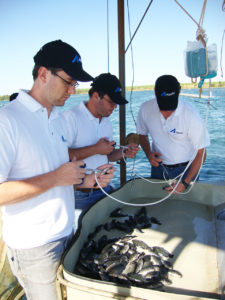
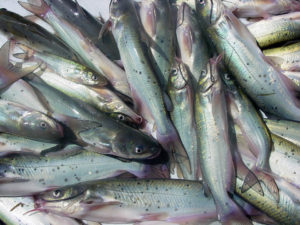
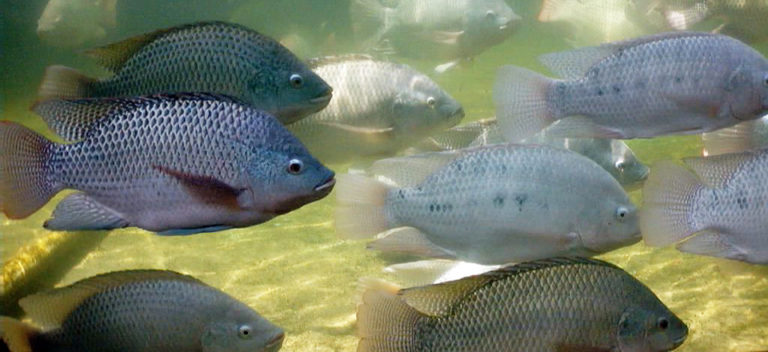
Essential oils are linked to livestock performance gains. In research with channel catfish, inclusion resulted in greater feed consumption and weight gain.
Kenya's economic stimulus program includes a bold move to help the country’s small-scale farmers literally dig themselves out of poverty with fish ponds.
Essential oils are linked to livestock performance gains. In research with channel catfish, inclusion resulted in greater feed consumption and weight gain.
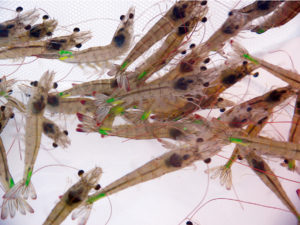
An eight-week growth trial evaluated the effects of potassium diformate on the growth performance and digestibility of Pacific white shrimp. Weight gain was not significantly affected by different levels of PDF in diets, and survival was high for all treatments.
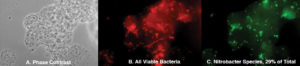
Healthy populations of both ammonia- and nitrite-oxidizing bacteria must be present in aquaculture systems to support the nitrification of potentially toxic ammonia to nitrite, with further oxidation to less problematic nitrate.
In southern Brazil, management data for Pacific cupped oyster culture were assessed to characterize production in relation to environmental parameters.
In a nutrition trial, longfin amberjack received two diets composed of 40 percent soy protein concentrate and 10 percent fishmeal, and a control diet with 20 percent fishmeal.
The absence of practical immediate-release sedatives for fish jeopardizes fish, fisheries, fish culture and research, posing risks to aquatic resources as well as those handling fish.
Single-cell detritus is a seaweed-based bioproduct whose use as feed has been studied with oysters and artemia. The authors are working toward the development of SCD for shrimp larvae.
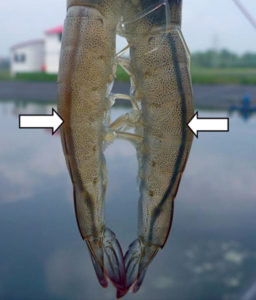
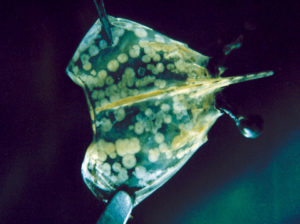
Granulomas in diseased fish often indicate infections by bacteria. External signs range from ulcers and emaciation to lethargy or no signs at all. Internally, gray or tan foci present in organs and can coalesce with severe inflammation.
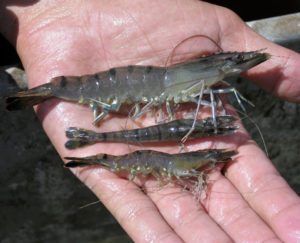
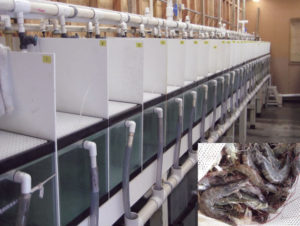
Accurate estimates of shrimp populations and size variability by sampling can help managers make informed decisions that reduce feeding costs and improve system performance.
The PescaMaris shrimp farm in Ecuador uses fish peptide isolates to accelerate probiotic bacteria growth and improve water quality.
Prevention through good hygiene, use of gloves and basic biosecurity procedures is the best method for reducing the risk of acquiring zoonotic diseases.
Smolt production in Norwegian hatcheries will likely increase during the next decade to answer salmon grow-out needs. Farmers are converting existing flow-through systems to partially or fully incorporate recirculation technologies.
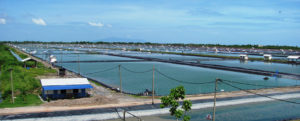
Thailand’s tilapia industry has been able to grow into a thriving sector thanks to technological advances and knowledge sharing.
In a challenge test under controlled conditions using a severe strain of the virus, resistance to WSSV was shown in shrimp supplied by the Camaronera de Coclé, S.A. L. vannamei genetics program.
The University of Arizona’s Aquaculture Pathology Laboratory oversees ring tests for a group of shrimp diagnostic laboratories in 10 countries.