


Did a mass salmon escape leave a genetic mark on Scotland’s wild fish? A study aims to find out.

Study to investigate if 75,000 escaped salmon during Storm Amy caused genetic changes in wild salmon across the Lochy system
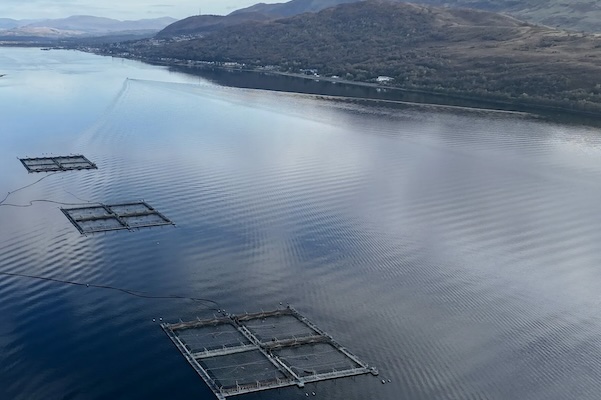
The River Lochy Association and Mowi Scotland have launched a long-term study to assess the potential impacts of a salmon escape at Mowi’s Gorsten farm in October.
The research, funded by the company and supported by genetic specialists at UHI Inverness, will monitor and mitigate any adverse impacts on the salmonid biology within the catchment area.
The escape occurred on October 5, 2025, when Storm Amy brought extreme weather to Upper Loch Linnhe, damaging Mowi’s Gorsten farm and releasing an estimated 75,000 salmon into the surrounding waters. The fish, averaging 860 grams and not yet sexually mature, came from a recirculating aquaculture system, and biologists expect their survival in the wild to be low.
In collaboration with the River Lochy Association, Mowi moved immediately to recover as many fish as possible. With the incident unfolding just ahead of the spawning season and river levels running high, the groups opted against netting and instead relied on rod-and-line capture. More than 100 anglers were deployed across the region, reporting all catches through the Fisheries Management Scotland escapes app.
![Ad for [BSP]](https://www.globalseafood.org/wp-content/uploads/2025/07/BSP_B2B_2025_1050x125.jpg)
To date, 440 escaped fish have been recorded, most of them immature salmon weighing between 0.5 and 2.5 kilograms and concentrated in the lower reaches of the Rivers Lochy and Leven.
Mowi and the River Lochy Association have now set the scope for a multi-year study to track any genetic imprint from the escape. Beginning in 2026, scale samples will be collected from most rod-caught adult salmon returning to the Lochy and Leven, allowing researchers to compare those fish with the Gorsten farm stock and determine whether any escapees later appear in the wild population.
“Obviously, an escape of farmed salmon into the wild is something that nobody wants to see,” said Jon Gibb, Manager of the River Lochy Association and Director of the Lochaber District Salmon Fishery Board. “But I am confident that we have designed a comprehensive three-year genetic monitoring plan that will definitively identify whether there will be any impact whatsoever from this unfortunate incident on the local wild salmon population.”
Local fisheries biologists will also conduct timed electrofishing surveys across major salmon catchments in the Upper Linnhe region in 2026, creating a baseline before any potential effects of the escape can emerge. At 58 established sites, they will collect non-lethal fin clips from 20 to 30 fry per location for genetic screening.
The fry surveys will be repeated in 2027 and 2028. Researchers say those years will be critical for detecting whether the escape left any measurable genetic impact on wild salmon within the catchment.
“While we are disappointed this incident occurred, we acknowledge our responsibility to monitor and assess the potential for any adverse impacts on local wild salmon populations,” said Stephen MacIntyre, Head of Environment at Mowi Scotland. “Using this scientific approach, the monitoring study will determine whether there is evidence of any changes in the genetic composition of wild salmon arising from the escape incident.”
Now that you've reached the end of the article ...
… please consider supporting GSA’s mission to advance responsible seafood practices through education, advocacy and third-party assurances. The Advocate aims to document the evolution of responsible seafood practices and share the expansive knowledge of our vast network of contributors.
By becoming a Global Seafood Alliance member, you’re ensuring that all of the pre-competitive work we do through member benefits, resources and events can continue. Individual membership costs just $50 a year.
Not a GSA member? Join us.
Author

Related Posts

Intelligence
Deep learning model being trained to identify escaped farmed salmon
Deep learning can identify wild vs. farmed salmon with 95% accuracy, possibly helping to track escapees and protect declining wild stocks.
Health & Welfare
Reporting of fish escapes, causes crucial step in developing better controls
Escapes of fish from farm facilities can lead to interbreeding and competition for mating opportunities with wild fish. Escapees may also transmit diseases and parasites, as well as compete for feed and space.

Responsibility
Survey reveals ‘stunning’ underwater images of marine life around salmon farm
A survey commissioned by Mowi documents thriving marine life around its salmon farm at Loch Hourn, highlighting local biodiversity.
Responsibility
Mowi: Scottish loch nutrients ‘virtually unaffected’ by nearly four decades of salmon farming
A review of 37 years of data finds that the nutrient status of a freshwater loch was not significantly altered by farming.