


Can the 3D-printed Reef of Hope turn the tide on oyster reef restoration?

Ph.D. student Dean Chan’s innovation reimagines oyster reef restoration, uniting innovation, ecology and community
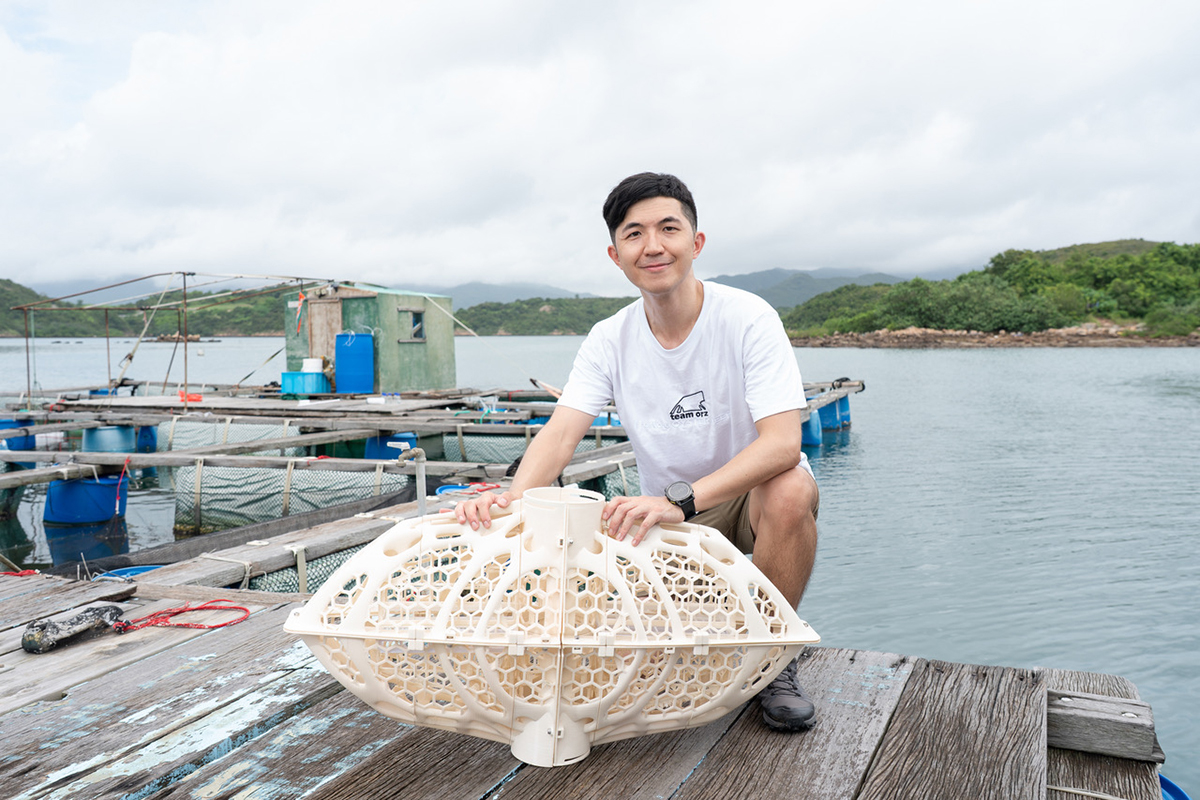
Oyster reefs are the rainforests of the sea – vital ecosystems that filter water, protect shorelines and support marine life. Yet in Hong Kong and many other hot spots worldwide, these ecosystems are disappearing at an alarming rate.
Enter Reef of Hope, a modular 3D-printed reef created by Dean Chan, a Ph.D. candidate at the Hong Kong Polytechnic University. His design, which recently won the James Dyson Award 2025 Hong Kong, combines cutting-edge materials and ecological insight to give fresh hope to oyster reefs – and marine biodiversity.
Chan’s passion for oyster reef restoration was ignited during an oyster tasting class, where he learned that more than 85 percent of global oyster reefs have been lost due to human activities.
“This alarming statistic, coupled with my engineering background, inspired me to devise a solution to rejuvenate these critical ecosystems,” he told the Advocate. “My supervisor, Professor James Kar-Hei Fang, has broadened my perspective to encompass not only oyster reef restoration, but also the revival of pearl oyster populations in Hong Kong, thereby enhancing both ecological and socioeconomic value.”

Chan’s artificial reef concept gained momentum from the realization that conventional reef restoration methods – like concrete blocks and oyster bags – often lack the ecological effectiveness and long-term sustainability needed for successful recovery.
These approaches tend to emphasize bulk and stability over ecological function, he explained, while his own lightweight solution was intentionally engineered to support and sustain marine life.
From space to the seabed
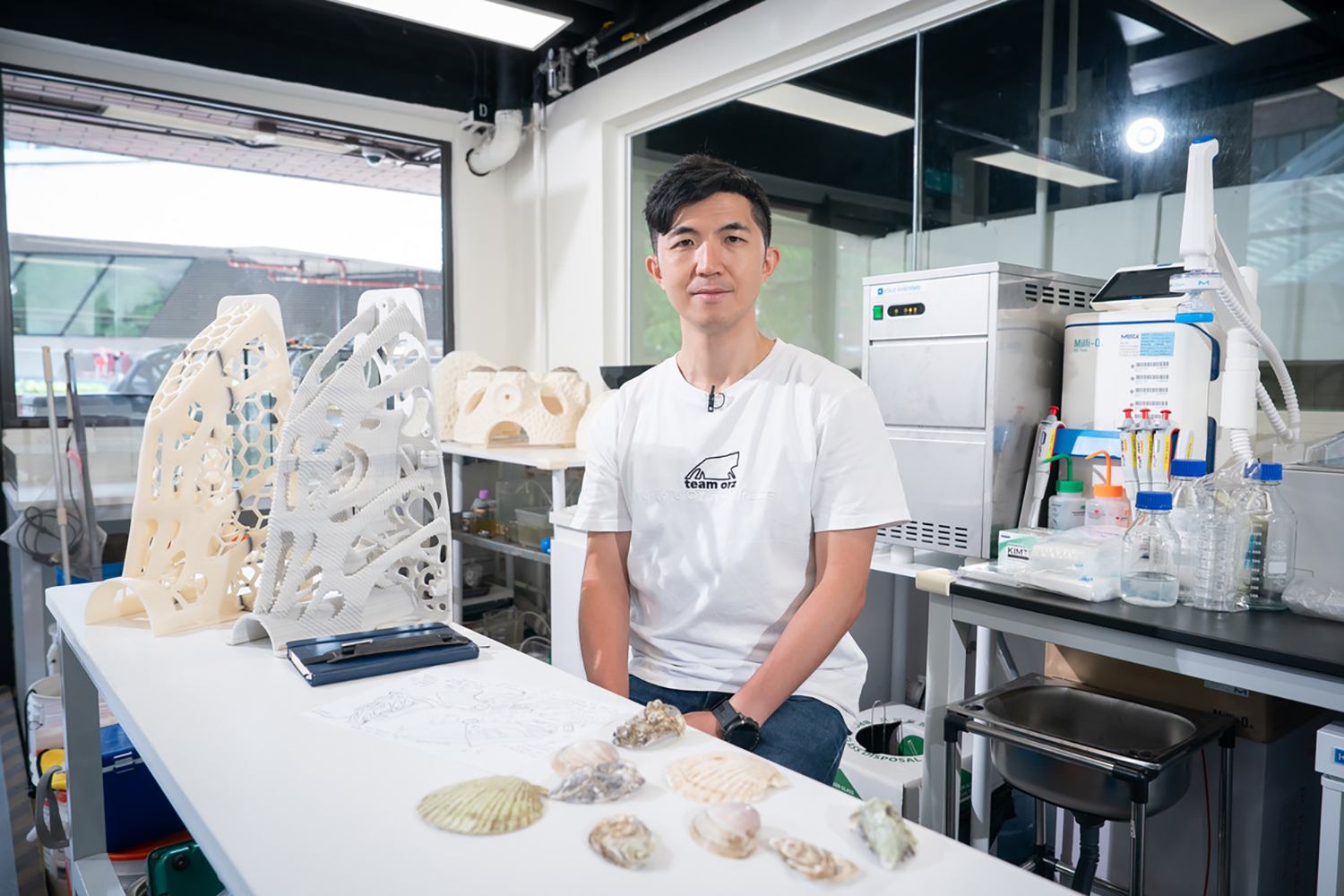
Reef of Hope’s interwoven voids increase surface area and water circulation, improving nutrient delivery, waste removal and biofilm formation – all essential for oyster larval settlement. The structure is made from a biodegradable polyhydroxyalkanoates (PHA) material blended with seashell calcium carbonate, marine-safe minerals and bioactive coatings that also promote oyster settlement.
Chan explained that the use of PHAs infused with upcycled oyster shell powder was driven by its ecological compatibility.
“Incorporating oyster shell powder – a waste byproduct from aquaculture – not only promotes sustainability through upcycling but also enhances the material’s strength and compatibility with 3D printing, supporting the formation of robust, topologically optimized reef structures that mimic natural oyster habitats,” he said.
He revealed that the main challenge in developing the material was PHA’s slow crystallization kinetics, which complicates its use in 3D printing by making it difficult to achieve precise structural integrity. However, through extensive research and development conducted at the Marine Ecology and Aquaculture Lab (MEAL) in the Department of Food Science and Nutrition – with technical support from the University Research Facility in 3D Printing (U3DP) and the Industrial Center (IC) of The Hong Kong Polytechnic University – the team engineered a specialized formula that successfully overcame this barrier.
“This formula ensures the PHA-seashell composite is 3D-printable while maintaining its ecological compatibility,” he said.
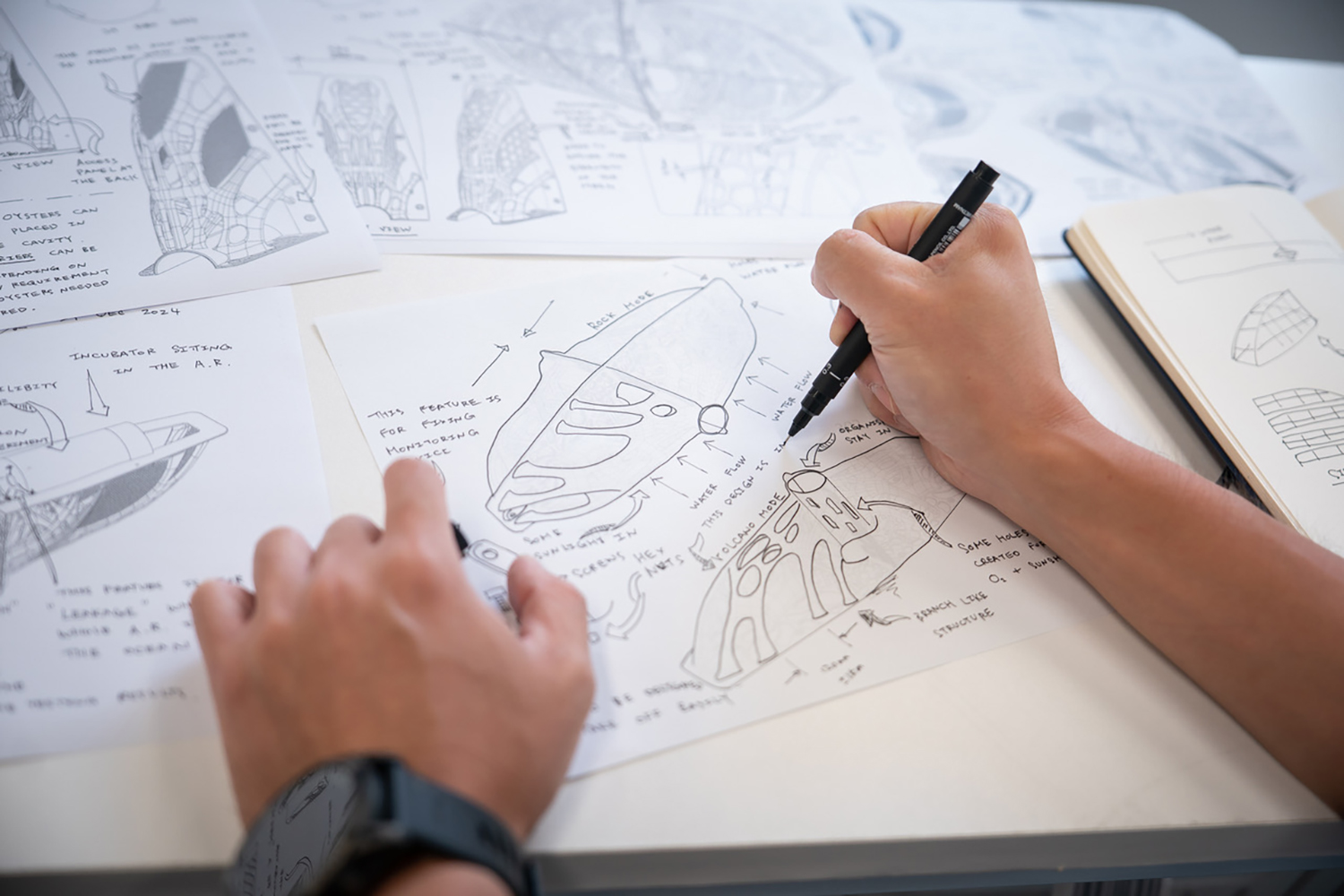
Chan added that the reef’s design, created through topology optimization – a technique commonly employed in space technology and likely applied here for the first time in artificial reef development – maximizes strength, increases surface area for larval attachment and optimizes water flow for nutrient delivery and waste removal.
“I also prioritized aesthetics, ensuring the porous, organic structure mirrors natural marine forms, blending seamlessly with coastal ecosystems to promote oyster and pearl oyster settlement and support global marine restoration efforts,” he said.
Field trials along Hong Kong’s shoreline revealed some significant environmental benefits. Oyster settlement rates were three times higher than traditional methods. Within just one month, the reef had positively impacted local biodiversity, attracting shrimp, small crabs, juvenile fish and algae species.
“The topologically optimized, porous structure maximizes the surface area for larval attachment, with recruitment rates, observed directly and supported by water quality measurements (chlorophyll, suspended solids, trace metals, microplastics), outperforming traditional concrete methods,” he said. “Water quality measurements indicate reduced turbidity and pollutants, supporting larval navigation and nutrition, unlike traditional setups. Biofiltration by oysters further enhances water clarity, sustaining high recruitment. These factors – optimized habitat, diverse species interactions and cleaner water – drive superior ecological performance.”
From the classroom to the coastline
Chan noted that a key challenge to scaling up Reef of Hope in Hong Kong lies in navigating the regulatory hurdles of deploying installations in public waters and degraded shorelines. As such, current efforts have focused on the territory’s private shorelines and aquaculture zones.
“Looking forward, we aim to expand deployments in aquaculture zones globally, with ongoing discussions with clients in South Korea to adapt reefs to local marine conditions,” he said.
For degraded shorelines, Chan said collaboration with governments is planned to integrate reefs into broader coastal restoration initiatives. Meanwhile, partnerships with conservation organizations, such as The Nature Conservancy, will further embed the reefs in global restoration programs aimed at enhancing biodiversity and improving water quality.
“The scalable, modular design ensures adaptability to diverse marine environments, supporting sustainable aquaculture and ecosystem restoration worldwide,” he said.
Beyond the technology, Reef of Hope has helped grow public awareness and community involvement in marine conservation through targeted educational and participatory initiatives. Talks at secondary schools, universities and corporations in Hong Kong have inspired action by showcasing the reef’s impact on marine ecosystems, Chan said.
He highlighted that this year, a collaboration with Oxfam Hong Kong launched the “Let Seniors Be Marine Docent” program, training elders to become knowledgeable guides who share marine conservation insights with the public.
This initiative, he said, equips seniors with marine ecology knowledge, enabling them to promote the importance of oyster reefs and sustainable practices. It also provides them with income, fostering economic empowerment and strengthens their social connections through community engagement.
“By integrating the reef’s deployment with these educational and social programs, the project builds a network of informed advocates, encouraging local communities to actively participate in marine conservation in Hong Kong,” he said.
Making waves – and winning recognition
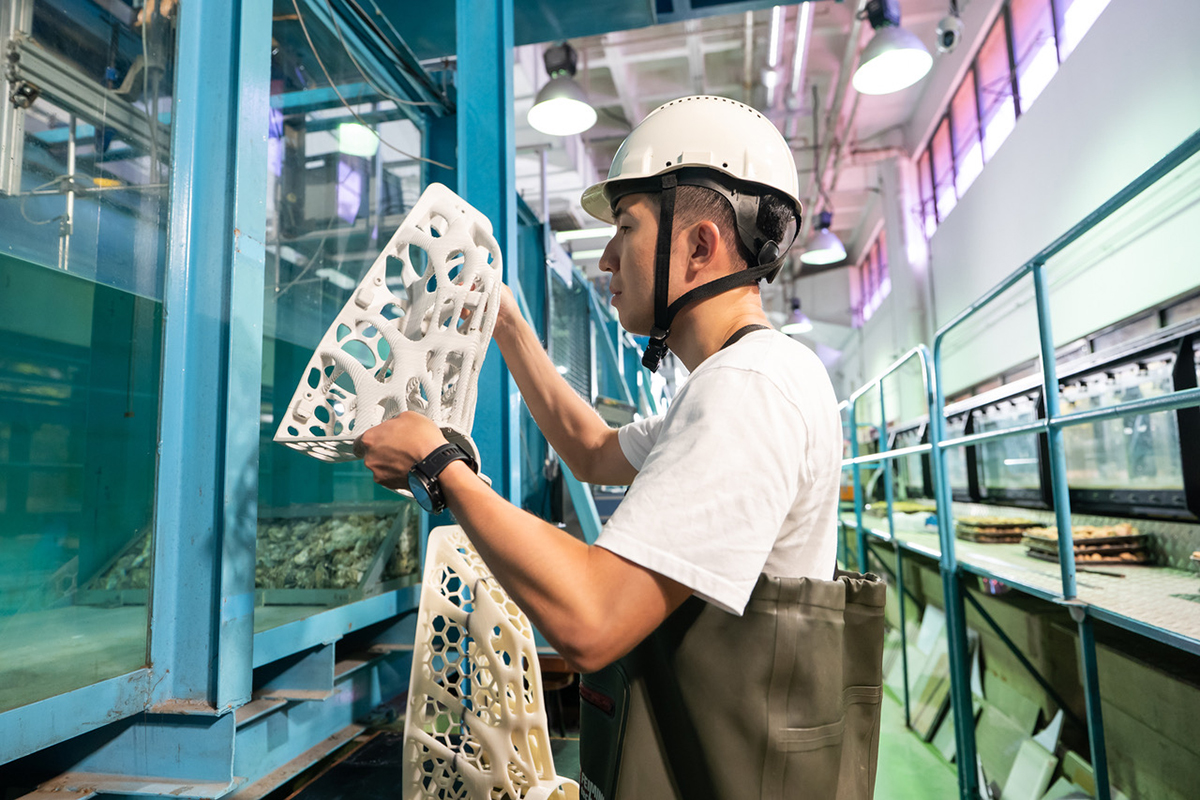
Winning the national James Dyson Award has given Reef of Hope extra impetus. During the appraisal process, Hong Kong judge Professor Joseph Wong praised the project as “well-developed and grounded in local ecological relevance,” noting that its focus on oysters – a species vital to Hong Kong’s marine biodiversity – makes it a “meaningful innovation.”
Now in its 20th year globally, the James Dyson Award celebrates and empowers young designer and engineers who tackle real-world problems with innovative solutions. As Hong Kong’s national winner, Reef of Hope receives financial support to advance its next phase of development and will represent Hong Kong on the global stage, competing against other innovators from around the world. The international Top 20 shortlist was announced on Oct. 15, 2025, with the global winners then chosen by James Dyson and announced on Nov. 5.
(Editor’s Note: WaterSense, an autonomous water quality monitoring device, is the Sustainability Winner of the 2025 James Dyson Award. It replaces manual, occasional sampling with real-time, AI-powered monitoring and early pollution alerts.)
“Winning the James Dyson Award will amplify the Artificial Reef for Restoring Oysters’ mission by increasing global visibility and accelerating marine conservation efforts,” Chan said.
Chan added that the award provides a valuable platform to spotlight the importance of oyster reef restoration, helping to engage governments, conservation organizations and aquaculture stakeholders worldwide in prioritizing marine ecosystem recovery.
“This recognition will facilitate advocacy for streamlined permitting processes, enabling deployments in diverse coastal areas, including degraded shorelines and public zones, where regulatory barriers currently hinder progress,” he said.
The funding, he noted, will support expanded research and development to optimize the reef’s biodegradable PHA and seashell composite for varied marine conditions, as well as advance IoT monitoring systems that enhance scalability.
“By leveraging the award’s prestige and resources, the project will drive multi-party collaboration, secure deployment permissions, and advance sustainable aquaculture and marine restoration globally,” he said.
Now that you've reached the end of the article ...
… please consider supporting GSA’s mission to advance responsible seafood practices through education, advocacy and third-party assurances. The Advocate aims to document the evolution of responsible seafood practices and share the expansive knowledge of our vast network of contributors.
By becoming a Global Seafood Alliance member, you’re ensuring that all of the pre-competitive work we do through member benefits, resources and events can continue. Individual membership costs just $50 a year.
Not a GSA member? Join us.
Author
-

Jason Holland is a London-based writer for the international seafood, aquaculture and fisheries sectors. Jason has accrued more than 25 years’ experience as a B2B journalist, editor and communications consultant – a career that has taken him all over the world. He believes he found his true professional calling in 2004 when he started documenting the many facets of the international seafood industry, and particularly those enterprises and individuals bringing change to it.
Related Posts
Responsibility
A case study of coral aquaculture on Australia’s Great Barrier Reef
Model generates a coral aquaculture facility on Australia’s Great Barrier Reef and a plan for optimal growth time to minimize costs.
Responsibility
A wider view: Conservation aquaculture anchors coral reef restoration
Half a billion people depend on coral reefs for food, income, coastal protection and more. The need to protect and restore their biodiversity is urgent.
Responsibility
As North Carolina restores oyster reefs, a case for regenerative aquaculture grows
Restoring oyster reefs in North Carolina boosts the economy, strengthens ecosystems and showcases the value of regenerative aquaculture.
Innovation & Investment
Can drones detect early signs of oyster reef deterioration?
New research shows that the digital elevation map produced by drones can accurately determine the condition of an oyster reef.