


Can solar-powered net lights cut sea turtle bycatch without reducing target catch?

Solar-powered net lights cut sea turtle bycatch by 63 percent in Mexico’s Gulf of California while maintaining fish catch, study finds
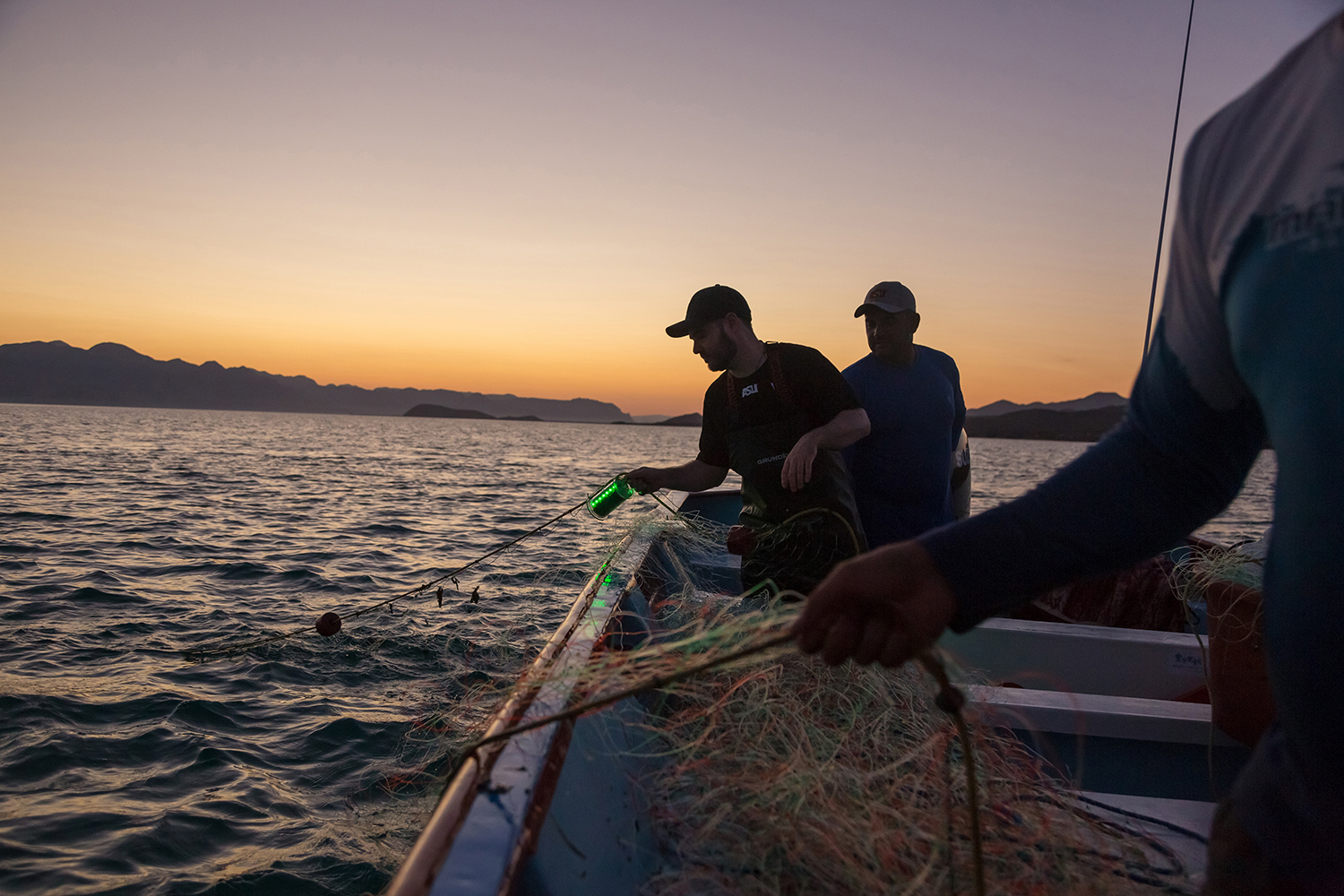
As global fisheries innovate to find solutions to bycatch, a promising solution is lighting the way to prevent sea turtles from ending up in commercial fishing nets.
Scientists from Arizona State University, NOAA Fisheries and the World Wildlife Fund (WWF) worked with fishers from a coastal community in Mexico to develop a light that harnesses solar energy to illuminate gillnets, commonly used to catch fish like yellowtail amberjack (Seriola dorsalis).
The light flashes at a duty cycle optimized for power consumption under different fishing durations and also functions as a buoy, providing easy integration into existing fishing gear.
The research team conducted controlled fishery trials in Mexico’s Gulf of California, revealing that these illuminated solar-powered net lights significantly reduced predicted mean sea turtle bycatch rates by 63 percent while maintaining target fish catch. Their study details the research that developed and tested the bycatch-mitigating lights.

“The study is the first to show the effectiveness of harnessing solar energy and flashing light to deter sea turtles from fishing nets. It’s a win-win in the sense that you’re getting a light that lasts significantly longer, and it also seems to reduce bycatch just as effectively as lights that require replaceable batteries,” corresponding and first author Dr. Senko told the Advocate.
Small-scale coastal fisheries are ubiquitous worldwide, provide nearly half of the world’s seafood, and are crucial to sustaining coastal communities with food, income and livelihoods. However, the diverse, dynamic and decentralized nature of coastal fisheries make them challenging to manage.
Passive net fisheries, such as gillnets, are among the most employed gear in coastal areas worldwide due to their ease of use and maintenance as well as high catch rates. But gillnets can pose significant threats to protected species like sea turtles, seabirds and marine mammals, contributing to population declines and ecosystem disruption, and lead to strict regulations with socioeconomic costs.
Although bycatch in coastal gillnet fisheries is well-documented, relatively few solutions have been broadly developed and adopted to reduce marine megafauna bycatch, especially in developing nations where resources and institutional infrastructure to assess and manage bycatch impacts are limited. Sensory-based BRTs (bycatch reduction technologies) that elicit visual, auditory, electro-sensory and chemosensory responses in both target and non-target species have been tested across a range of marine megafauna, including sea turtles, marine mammals, elasmobranchs (sharks) and seabirds.
Over the past decade, illuminating gillnets with LED lights or chemical light sticks has emerged as a promising solution to reduce bycatch of sea turtles and other marine megafauna while maintaining target fish catch in coastal gillnet fisheries operating at night. However, current solutions face challenges: replaceable batteries and short-lived light sticks increase costs, pollution risks and maintenance issues.
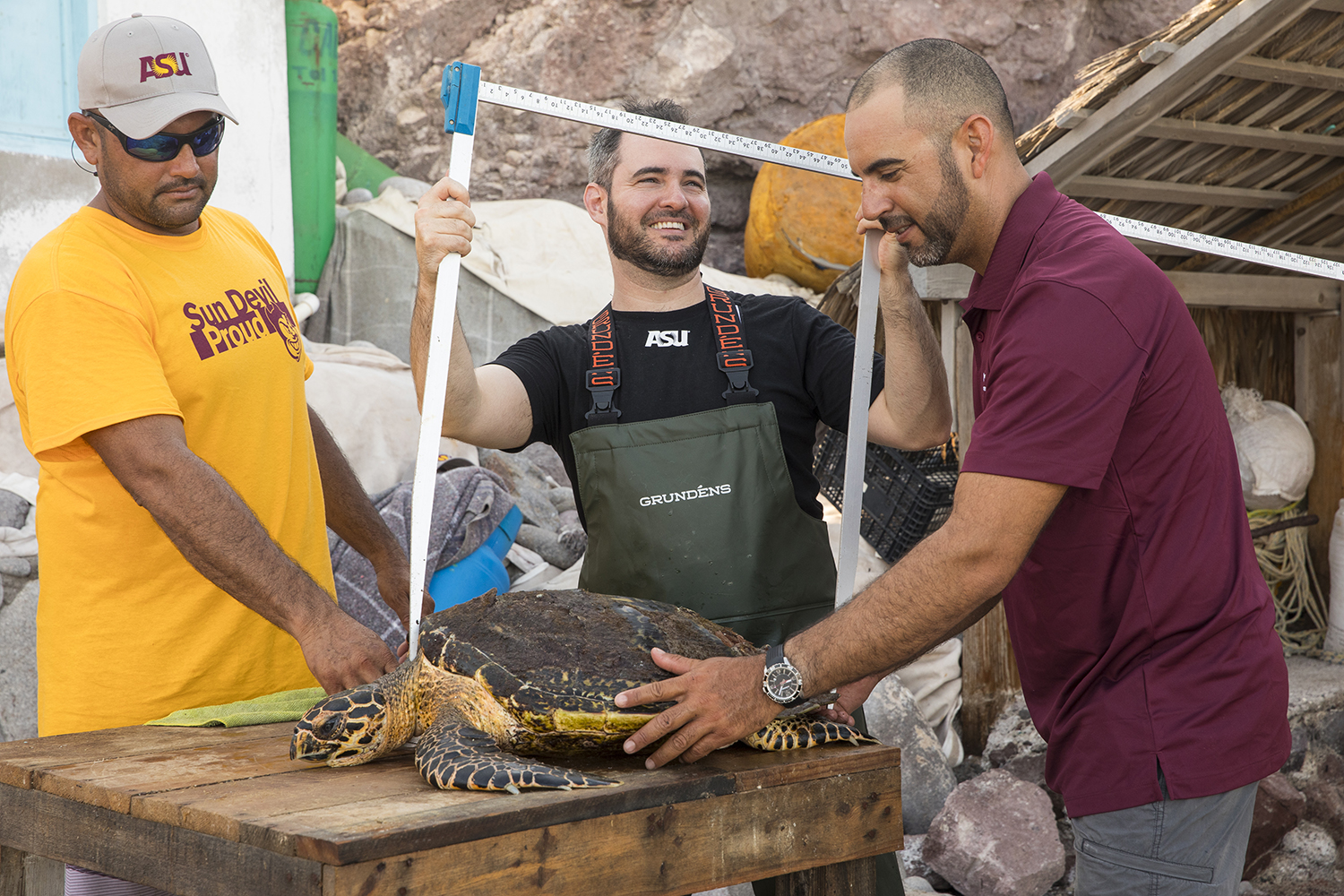
Because collaboration with fishers is critical for adopting new gear, researchers held three workshops in Loreto and La Paz, Baja California Sur (BCS), Mexico, whereby local fishing leaders helped design the solar-powered net illumination system, ensuring practical feedback and compliance. The resulting technology design is a solar-powered light that doubles as a float line buoy, integrating seamlessly into gillnet fisheries while addressing issues of conventional lights (e.g., snagging, weight, battery replacement).
The device features a polycarbonate casing, a flexible solar cell, a lithium polymer battery, and LEDs emitting green light, operating up to five nights without sunlight. Controlled experiments were then conducted at Isla El Pardito, BCS, a known sea turtle bycatch hotspot. One experiment compared illuminated and control nets (85-m long, 20 cm mesh) targeting yellowtail amberjack. The sea turtle bycatch experiment (28 net pairs, 650 hours) and target fish catch trials (14 net pairs, 400 hours) used consistent fishing techniques to eliminate bias.
The AI tool that aims to make bottom trawling smarter and prevent bycatch and discards
Results of the controlled experiments with flashing lights showed a significant decrease in bycatch: a 63 percent reduction in predicted mean sea turtle bycatch rates. This landed within the range (∼40 to >90 percent) of reductions reported in previous studies that assessed the effects of static light on sea turtle bycatch. This finding suggests that bycatch can be reduced while using less power consumption.
Building on this study, future research could focus on understanding and enhancing the behavioral responses of sea turtles to flashing light. In trials assessing target fish catch – 14 paired net sets over 400 hours – no significant difference was found in yellowtail catch between illuminated and control nets, confirming that the technology maintains fishery productivity while reducing bycatch.
Ease of use and cost are key considerations when developing new BRTs. During the fishery trials, the lights maintained their buoyancy and functionality without needing removal or manual adjustment to face the sun for charging, meaning no training is required for adoption. Although the cost to build lights in a university setting is currently high, the researchers have incorporated fisher feedback to develop the next prototype light that reduces the cost by more than 50 percent.
“Additional design improvements of the next iteration solar-powered lights include a size reduction of [about] 50 percent while maintaining a similar light output; a more hydrodynamic shape to enhance retrieval by fishers; activation of the light on contact with water using a capacitive touch panel; and illumination of the net in a fixed downward position. We anticipate additional cost reductions once production utilizes an injection-molded casing and is transferred to a high-volume manufacturing plant,” remarked the authors.
Now that you've reached the end of the article ...
… please consider supporting GSA’s mission to advance responsible seafood practices through education, advocacy and third-party assurances. The Advocate aims to document the evolution of responsible seafood practices and share the expansive knowledge of our vast network of contributors.
By becoming a Global Seafood Alliance member, you’re ensuring that all of the pre-competitive work we do through member benefits, resources and events can continue. Individual membership costs just $50 a year.
Not a GSA member? Join us.
Author
-

Editor Emeritus
Responsible Seafood Advocate
Related Posts
Fisheries
‘A world down below’ – Deeper fishing insights lead to better tools for bycatch reduction
High-tech bycatch reduction devices – data analytics, cameras and sensors – are in play but SafetyNet Technologies says the secret is collaboration.

Fisheries
Bycatch release tools help boost crew safety and sustainability in tuna fisheries
New onboard tech helps tuna fisheries release bycatch with minimal handling, improving crew safety and advancing sustainability goals.
Fisheries
‘We were just looking for a way to fish better’: How one partnership is reinventing commercial fishing nets to reduce bycatch and improve animal welfare
Precision Seafood Harvesting’s novel reimagining of commercial fishing nets provides innovative solutions to both bycatch and animal welfare issues.
Fisheries
‘A wake-up call’: Nearly half of key fisheries for marine ingredients now poorly managed, SFP report warns
With nearly half of key fisheries for marine ingredients now rated as poorly managed, Sustainable Fisheries Partnership calls for action.