


Warmer water temperatures boost farmed salmon growth in seawater but raise health concerns: Nofima study

Farmed salmon raised in warmer water grew faster and thrived in seawater, but Nofima researchers warn high temperatures may affect fish health
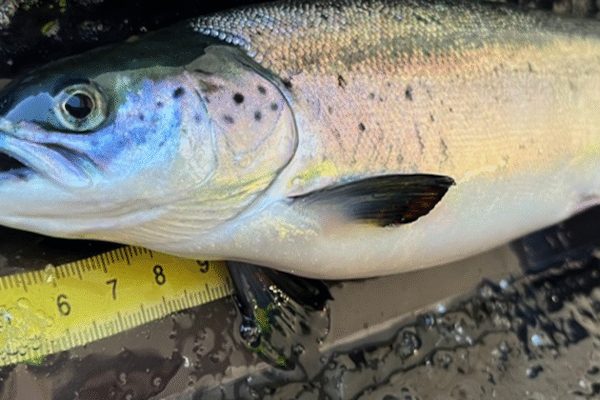
Atlantic salmon raised at different temperatures developed normally in freshwater but showed unexpected differences after being transferred to seawater, according to a recent study by researchers at Nofima.
The trial examined how temperature affects farmed salmon health and development across their lifecycle, highlighting its role as a key regulator of behavior, physiology and growth in aquaculture.
In recent years, concerns have emerged that higher rearing temperatures may harm fish health, leading to issues such as reduced heart function and poor seawater performance among fast-growing juvenile salmon. In response, Nofima scientists launched a study to understand how temperature during the freshwater phase influences salmon health and adaptation after transfer to seawater.
“There was a lack of long-term experiments assessing the effects of temperature from smolt to harvest,” said Anja Striberny, a scientist at Nofima. “We needed this to determine whether high temperatures early in life would impact salmon growth and health later on.”
![Ad for [Aquademia]](https://www.globalseafood.org/wp-content/uploads/2025/07/aquademia_web2025_1050x125.gif)
The experiment took place at Nofima’s aquaculture research station in Sunndalsøra on Norway’s west coast, which supports trials on salmon under different water conditions. Researchers followed Atlantic salmon from 10 grams to the smolt stage, rearing groups at 8 degrees-C (46 degrees-F), 12 degrees-C (54 degrees-F) and 14 degrees-C (57 degrees-F). To reflect industry practices, the trial included both flow-through and recirculating aquaculture systems. After smoltification, the fish were transferred to Nofima’s seawater facility in Gildeskål, where scientists continued monitoring growth, health and welfare.
Nofima unlocks ‘promising’ method for sterilizing farmed salmon at embryotic stage
Most results were as expected. All groups developed good seawater tolerance and showed high survival rates. Changes in day length, rather than temperature, appeared to drive smolt development. Fish reared in warmer freshwater grew faster, with those at 14 degrees-C (57 degrees-F) averaging 140 grams at transfer compared to 70 grams for the 8 degrees-C (46 degrees-F) group.
The surprise came after the transfer to seawater, when the warm-water fish continued to outgrow the others. Researchers have not yet determined whether the faster growth in the warm-water group was due to higher growth rates during smolt production or simply a larger size at transfer.
While overall growth and survival were strong across all groups, the team is now analyzing tissue samples to identify potential underlying effects. Early findings show only minor welfare differences, although fish exposed to higher temperatures showed a tendency toward mild cataracts and slightly smaller hearts by the end of the seawater phase. Similar cardiac differences were also observed in fish reared in recirculating aquaculture systems.
“When several of the projects have delivered their recommendations, it will be important to compile the results so that the aquaculture industry can gain updated knowledge about which early production conditions produce a farmed salmon with the best possible health and performance,” said Sven Martin Jørgensen, Head of Research at The Norwegian Seafood Research Fund, which funded the study.
The scientists also examined whether early rearing conditions could affect the final product.
“Interestingly, the 12 and 14-degree groups showed a higher proportion of fish with superior quality, with a tendency towards more intense fillet color,” said Striberny.
Overall, the results suggest that conventional smolt production at temperatures up to 14 degrees-C (57 degrees-F) does not negatively affect salmon performance and may even offer long-term growth benefits. However, the researchers cautioned against assuming that higher temperatures alone guarantee faster or healthier growth.
“We only manipulated temperature in this trial,” said Striberny. “Density and water quality were kept well within recommended levels, and changes to those parameters could produce different results.”
Now that you've reached the end of the article ...
… please consider supporting GSA’s mission to advance responsible seafood practices through education, advocacy and third-party assurances. The Advocate aims to document the evolution of responsible seafood practices and share the expansive knowledge of our vast network of contributors.
By becoming a Global Seafood Alliance member, you’re ensuring that all of the pre-competitive work we do through member benefits, resources and events can continue. Individual membership costs just $50 a year.
Not a GSA member? Join us.
Author

Related Posts
Health & Welfare
Early immune response key to sea lice resistance in Pacific salmon, study finds
Study links Pacific salmon’s rapid immune response to sea lice resistance – insights that could benefit Atlantic salmon farming.
Aquafeeds
Can farmed salmon retain flesh color under stress? Research points to a nutritional solution
Stress reduces the color intensity of farmed salmon fillets, but adding high levels of vitamin A and astaxanthin in feed may help maintain pigmentation under pressure.
Health & Welfare
Study reveals how salmon adapt to low hydrogen sulfide in RAS
Study shows salmon can adapt to low hydrogen sulfide in recirculating aquaculture systems, improving fish health and aquaculture practices.
Health & Welfare
Nofima gleans new insights on how to protect farmed salmon from winter ulcers
The vaccine for Moritella viscosa, which causes winter ulcers, performs better if developed with the correct strain of bacteria, Nofima says.