


European indoor shrimp farming – investment vacuum or viable, high-end enterprise?

With investors balking at the high costs of operating land-based shrimp farms, questions about the sector’s viability arise
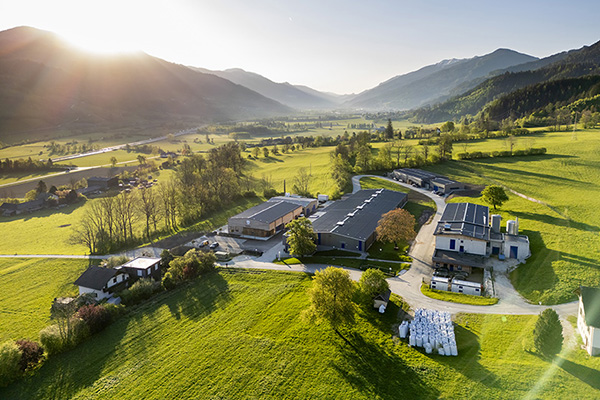
While it’s generally accepted that from a cost perspective alone, shrimp produced in indoor farms cannot hope to compete with those harvested in open ponds in the main supply regions of Ecuador and Southeast Asia, there’s still a lot to be said for the greater levels of biosecurity and disease control that these controlled environments offer.
Advocates of these enclosed alternatives can also point to significantly lower land, water and antibiotic usage, as well as lower pollutants and fewer escapes compared to vast pond networks. Additionally, land-based farms can be strategically located near key urban markets. Despite these positive attributes, the sector hasn’t fully taken off, remaining a very modest part of the wider aquaculture landscape.
Securing investment has perhaps been the biggest hindrance to indoor shrimp farming, with potential suitors put off by the aforementioned high costs and intense energy consumption. Additionally, very few of these ventures to date have achieved any level of profitability, according to Spheric Research Founder Matt Craze.
Speaking at an indoor farming-focused session at the 2025 Global Shrimp Forum in the Netherlands, Craze, who compiles an annual land-based aquaculture report, said there’s been a strong upturn in land-based recirculating aquaculture system (RAS) production in the last five years, but that much of this RAS “boom” has been related to salmon rather than shrimp farming. Indeed, Spheric’s analysis finds that $1.6 billion was invested in RAS in the first half of this year, compared with $1.1 billion for the whole of 2024, with 98 percent going the way of salmon and the remaining 2 percent allocated to all the rest.
![Ad for [membership]](https://www.globalseafood.org/wp-content/uploads/2025/07/membership_web2025_1050x125.gif)
“Only a really small part of the investment is going into shrimp farming,” he said, adding that the number of such projects has diminished year-on-year.
There are a few key causes for this trend, suggested Craze. Among these, investors have “stayed on the fence” regarding indoor shrimp farming as no clear winner has emerged between RAS and biofloc technologies. Also, the shrimp industry doesn’t have the same supply limitations that salmon has been experiencing. Furthermore, indoor farmers are not “singing in unison” when it comes to talking up the sector, with some saying their technology can be more efficient than pond farming, while others maintain that it’s a niche production system for affluent customers who would rather not eat imported shrimp.
As such, the indoor shrimp farming sector has “struggled to articulate its value proposition,” with potential investors in these companies being sold vastly different operating models, Craze said. “That’s the problem. That’s creating confusion.”
Shrinking landscape
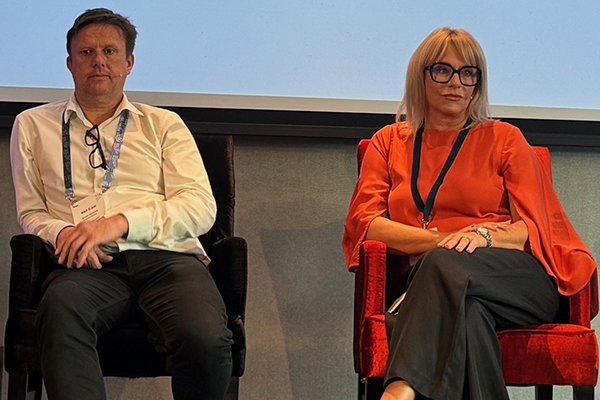
In 2024, Spheric counted 35 indoor shrimp farming projects capable of producing upwards of 5 metric tons (MT) of products for market, with 27 of these in operation, three under construction and five still at the concept phase. This year, that total number was down to 26 – comprising 22 that are operating, three under construction and just one conceptual project. Craze is expecting a similar level of shrinkage in 2026.
“In theory, it’s easier to invest in one of these indoor shrimp farms as early-stage companies, because they’re much smaller than some of these massive salmon facilities…But actually, it’s been extremely difficult for some of these companies to raise capital, and we’ve seen a number of closures this year in particular,” he said.
A lot of this “carnage” has been seen in Europe, with companies shutting down partly due to high energy costs, as well as persistent technical challenges with the farming process, he told the conference.
“The interesting thing is that Europe has really carried the sector so far. Especially in Central Europe, you see a lot of these facilities – in Germany and Austria. But some facilities have really struggled this year and have gotten into some significant difficulties. We expect that by next year, our land-based aquaculture report will show even fewer projects in operation.”
Among the most recent shutdowns, SwissShrimp entered liquidation off the back of high energy costs and unsustainable operating expenses, while HansenGarnelen in Germany filed for insolvency in July, citing financial difficulties and limited commercial traction.
Despite the tough backdrop, Craze acknowledged there has still been a scattering of investment positives. Oceanloop recently secured a EUR 35 million (U.S. $40 million) European Investment Bank (EIB) loan, which is contingent on finding co-investors, while Aquapurna is pushing ahead with the development of its 400 MT farm. Both of these facilities will be in Germany.
Spheric’s analysis confirmed that European-produced shrimp is “prohibitively expensive,” with HOSO products from these farms trading at $40 to 50 per kilogram – or almost twice as much as the average from Ecuadorian or Southeast Asia pond production. It further found that where the indoor offering really loses competitiveness is in value-added channels, where some products were being sold at well over $100 per kilo.
Though this inability to make value-added products at a competitive price further undermines the indoor offering, there’s a marketplace in Europe and some rich countries for antibiotic-free whole shrimp, Craze said.
“Its place is with high-net-worth, ecologically minded customers and haute cuisine. In Central European countries, like in Germany, Austria and Switzerland, there’s a very high value on local produce. There is also an entire group of consumers who just would not buy imported shrimp. So, you’re creating a product or a market that didn’t exist before,” he said.
Niche success
Austrian firm White Panther Produktion GmbH has established just such a niche, confirmed the indoor shrimp farm’s CEO Eva Keferböck. Established in 2017, it has a 60-MT production capacity for full grow-out. Its hatchery also produces 2 million postlavae per month for a client base of some 40 customers in and around Europe, Saudi Arabia and parts of Africa.
White Panther’s clear water RAS system produces fresh products for local markets, with 80 percent of its production sold as whole, easy-peel or peeled shrimp that is delivered fresh to customers within 24 hours of harvest. The remaining 20 percent is sold in frozen formats. Its fresh shrimp is currently selling for an average of EUR 80 (U.S. $93) per kilo.
“That’s what the market pays at this high-end consumer level,” Keferböck said. “At the moment, we are producing around 35 tons per year – that’s what we can easily bring to market. We don’t want to go into overproduction because the price will go down. We believe in small, regional farms that serve Europe’s high-end consumer and retail markets.”
While the initial investment costs were high and energy costs remain so, having its own hatchery, biomass plant, grow-out facility and processing unit in one location, together with proven systems and well-trained staff, has been key for the company. Having its own hydroelectric power plant has also been a big help.
Further down the line, the company expects to adopt further technical innovations, including potentially introducing fully monitored automation, and will look at creating more value-added products to avoid wasting any part of its shrimp, Keferböck said.
“There’s an increasing market for customers with preferences for local, sustainable production, and especially in the middle of Europe, in regions of France, Italy, parts of Germany and Austria,” she said. “We now have a lot of young people who just eat ‘green products,’ and we have customers in fine dining and restaurants.”
Keferböck continued: “From the experience of serving these markets for five years, we know that we will never compete with imported shrimp. That’s something that we don’t want to do. We are completely different, with a very different story. The future in Europe is promising: fresh, locally produced shrimp will emerge as a separate product range. It will be independent of imported competition.”
But there’s still considerable work to do to create a profitable indoor shrimp farming sector in Europe, she told the conference.
“We have to develop a completely new market with new products, because we will not be able to compete with the price of imported shrimp. In my opinion, there are customers for lower price imported shrimp, and there are customers for higher price, high quality, sustainable farmed shrimp. Creating a feeling for these new products that we are bringing to market – that’s the challenge.”
Keferböck also believes this form of localized production could also take off in other, high-value markets, such as the United States, Canada, Japan and some Chinese markets and other Central European markets.
“I think that in regions where there are no high volumes, but where there’s [wealthy] people living there, then the concept will work,” she said.
New artificial intelligence technology can detect early stress symptoms in farmed shrimp
Eyes on China
From its research, Spheric has also identified growing interest in the indoor shrimp farming sector in emerging aquaculture production regions like Africa and the Middle East, while China has begun developing so-called “mega RAS shrimp farms” as replacements for the greenhouses that currently account for 30 percent of the country’s domestic shrimp production.
These new 200,000-cubic-meter, fully automated structures, which are seen as a way to address the government’s water pollution concerns that greenhouses don’t solve, are, for the time being, “very big experiments,” led by China’s leading feed companies, Craze explained.
Already, Shanghai Stock Exchange-listed Tongwei has reported the production of 1,500 MT of vannamei shrimp in 2024, utilizing an internal and external dual cycle water treatment process system, while the $16 billion annual revenue-generating Haid Group is developing a 2,500 MT facility with the two stated strategic goals to master factory shrimp farming and also asset-light pig farming.
“For me, this puts the whole development of this industry on a completely different level,” said Craze. “When you have [Haid’s] 4,000-strong R&D team, with 137 PhDs working on this challenge, it’s going to be very interesting to see what happens next – if these projects are going to be a further string of failures, or if they crack the code of RAS shrimp farming.”
Now that you've reached the end of the article ...
… please consider supporting GSA’s mission to advance responsible seafood practices through education, advocacy and third-party assurances. The Advocate aims to document the evolution of responsible seafood practices and share the expansive knowledge of our vast network of contributors.
By becoming a Global Seafood Alliance member, you’re ensuring that all of the pre-competitive work we do through member benefits, resources and events can continue. Individual membership costs just $50 a year.
Not a GSA member? Join us.
Author
-

Jason Holland is a London-based writer for the international seafood, aquaculture and fisheries sectors. Jason has accrued more than 25 years’ experience as a B2B journalist, editor and communications consultant – a career that has taken him all over the world. He believes he found his true professional calling in 2004 when he started documenting the many facets of the international seafood industry, and particularly those enterprises and individuals bringing change to it.
Related Posts
Intelligence
Carbon clarity and a call to action: Shrimp industry urged to start work on low-emissions future
New Shrimp Carbon Footprint Guide launches at Global Shrimp Forum, urging swift industry action and practical steps for a low-carbon future.
Intelligence
Global shrimp industry navigating sustainability, innovation and shifting trade dynamics
A comprehensive recap of the 2025 Global Shrimp Forum, which focused on sustainability, innovation and resilience in a fast-changing trade landscape.
Innovation & Investment
The coronavirus pandemic’s influence on aquaculture priorities
There are lessons to be learned for aquaculture amid the coronavirus pandemic that's impacting life and business at every level. We explore a few perspectives.
Intelligence
The Advocate reports from the Responsible Seafood Summit in St Andrews
More than 80 speakers took the stage to discuss a wide range of topics in fisheries and aquaculture and responsible seafood sourcing.