


Survey reveals ‘stunning’ underwater images of marine life around salmon farm

Survey finds diverse marine life near Mowi’s Loch Hourn farm, suggesting aquaculture can coexist with healthy marine ecosystems

Mowi Scotland has released a series of “stunning” underwater images documenting marine life around its fish farm at Loch Hourn, an area with more than three decades of aquaculture activity.
The photographs, taken by independent marine surveying firm Tritonia Scientific, capture a range of species thriving in the site’s moorings, including feather stars, peacock worms, catsharks, jellyfish, wrasse, anemones, urchins, soft coral and scallops.
“At Mowi Scotland, protecting our marine environment is at the heart of everything we do,” said Stephen MacIntyre, head of environment at Mowi Scotland. “That’s why we commissioned an independent environmental survey of the seabed and waters around our salmon farm at Loch Hourn, a water body that has been the subject of a recent environmental pollution report.”
Mowi commissioned Tritonia Scientific to carry out the survey as part of an effort to assess and document the condition of the marine environment around its salmon farm. The company said the findings support the view that aquaculture and local marine ecosystems can co-exist without causing environmental harm.
![Ad for [BSP]](https://www.globalseafood.org/wp-content/uploads/2025/07/BSP_B2B_2025_1050x125.jpg)
“There are a lot of misconceptions around the environmental effects of fish farming, with a rush to judge and apportion cause and effect when reports such as these arise,” said MacIntyre. “In response, it’s important we acknowledge such concerns but that we also investigate, monitor and transparently present observational field data to inform more reasoned opinions.”
According to the company, more than three decades of fish farming activity at Loch Hourn has not prevented the development of a diverse marine ecosystem. Recent internal surveys have indicated strong biodiversity in the area, a finding that Mowi says is reinforced by the latest independent assessment. The company noted that sensitive species – such as feather stars, sponges, scallops, squat lobsters, soft corals and small-spotted catsharks – were observed around mooring lines and within nearby kelp habitats.
“The photos definitely speak for themselves,” said MacIntyre. “This is what responsible fish farming looks like in a well-managed environment.”
MacIntyre said the company operates under some of the strictest fish farming regulations globally, particularly regarding environmental protection. He added that Mowi employs a team of environmental professionals to monitor its farms and now funds dedicated surveys that extend beyond regulatory requirements, aiming to share more data and evidence on the condition of the marine environment surrounding its aquaculture sites.
Now that you've reached the end of the article ...
… please consider supporting GSA’s mission to advance responsible seafood practices through education, advocacy and third-party assurances. The Advocate aims to document the evolution of responsible seafood practices and share the expansive knowledge of our vast network of contributors.
By becoming a Global Seafood Alliance member, you’re ensuring that all of the pre-competitive work we do through member benefits, resources and events can continue. Individual membership costs just $50 a year.
Not a GSA member? Join us.
Author

Related Posts
Responsibility
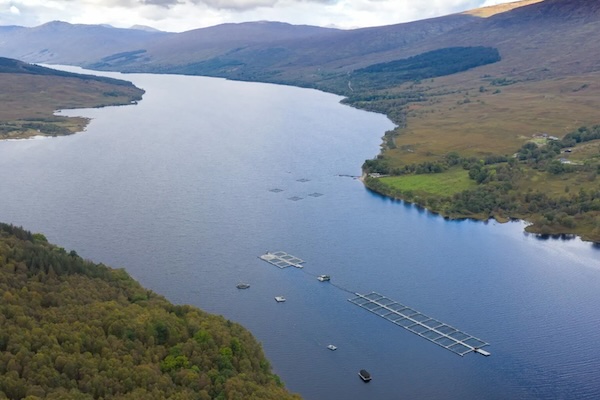
Mowi: Scottish loch nutrients ‘virtually unaffected’ by nearly four decades of salmon farming
A review of 37 years of data finds that the nutrient status of a freshwater loch was not significantly altered by farming.
Health & Welfare
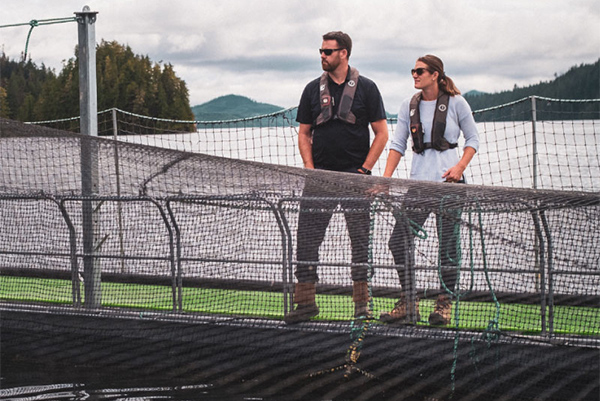
Aquaculture tech firm to trial novel fish welfare technology with Mowi Canada West
Novel "ecosystem-supporting" technology may improve fish welfare and performance, and reduce interactions between wild and farm-raised fish.
Intelligence
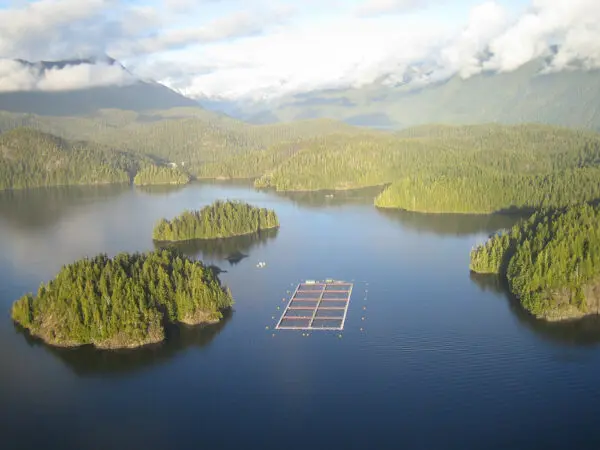
Researchers conclude B.C. salmon farms pose minimal risk to wild salmon populations
Study finds B.C. salmon farms pose minimal risk to wild salmon, challenging claims about impact of open-net pen aquaculture.
Intelligence
Eight-year study finds no clear link with B.C. salmon farms and sea lice
Study finds no consistent drop in sea lice on wild salmon after B.C. closures, challenging claims about aquaculture impacts.