


Researchers conclude B.C. salmon farms pose minimal risk to wild salmon populations

Researchers from top U.S. universities challenge claims about impact of open-net pen aquaculture
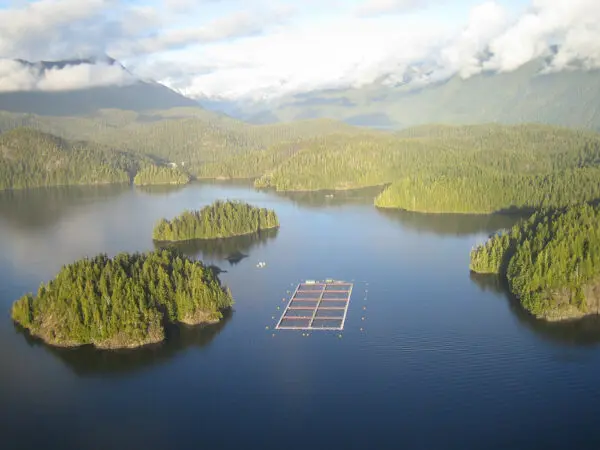
Salmon farms in British Columbia (B.C.) have minimal impact on wild salmon populations, according to a new study published in Aquaculture, Fish and Fisheries. The paper, authored by six fish health experts from UC Davis, the Alaska Department of Fish and Game, Washington State University and Oregon State University, re-examines two decades of scientific research to reassess the risks associated with open-net pen aquaculture in the region.
“Infectious disease is a normal part of all animal populations,” said corresponding author Gary D. Marty, a research associate with the UC Davis School of Veterinary Medicine and a senior fish pathology consultant in British Columbia. “Also normal is pathogen transfer among populations that interact, including wild and farmed salmon. Many studies over the past two decades have elevated these natural risks to an existential threat to wild salmon.”
The researchers challenged these interpretations, showing that, in British Columbia, there’s “no good evidence that risks from salmon farm pathogens have resulted in long-term impacts on wild salmon populations.”
The paper’s conclusions are consistent with findings from several other studies and legal reviews. In June 2025, an eight-year study in British Columbia’s Discovery Islands found no consistent decrease in sea lice on wild juvenile Pacific salmon following the removal of open-net pen salmon farms – raising questions about claims that farm closures directly reduce parasite levels.
![Ad for [BSP]](https://www.globalseafood.org/wp-content/uploads/2025/07/BSP_B2B_2025_1050x125.jpg)
A literature review published in April 2024 similarly found that the effects of sea lice from farms on wild Atlantic salmon had often been overestimated. In 2022, the Canadian Science Advisory Secretariat (CSAS) also concluded there was no statistical correlation between sea lice levels on wild and farmed salmon.
In 2022, a Federal Court ruling further supported these views, referencing nine peer-reviewed reports that concluded salmon aquaculture in B.C. poses “no more than a minimal risk of harm” to Fraser River Sockeye salmon.
Behind one First Nation’s fight to keep its salmon farms afloat
On December 17, 2020, the Minister of Fisheries, Oceans and the Canadian Coast Guard announced in a news release that open-net pen salmon farming in the Discovery Islands would be “phased out” within 18 months. Specifically, no further licenses would be issued and the introduction of new fish of “any size” to those fish farms during this period would be prohibited. It mandated that all fish farms would “be free of fish” by June 30, 2022, but that the existing fish at these sites could complete their growth cycles and be harvested.
Now that you've reached the end of the article ...
… please consider supporting GSA’s mission to advance responsible seafood practices through education, advocacy and third-party assurances. The Advocate aims to document the evolution of responsible seafood practices and share the expansive knowledge of our vast network of contributors.
By becoming a Global Seafood Alliance member, you’re ensuring that all of the pre-competitive work we do through member benefits, resources and events can continue. Individual membership costs just $50 a year.
Not a GSA member? Join us.
Author

Related Posts
Responsibility
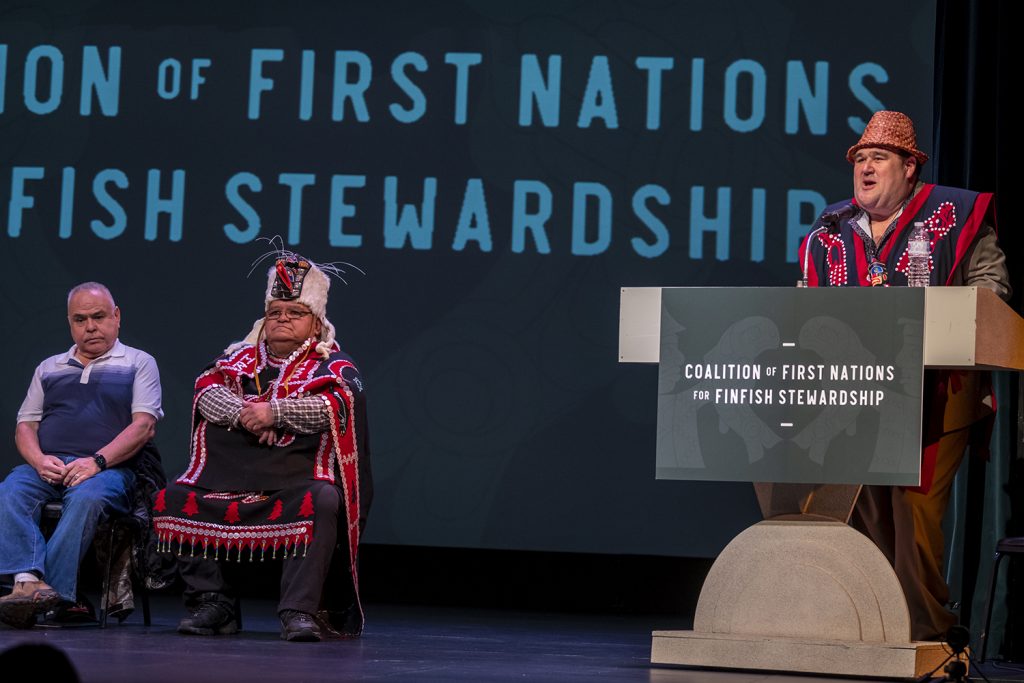
First Nations coalition unveils plan for salmon farming in British Columbia waters
The Coalition of First Nations for Finfish Stewardship releases a “responsible, realistic and achievable” plan for an Indigenous-led blue economy.
Intelligence
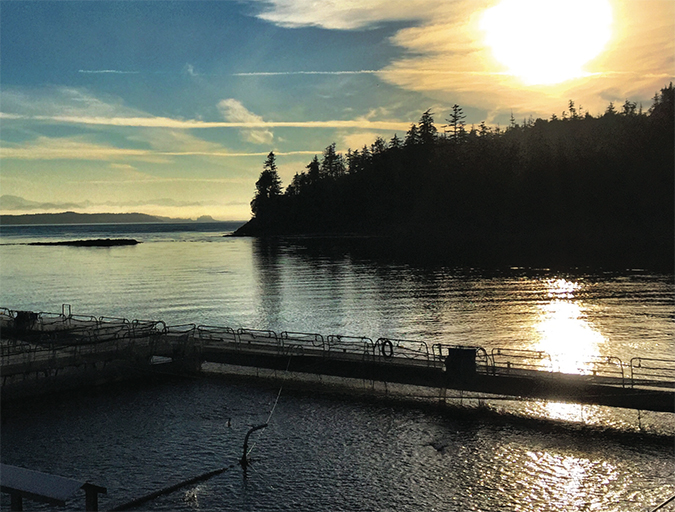
Report: Moving BC salmon farms to land may not be economically viable
Regulatory uncertainty, high capital cost, low ROI and few incentives were identified as hurdles to moving BC salmon farms onto land.
Responsibility
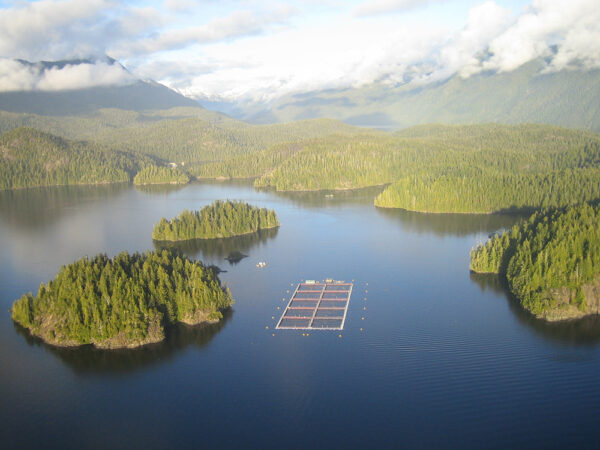
Leading scientists defend Canada’s peer-reviewed science advisory process on salmon farming
Nine top scientists are publicly defending the science and advice presented on salmon farming by the Canadian Science Advisory Secretariat.
Responsibility
Some First Nations are asserting their right to farm salmon, despite pending government closures
With salmon farm closures imminent, some First Nations are taking action to preserve ocean-based farming and assert Indigenous sovereignty.