


Report: Sustainable aquaculture could create more than 20 million jobs by 2050, but investment gaps remain

Sustainable aquaculture could create 22 million jobs, but scaling it requires major investment, policy reform and public-private collaboration
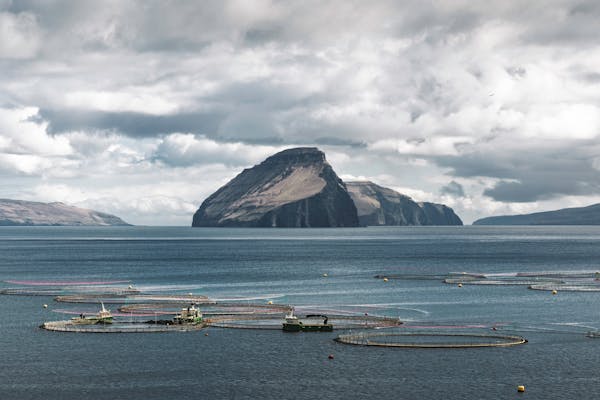
A new report by the World Bank and WWF has projected that sustainable aquaculture could generate up to 22 million jobs and $1.5 trillion in investment by 2050, positioning the sector as a cornerstone of future food systems and blue economy growth.
The report, Harnessing the Waters: A Trillion Dollar Investment Opportunity in Sustainable Aquaculture, outlines two scenarios for the industry’s growth: A “business-as-usual” path, requiring $500 billion in investment, could increase production to 159 million metric tons (MT) and create up to 14 million jobs. A more ambitious approach, backed by $1.5 trillion, could raise output to 255 million MT and support as many as 22 million jobs by mid-century.
“To realize aquaculture’s full potential, we must shift toward practices that are not only productive, but also environmentally responsible, socially inclusive and economically viable,” said Genevieve Connors, acting Global Director, Department of Environment at the World Bank. “This is a call to action – to deepen collaboration, to invest boldly in new aquaculture technologies, and to foster stronger alignment between public and private sectors.”
With global demand for seafood continuing to rise and wild fisheries facing increasing pressure, aquaculture has emerged as a critical component of global food security, economic development and environmental sustainability. Today, the sector accounts for nearly 60 percent of the world’s seafood supply. Compared to other forms of animal protein production, aquaculture also has the lowest carbon footprint and generates the fewest greenhouse gas emissions.
![Ad for [membership]](https://www.globalseafood.org/wp-content/uploads/2025/07/membership_web2025_1050x125.gif)
“Aquaculture is among the most sustainable ways to produce animal protein and will be essential in feeding the world’s growing population,” said Sergio Nates, Senior Director for Aquaculture at WWF. “As the sector continues to expand, it holds immense potential to deliver positive social impact globally. It’s critical that we guide this growth through sustainable and responsible production practices.”
To reach its full potential, aquaculture will require innovative financing models, particularly in emerging markets. The report examines investment trends and financial tools shaping the industry, emphasizing the need for a shift from small-scale operations to more intensive, sustainable production.
World Bank releases investment guide for developing sustainable aquaculture
Drawing on case studies from Bangladesh, Chile, China, Ecuador, Egypt, Thailand and Vietnam, the analysis highlights how financial mechanisms and public-private collaboration have driven growth in mature aquaculture industries. Aimed at financial institutions, governments, philanthropies and private investors, the report positions aquaculture as a key pillar of future food systems – and a growing opportunity in the blue economy, with seafood production projected to rise 14 percent by 2032.
Now that you've reached the end of the article ...
… please consider supporting GSA’s mission to advance responsible seafood practices through education, advocacy and third-party assurances. The Advocate aims to document the evolution of responsible seafood practices and share the expansive knowledge of our vast network of contributors.
By becoming a Global Seafood Alliance member, you’re ensuring that all of the pre-competitive work we do through member benefits, resources and events can continue. Individual membership costs just $50 a year.
Not a GSA member? Join us.
Author

Related Posts
Innovation & Investment
Report: Africa’s seafood sector needs investment, policy reform to sustain growth and ensure food security
Africa’s seafood sector is growing fast, but investment and policy reforms are key to ensuring food security, concludes a new report.
Fisheries
Study: Small-scale fisheries essential to global food security, livelihoods
New study highlights small-scale fisheries’ critical role in global food security, nutrition and livelihoods, urging stronger policy support.
Responsibility
FAO: More investment in seafood production needed to drive ‘blue transformation’ for global food security
At the G7 meeting, FAO says investment in seafood production is critical to ensuring global food security and combating poverty.
Responsibility
Study: Small-scale aquaculture can improve income, food security in rural regions like Zambia
A Stirling study finds that adopting aquaculture helps rural Zambian households diversify their income and improve their food security status.