


How the next generation diagnostic tools are improving early detection of disease in aquaculture

Advances in aquaculture diagnostics are making early detection of disease possible, helping farmers respond faster and protect fish health
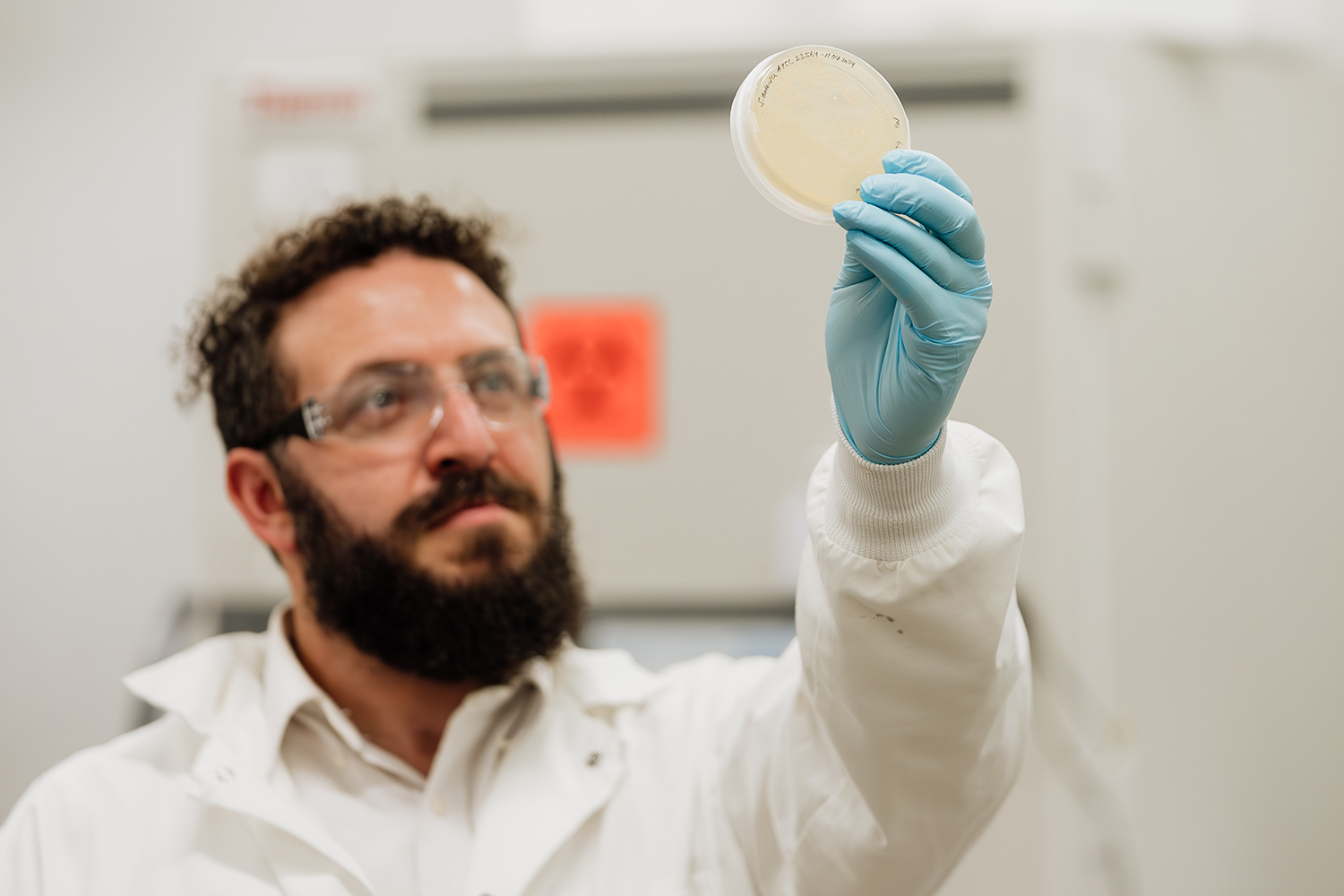
Maintaining health and welfare is a crucial task on fish and shellfish farms. However, as farming practices intensify, the prevalence and impact of infectious disease increases. Today, research is shifting toward diagnostic technologies that help aquaculture with early detection of disease, allowing farmers to respond faster.
Over the past two decades, molecular diagnostics in aquaculture have advanced, with PCR and real-time PCR becoming the gold standard for detecting viral, bacterial and parasitic agents. Recent innovations like high-throughput systems, multiplex assays and portable platforms allow for simultaneous detection of multiple pathogens, enabling faster response times. The scope is also expanding to include screening for antimicrobial resistance (AMR) genes and tracking virus transmission.
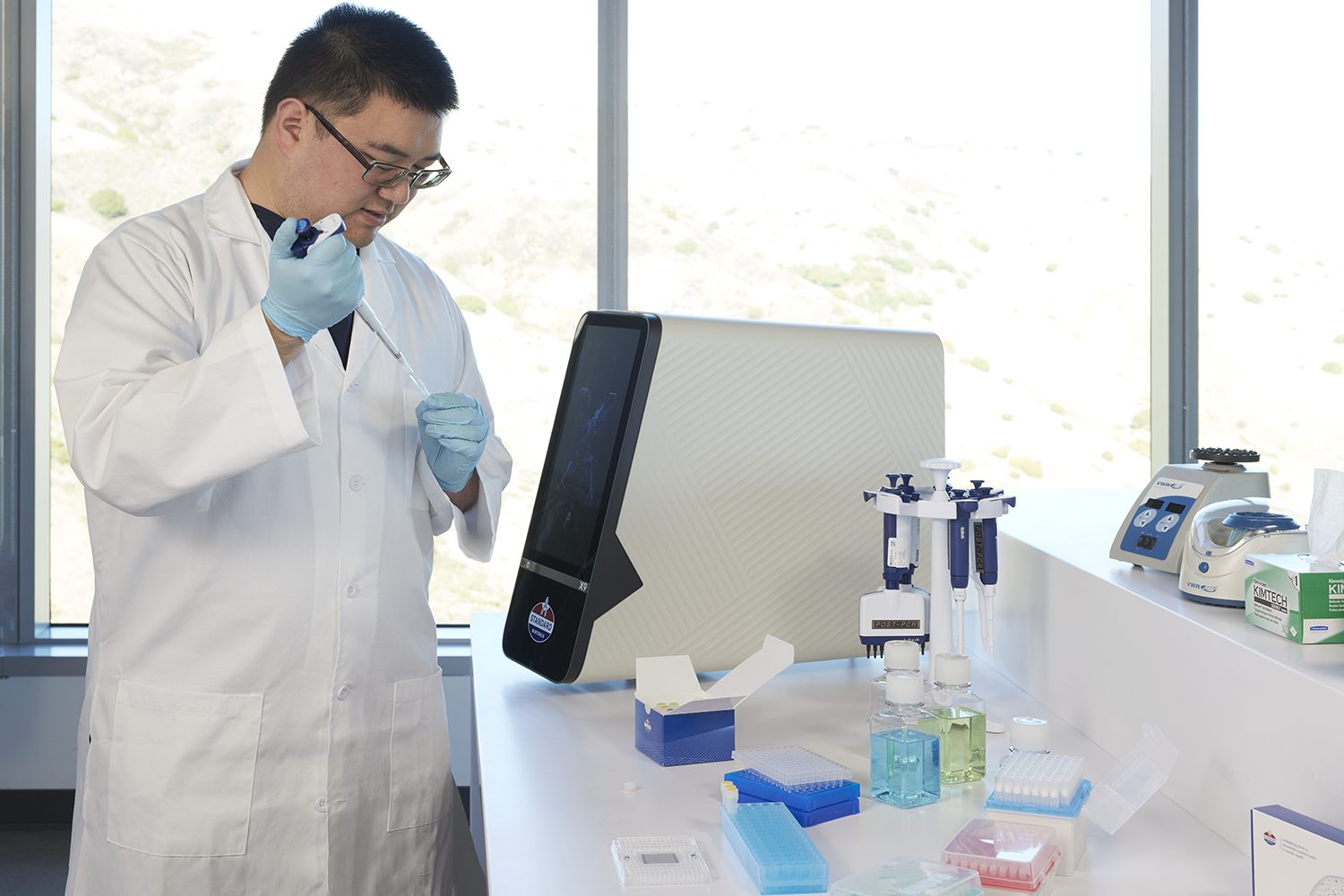
One tool that can efficiently identify pathogens and genetic markers in fish and shellfish is microfluidics, which helps farmers quickly determine the causes of infection, eliminating the need for multiple tests. Microfluidics is the foundation for Integrated Fluidic Circuits (IFCs), which contain networks of microscopic channels that allow researchers to test fish samples for targeted pathogens or specific genetic markers.
“Our BiomarkTM real-time PCR system offers rapid, sensitive and high throughput identification of viruses, bacteria or parasites from fish or environmental samples,” Sejal Desai, director of project management at life science technology firm Standard BioTools, told the Advocate. “Users can test dozens of pathogens across many samples in a single run, using a fraction of the reagents and hands-on time. The result is cost-effective surveillance and early detection.”

Standard BioTools’ microfluidics-based system screens for viral pathogens in salmon, including infectious salmon anemia virus (ISAV), infectious hematopoietic necrosis virus (IHNV), viral hemorrhagic septicemia virus (VHSV), and piscine reovirus (PRV), as well as parasites such as Neoparamoeba perurans, the cause of amoebic gill disease (AGD). It also profiles pathogen- and stress-response genes in salmonids at scale, and measures host immune responses, enabling early detection of disease before clinical symptoms emerge.
Although primarily designed as a laboratory-based, high-throughput system, its compact footprint, small reaction volumes and automation make it well-suited to near-site and at-sea genetics laboratory deployments.
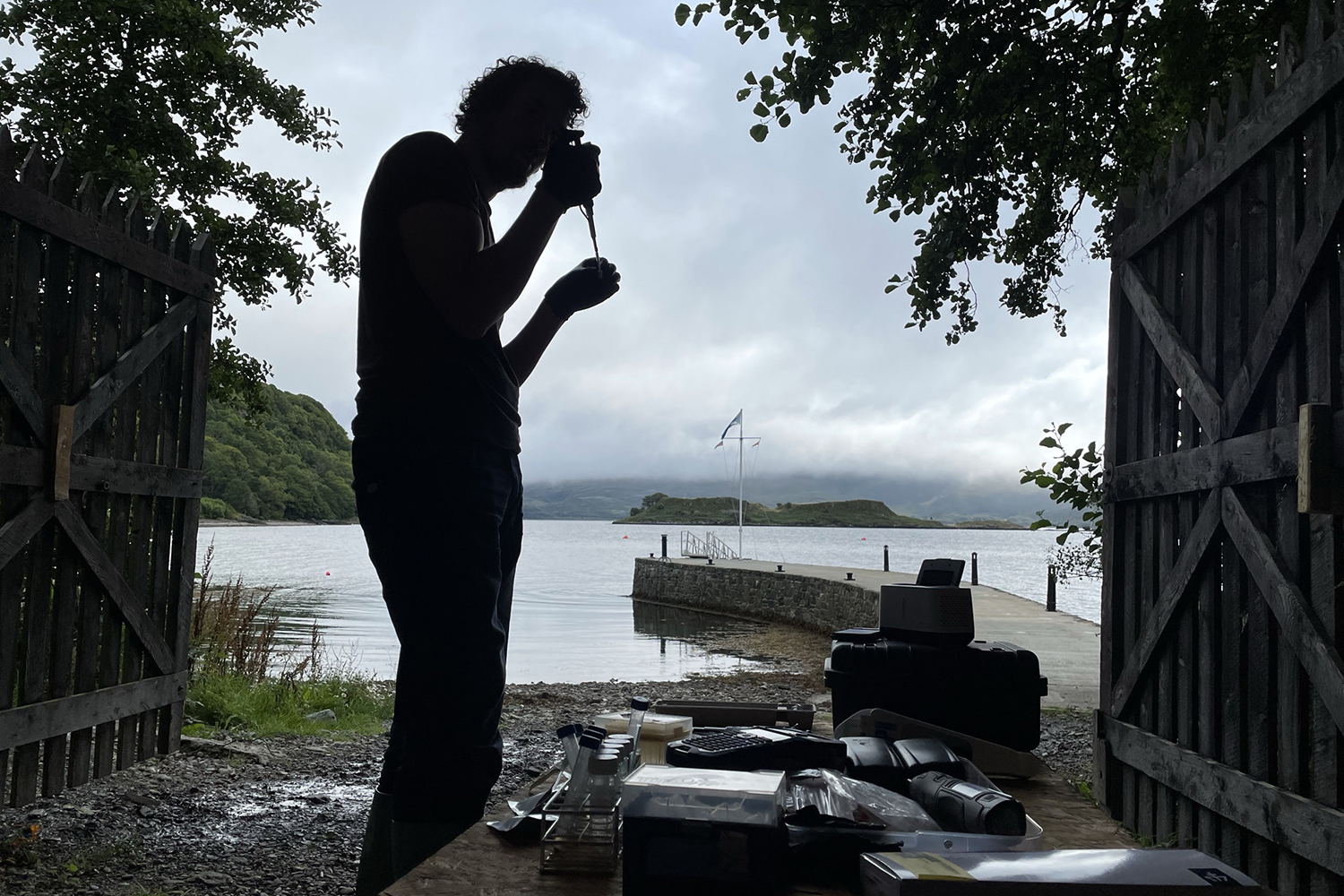
“One example of this is the Port Moller Test Fishery in Bristol Bay, which set up an on-vessel genetics lab using our microfluidics to process samples quickly for in-season decision-making, removing logistic hurdles,” said Desai. “After processing, the samples were delivered to Anchorage every two days.”
Meanwhile, in the UK, scientist Dr. Tim Bean and colleagues at the University of Edinburgh’s Roslin Institute have developed a way to detect the parasite Bonamia ostreae in European flat oysters (Ostrea edulis). Using oyster feces and pseudofeces to look for the parasite’s DNA, the team can screen large numbers of oysters at once without harming them.
“European oysters used to be present around the British Isles and European coastline,” said Bean. “For many people across Europe, they were essentially a staple food until the end of the 1800s. However, they have declined dramatically due to overfishing and climatic events, while the movement of oysters from other continents has introduced disease, one of which is bonamiosis, which is caused by the Bonamia parasite. It’s been causing issues since it arrived in the UK in the late ‘70s and early ‘80s, and has gradually spread.”
The new test developed by Bean and his colleagues is straightforward: live oysters are placed overnight in containers filled with aerated seawater. The following day, feces and pseudofeces are collected from the bottom. DNA is extracted from the sediment and analysed using qPCR. The approach is as sensitive – or even more so – than traditional tissue sampling and histology and appears more accurate than water-based environmental DNA tests. Feces and pseudofeces may act as a natural sink for the Bonamia parasite’s DNA, said Bean.
Unlike other DNA-based detection methods that rely on complex lab setups, the test can be deployed on oyster farms using mobile DNA extraction and PCR kits. Not only does this help farmers make informed decisions, but it also positively impacts other areas of the production chain.
“Using the test on farms will change the cost and time dynamics of the whole process and provide value amidst farmers’ interest in understanding in advance whether parasites are present on their farms,” said Bean. “We hope that the test will encourage more people to take up native oyster farming. It could also enable hatcheries growing oyster spat to test the detritus in their tanks, increasing biosecurity without sacrificing valuable broodstock.”
Over the years, the European flat oyster has also become a conservation priority due to its ecological importance, such as removing detritus from the water column and protecting coastlines. However, like farming, oyster restoration efforts have been repeatedly impacted by the Bonamia parasite. This is where the new test comes in.
“Moving oysters from one site to another increases the risk of moving the parasite,” said Bean. “Restoration teams can’t afford to do this, because once the parasite has been detected, the oysters cannot be moved. Our test gives restoration efforts a way to respond quickly to disease threats without compromising the species that they are trying to protect.”
However, despite available diagnostic tools, farms still face disease outbreaks due to challenges with cost, access and logistics, said Desai. Many lack the resources to invest in high-throughput testing or nearby labs, while samples often need to be shipped to centralized facilities, delaying results and hindering early intervention.
In some regions, there are also gaps in technical expertise or infrastructure to implement molecular testing at scale. For example, amoebic gill disease (Neoparamoeba perurans) in salmon can be detected early with molecular assays, but many farms rely on clinical observation, leading to delayed treatments and greater stock losses. Overcoming these barriers requires more accessible testing models, mobile or regional labs, and greater integration of tests into routine farm management.
“To make microfluidics-based qPCR viable for aquaculture – especially small-scale operations – cost must be reduced through smaller reaction volumes and shared lab resources,” said Desai. “Simplified workflows and automation can lower the need for specialized technical expertise, allowing farm staff or technicians to run assays themselves. Mobile or regional labs bring testing closer to farms, reducing sample transport time and enabling faster results for early intervention. Together, these steps can make diagnostics a routine part of sustainable aquaculture management.”
With faster, more cost-effective options being developed to enable early on-site disease detection, accessibility will be key, agrees Dr. Jordan Poley, director of lab technologies at Canadian research organization Onda.
“The salmon sector, for example, has the resources to support high-level, robust screening, and the capital to invest in R&D and explore its own hypotheses,” he said. “Meanwhile, other sectors struggle to afford even basic diagnostic tools. We need to ensure that farms across all sectors can access the diagnostics they need for their specific situations and want to make this possible as we refine and validate our own technology.”
Looking ahead, Poley believes that the future of diagnostic tools in aquaculture is moving toward integrated systems that generate more information to keep pace with the industry’s disease challenges.
“Farms are likely to benefit even more from disease diagnostics,” he said. “They’ll be able to detect a wider range of pathogens and extract more data from samples, potentially building detailed profiles of fish health. Diagnostic tools will also be further integrated into the production process. But there is a key question: How do we act before major disease outbreaks happen? How can we apply our knowledge and experience proactively – while the fish are still healthy – so that our efforts are preventative? In this regard, I hope to see more proactive surveillance platforms to enable earlier intervention and greater resilience across aquaculture.”
“I would like to see a regulatory environment that accelerates farmers’ access to disease diagnostic tests,” said Bean. “When we have a test that we trust, backed by solid data, it will still take a while before it reaches farmers. Putting the power back into their hands under the right regulatory environment would be a meaningful and much-needed step forward.”
Now that you've reached the end of the article ...
… please consider supporting GSA’s mission to advance responsible seafood practices through education, advocacy and third-party assurances. The Advocate aims to document the evolution of responsible seafood practices and share the expansive knowledge of our vast network of contributors.
By becoming a Global Seafood Alliance member, you’re ensuring that all of the pre-competitive work we do through member benefits, resources and events can continue. Individual membership costs just $50 a year.
Not a GSA member? Join us.
Author
-

Correspondent Bonnie Waycott became interested in marine life after learning to snorkel on the Sea of Japan coast near her mother’s hometown. She specializes in aquaculture and fisheries with a particular focus on Japan, and has a keen interest in Tohoku’s aquaculture recovery following the 2011 Great East Japan Earthquake and Tsunami.
Related Posts
Health & Welfare
Advances in technology for shrimp virus detection
Shrimp virus detection requires innovative options in tools for viral diseases, such as polymerase chain reaction and isothermal nucleic acid amplification.
Responsibility
‘Do more and do better’ – Sustainability manager discusses Skretting’s ambitious agenda
Aquafeed giant Skretting recently appointed Jorge Diaz as its sustainability manager to advance its ambitious sustainability agenda.

Intelligence
‘The power of impact is in all of us’: Day one of 2025 Responsible Seafood Summit charts a more sustainable future for a global industry
The 2025 Responsible Seafood Summit explored how to make seafood’s global impact more sustainable, transparent and equitable.
Innovation & Investment
Scottish firm honing bacteriophages into aquaculture-disease assassins
Scottish biotech firm Fixed Phage aims to bottle the powers of bacteriophages to deploy these “bacteria killers” on some of the world’s most destructive aquaculture diseases.