


How change in spawning locations of Atlantic cod in the Barents Sea may affect the mean individual size of the offspring

Poleward shifts in spawning habitat, primarily related to rising ocean temperatures, are associated with smaller-sized juvenile cod
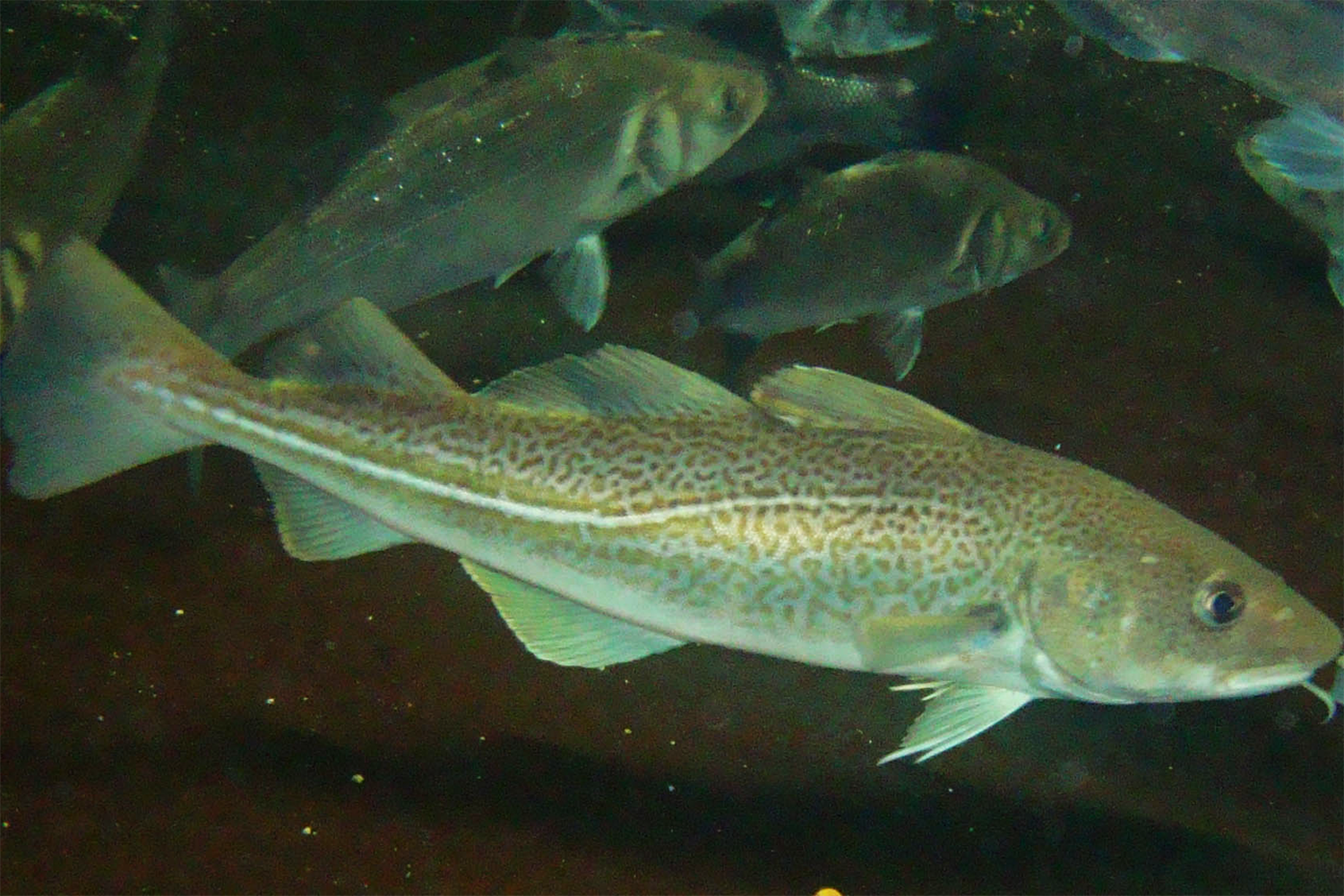
Climate change is affecting the distribution of marine life across the world, with rising temperatures often leading to poleward shifts. These distributional changes can disrupt established species interactions, significantly affecting ecosystem functioning and services, including food security and human well-being. For example, a “borealization” of the Arctic is documented, i.e., a northward expansion of predatory boreal fish with rising sea temperatures, negatively affecting the resident Arctic fish.
The general poleward distributional shifts of fish also extend to spawning distributions, but different life stages often have different thermal tolerances. Therefore, the thermal conditions for spawning and thus the new spawning locations may not necessarily have the optimal temperature for young-of-the-year fish development, growth, or survival. Several studies have documented poleward expansion of fish spawning locations with increasing temperatures. The consequences of the distributional shift of spawners on offspring fate are often less well understood, although this mechanism may play a major role in how fish populations respond to global warming.
One prominent example of a change in distribution associated with ocean warming is the population of Atlantic cod (Gadus morhua) in the Barents Sea (BS). The recent decrease in cod recruitment and total biomass is unexpected with the still large (although rapidly decreasing) spawning stock biomass (SSB) and relatively low fishing pressure, the relatively high occurrence of older and bigger spawners, and the general increase in sea temperature in the BS. The north and eastward shift of BS cod spawning location is projected to continue with climate change, potentially also into new areas.
This article – summarized from the original publication (Langangen, Ø. et al. 2025. Consequences of climate-related poleward shifts in cod spawning. Canadian Journal of Fisheries and Aquatic Sciences Volume 82, 5 August 2025, Pages 1-11) – reports on a study that investigated how the change in spawning location of the Barents Sea population of Atlantic cod may affect the mean individual size of the offspring in their first fall.

Study setup
We hypothesized that the recent northward shift in spawning location may be linked to reduced size of juveniles. To investigate this hypothesis, we used commercial fisheries statistics data available from the Norwegian Directorate of Fisheries for the years 2000–2021 to construct a proxy for the intensity of spawning at different locations as explained in detail by Langangen et al. (2019). Such data have previously been successfully used as a proxy for spawning location in this cod population.
A time series of cod mean lengths at the 0-group stage was analyzed for associations with temperature, spawning location, and size of the spawning stock. To shed further light on the possible mechanisms for why spawning location may affect offspring size, i.e., effects of timing, temperature, and hatch size, we analyzed a mechanistic larval and juvenile growth model.
For detailed information on the experimental design, data, models used, and analysis, refer to the original publication.
Results and discussion
Climate warming typically pushes populations polewards. Here, we show that for the BS cod, the northern spawning is also linked to smaller young-of-the-year in fall before their first winter. The reduction of offspring size is often associated with lower survival, and we speculate that this may partly explain why the BS cod has experienced a reduction in spawning stock (i.e., SSB) over the last decade.
A reduction in juvenile size may reduce survival over the first winter and thus affect cod abundance at age 1. Such effects may propagate to recruitment at age 3, e.g., a reduction in the juvenile size of about 20 percent (e.g., 8.4–7.0 cm) can reduce recruitment by about 70–80 percent. This change in survival and recruitment potentially constitutes a significant fraction of the recruitment variations in cod that is about a factor of 22 (max to min recruitment) over the whole time series used.
The observed size decrease with northwards spawning can be explained by several mechanisms. Such mechanisms include reduced temperature-dependent growth in northern and colder areas, food-dependent growth with poorer feeding conditions in the north, spawning time, delay in northern compared to more southern spawning grounds associated with shorter growing season, or if offspring quality was poorer in the northern spawning grounds.
To disentangle these mechanisms, we analyzed a mechanistic growth model that combines egg-hatching times with larval growth. The results of this analysis indicate that temperature-dependent growth as well as spawning time may play a more prominent role in shaping offspring size than hatching size. We note that size differences can be caused by a combination of slower growth and altered age of the juveniles in the survey.
Spawning at higher temperatures has been suggested to provide some benefits, e.g., increased early life survival or growth in cod. Our results are in line with the likely reduction of offspring size with northern and colder spawning and that may lead to negative effects for the population.
Our results are also consistent with the hypothesis that changes in fish adult distributions may result in spatial mismatch of offspring and their thermal optima. Note that the effect of reduced juvenile size on population level may be propagating through effects on multiple stages up to recruitment, e.g., year-classes distributed towards the southwestern BS having faster growth than year-classes distributed farther northeast.
In addition to spawning location, we found that increased annual mean spring–summer temperature has a generally positive effect on juvenile size, while increased SSB had a positive effect on juvenile size for small values and a negative effect for large values. The former is in line with previous work on BS cod by various researchers and consistent with slower growth of larvae and juveniles in the colder water at the northern spawning grounds.
Using broadband hydroacoustics to identify Atlantic cod, polar cod and northern shrimp
It is commonly reported that age and size at maturity are reduced with increased temperature in aquatic species One mechanism of the temperature-size rule (TSR) is faster growth in early life caused by warmer temperatures. Cod juveniles from southern and warmer spawning grounds will then reach a given size at a younger age compared to juveniles from northern and colder spawning grounds. However, according to the TSR the cod juveniles from the warmer regions may, e.g., mature at an earlier age and size, leading to smaller sizes later in life compared to fish originating from colder regions. Information on the growth and maturity of cod specific for spawning ground origin is currently not available. To what extent the spawning location of cod has long-lasting effects on the size of the cod that survives the first winter warrants further investigations.
There are some limitations associated with this study. First, we have extracted the proxy for spawning location from fish landing information. The landing data may not directly reflect the fish biology and may be imprecise, e.g., in the reported location and time. We nonetheless consider it a good proxy due to the large data set and consistent results obtained in previous analyses using additional data sources. Second, using average temperatures over several months taken from one transect as a proxy for growth/size at age is a major assumption, but we note that the Kola-section temperatures have been considered to be a highly informative proxy for fish and cod in particular in the BS. Third, we did not include proxies for processes such as food availability or predators, mainly due to limitations in both the proxies’ availability and the length of the time series analyzed. Finally, using the median survey day may not have fully accounted for the variations in the size of the juveniles caused by the survey.
Despite these limitations, we have clearly demonstrated how poleward shifts in spawning habitat, primarily related to rising ocean temperatures, are associated with smaller-sized juvenile cod. Moreover, we hypothesize that this effect may have influenced size and abundance in subsequent life stages and recruitment to fisheries. This is highly relevant information, as it may potentially have played an important role in the recent biomass decline in the BS cod and more generally in the population dynamics of fish in general.
Perspectives
This study investigated how the change in spawning location of the Barents Sea population of Atlantic cod may affect the mean individual size of the offspring in their first fall. Results demonstrated how the observed climate warming-related northerly shift in spawning location may lead to smaller sizes of young-of-the-year cod. The analysis reveals a positive effect of sea temperature on offspring size and a nonlinear effect of spawning stock biomass (SSB) with smaller offspring size at both the high and low end of SSB. Decreased offspring size is likely to affect population dynamics through reduced recruitment success, and we hypothesize that it may have been part of the reason for this population’s recent reduction in biomass.
Now that you've reached the end of the article ...
… please consider supporting GSA’s mission to advance responsible seafood practices through education, advocacy and third-party assurances. The Advocate aims to document the evolution of responsible seafood practices and share the expansive knowledge of our vast network of contributors.
By becoming a Global Seafood Alliance member, you’re ensuring that all of the pre-competitive work we do through member benefits, resources and events can continue. Individual membership costs just $50 a year.
Not a GSA member? Join us.
Authors
-

Corresponding author
Department of Biosciences, 208408 University of Oslo, PO Box 1066, Blindern, N-0316 Oslo, Norway -
Department of Biosciences, 208408 University of Oslo, PO Box 1066, Blindern, N-0316 Oslo, Norway
-
115347 Institute of Marine Research, P.O. Box 1870 Nordnes, NO-5817 Bergen, Norway
-
115347 Institute of Marine Research, P.O. Box 1870 Nordnes, NO-5817 Bergen, Norway
-
Department of Biosciences, 208408 University of Oslo, PO Box 1066, Blindern, N-0316 Oslo, Norway
Related Posts
Fisheries
Marine byproduct-based bait performs well in Barents Sea snow crab fishery
Experimental bait using marine byproducts was tested by SINTEF researchers in a Barents Sea snow crab fishery.
Innovation & Investment
Norway banned scallop harvesting in the Barents Sea. Responsible Seafood Innovation Award finalist Ava Ocean delivered a tech solution.
Ava Ocean proves scallop harvesting in the Barents Sea can be done responsibly using its selective “shellfish picker" technology.
Responsibility
Does fishing contribute to microplastic pollution in the Arctic?
Ocean circulation, ice melt, tourism and fishing are all 'likely contributors' to Arctic microplastics, researchers say.
Health & Welfare
Atlantic cod genomics and broodstock development project
The Atlantic Cod Genomics and Broodstock Development Project has expanded the gene-related resources for the species in Canada.