


Five-year initiative aims to strengthen fisheries management in the Gulf of Thailand

GoTFish Project will strengthen fisheries management and support recovery of overfished stocks
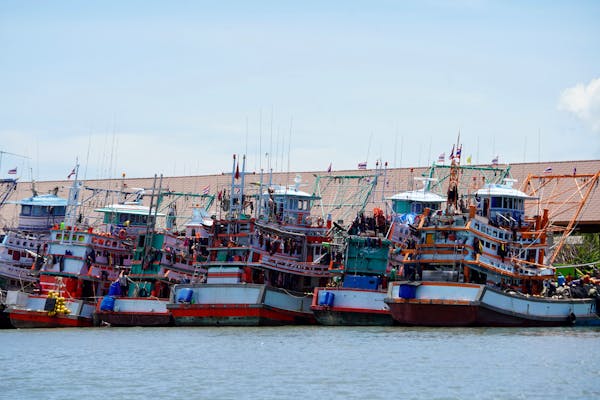
Sustainable Fisheries Partnership (SFP) is collaborating with the Southeast Asian Fisheries Development Center (SEAFDEC) and the University of Queensland to launch a regional effort to secure the long-term health of the Gulf of Thailand’s fisheries.
Implemented by the Food and Agriculture Organization of the United Nations (FAO) and funded by the Global Environment Facility (GEF), the GoTFish Project will coordinate efforts in Cambodia, Malaysia, Thailand and Vietnam to address the growing threats facing the Gulf – one of the world’s most productive marine ecosystems.
This five-year initiative, “Promoting the Blue Economy and Strengthening Fisheries Governance of the Gulf of Thailand through the Ecosystem Approach to Fisheries,” will strengthen natural resource governance across the Gulf to protect marine biodiversity, rebuild fish stocks and contribute directly to the objectives of the South China Sea Strategic Action Programme (SCS-SAP).
“The Gulf of Thailand is reaching a critical crossroads,” said Pedro Ferreiro, fisheries governance and livelihoods director at SFP. “With GoTFish, SFP is mobilizing the private sector to turn global seafood demand into a force for recovery. This project shows that when markets support responsible practices, the improvements can be deep and long-lasting.”
![Ad for [BSP]](https://www.globalseafood.org/wp-content/uploads/2025/07/BSP_B2B_2025_1050x125.jpg)
The GoTFish Project seeks to reverse the decline of overexploited marine fisheries, bringing 75 percent of these depleted stocks – around 315,000 tons – back to sustainable levels. The project will focus on three key fisheries in the Gulf: the demersal trawl fishery, the pelagic purse seine fishery and the small-scale artisanal coastal fishery.
The project takes a broad approach to fisheries management, combining stronger regional cooperation with efforts to align market incentives and fishing practices around sustainability. It also focuses on protecting critical aquatic habitats through the identification of ecological corridors, while improving stakeholder engagement, communication and monitoring to support more inclusive and effective decision-making.
As the lead organization for the project’s market-focused work, SFP will concentrate on using buyer demand to encourage more responsible fishing practices. Its efforts will focus on two key value chains in the Gulf of Thailand: the multi-species trawl fisheries that supply marine ingredients, and the small pelagic fisheries that underpin the region’s fish sauce industry.
The work will include adapting improvement frameworks to the realities of complex tropical fisheries and developing a new responsible sourcing scheme in sectors where no widely accepted standard currently exists.
The Gulf of Thailand Large Marine Ecosystem covers approximately 392,000 square kilometers and is recognized as a global center of shallow-water marine biodiversity, including coral reefs, seagrass and mangrove habitats. These ecosystems support food security, nutrition and livelihoods for coastal communities and contribute to the export economies of neighboring countries.
An estimated 838,000 people depend on marine fisheries in the Gulf, which produce more than 1.8 million tons of fish annually, with an estimated value exceeding $2.2 billion. At the same time, fisheries in the region face persistent pressures from overexploitation, illegal, unreported and unregulated fishing, non-selective gear use and governance challenges. Stock assessments conducted in 2018 indicated that 41 percent of fish stocks and nearly a quarter of total catch volumes were overexploited.
Now that you've reached the end of the article ...
… please consider supporting GSA’s mission to advance responsible seafood practices through education, advocacy and third-party assurances. The Advocate aims to document the evolution of responsible seafood practices and share the expansive knowledge of our vast network of contributors.
By becoming a Global Seafood Alliance member, you’re ensuring that all of the pre-competitive work we do through member benefits, resources and events can continue. Individual membership costs just $50 a year.
Not a GSA member? Join us.
Author

Related Posts
Fisheries
Partnership aims to enhance transparency in global tuna supply chain
SFP-ISSF-GFW partnership will share data and tools to help buyers ID tuna vessels using sustainable practices and following regulations.
Fisheries
‘A wake-up call’: Nearly half of key fisheries for marine ingredients now poorly managed, SFP report warns
With nearly half of key fisheries for marine ingredients now rated as poorly managed, Sustainable Fisheries Partnership calls for action.
Responsibility
Sustainable Fisheries Partnership and SAGE partner to promote gender equality in seafood
Sustainable Fisheries Partnership and SAGE will promote gender equality in seafood, helping industry leaders create more inclusive workplaces.
Aquafeeds
SFP toolkit aims to help seafood companies tackle environmental impact of aquafeeds
Sustainable Fisheries Partnership aims to increase the transparency of aquafeed ingredients and help improve seafood sustainability.