


Dutch engineer’s land-based seaweed farm gives new meaning to greenhouses

Founder of Seaweedland talks about the risks of growing seaweed in the sea and his goal to license the technology
Back in 2022, when Sven Rusticus attended seaweed conferences across Europe to learn more about the emerging industry, one thing stood out: Every seaweed cultivator seemed to share the same challenge.
“The sea will demolish everything you put out there, so you’re a victim of nature,” said Rusticus, a Dutch mechanical engineer. “In the ocean, seaweed growth is seasonal and it’s unpredictable.”
Inspired by the Netherlands’ horticultural success, with its many greenhouses that efficiently grow crops in controlled environments, he wondered if seaweed cultivation could occur in greenhouses with greater productivity and fewer challenges.
“I figured if we could grow seaweed in greenhouses, maybe you could avoid the seasonality of ocean-grown seaweed,” Rusticus said.
![Ad for [BSP]](https://www.globalseafood.org/wp-content/uploads/2025/07/BSP_B2B_2025_1050x125.jpg)
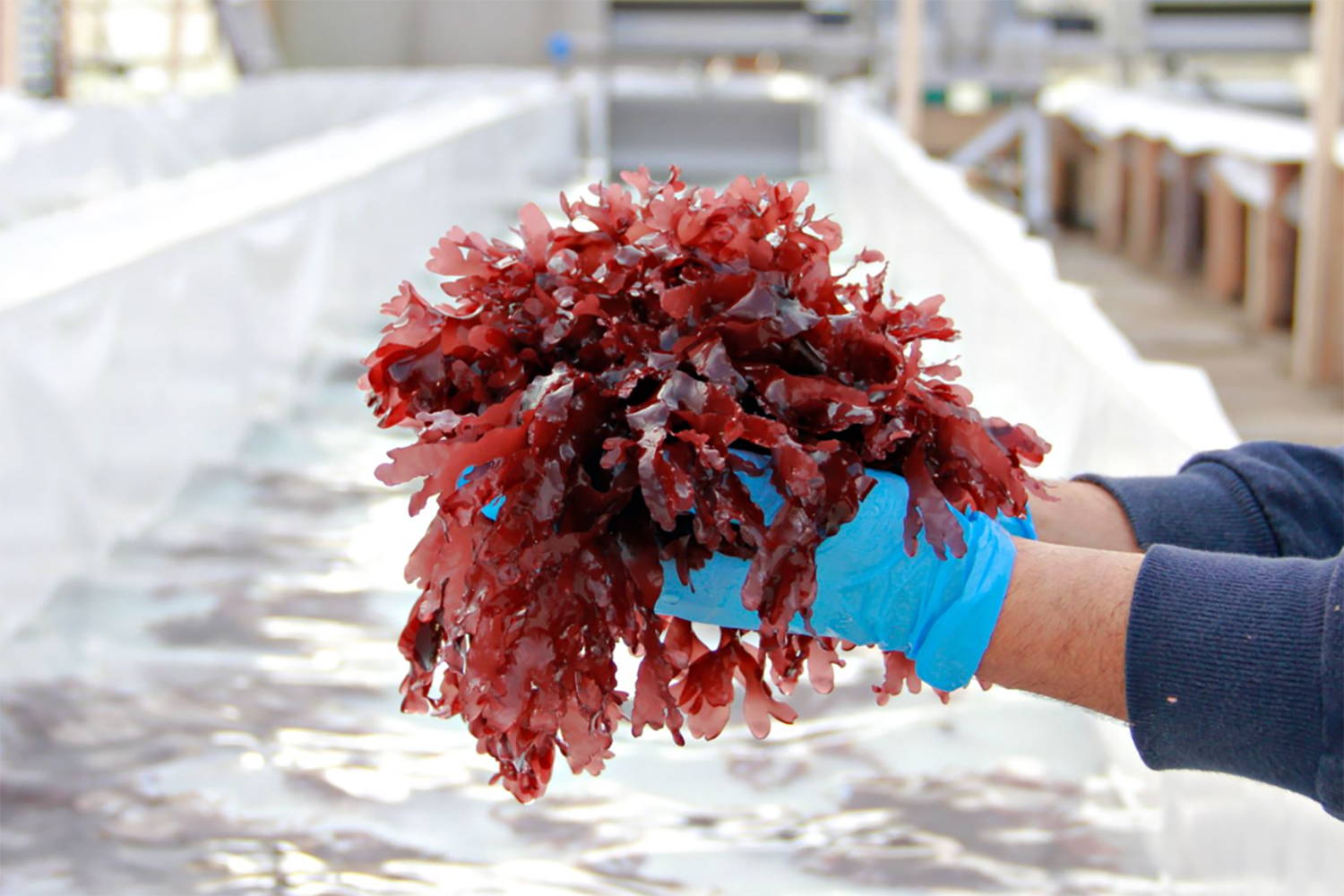
That same year, he launched Seaweedland, building a research and development seaweed production facility in Heerhugowaard. Inside this test facility, Rusticus grows seaweed in raceways like those used for freshwater farmed fish like rainbow trout. Water flow keeps the seaweed moving, driven by a mechanical driver like a paddlewheel, which operates on electricity and solar energy. He adds organic nutrients and carbon dioxide to the water and has been growing dulse and Ulva lactuca with success.
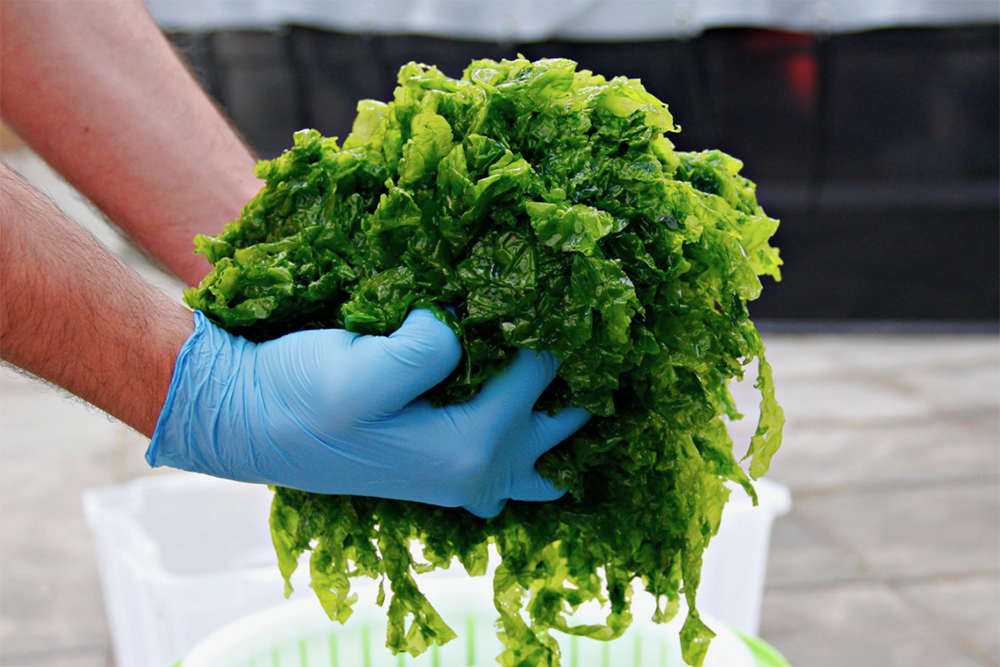
“Our yields are significantly higher compared to ocean-grown seaweed and we can produce 10 times more proteins per meter than soy in our raceways,” he said. “Ocean-grown seaweed always contains pieces of shellfish, and washing and cleaning it takes a lot of energy. The biggest benefit to our product is that it’s allergen-free because our process is controlled. There are no shellfish in our raceways and bacteria levels are significantly lower, so our seaweed has a longer shelf life.”
Partnering with Hortimare, a Dutch seaweed seed cultivator, he is testing Ulva lactuca, dulse, Gracilaria and Asparagopsis. For now, production is limited to 35 kg (77 pounds) of seaweed per week, which is sold to top restaurants in the Netherlands like Michelin-ranked De Librije. But Rusticus sees a strong future for land-grown seaweed with many application opportunities.
“Spice manufacturers are interested in using our seaweed as a salt alternative because it has more of an umami taste, and the hybrid meat market is another huge market coming our way,” he said. “Food manufacturers are exploring hamburgers where 40 percent of the meat is replaced with plant-based products, including seaweed, which contains hydrocolloids, a gelling agent that’s a replacement for fat. By using seaweed, they can eliminate salt and fat, and we expect hospitals and elder care to be the first to jump in on this market.”
Seaweedland is cultivating Asparagopsis as a side project because this species of seaweed can reduce the methane emissions of cows.
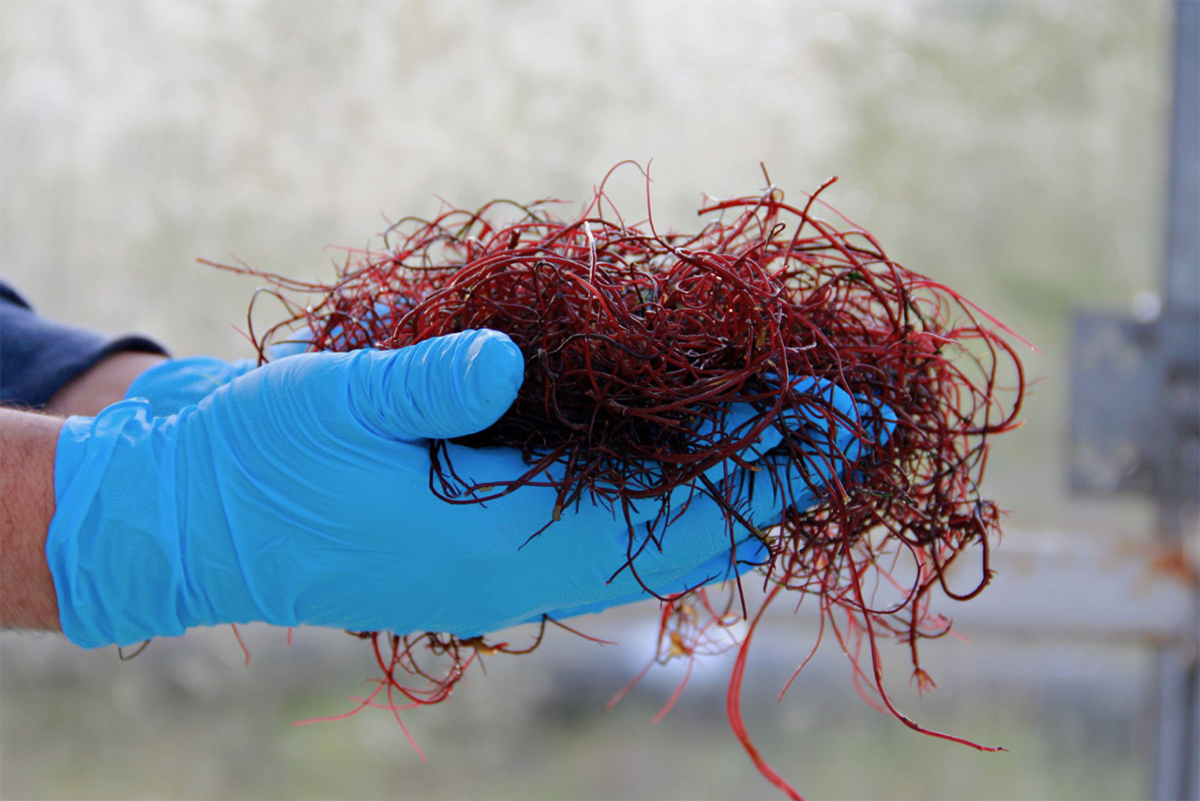
“A lot of emissions in the Netherlands come from cows, and if this works there will be a huge market for Asparagopsis,” he said.
To date, the company’s investment of €5.5 million (U.S. $6.2 million) has been funded by the Northern Development Company, Rusticus’ private equity and grants from the European Union and the Dutch government. The company is actively seeking investors to scale up at locations where salt water is easily accessible.
“We could build raceways in existing greenhouses or new greenhouses,” he said, adding that energy requirements for seaweed aquaculture are much lower than other vegetables. “You could grow a winter Ulva at temperatures ranging from five to 15 degrees Celsius (41 to 59 degrees-Fahrenheit) and switch to a warmer strain in the summer.”
Rusticus estimates that a one-hectare facility capable of producing 200,000 kg (440,924 pounds) of seaweed per year would cost €2 million (U.S. $2.2 million), a price tag that would shrink significantly if the facility was an existing greenhouse. Scaling up from there is much less expensive, he added.
Rusticus’ team is scouting locations for future production facilities and expects to start construction within a year. They envision multiple sites to meet the demand for seaweed but are also considering franchising the technology to entrepreneurs and seaweed growers interested in growing Ulva.”
“I believe there are multiple countries around the world that can benefit from our technology, so my goal is to become a tech developer,” Rusticus said. “I’d like to license the technology to seaweed farmers around the world who could come together, exchange learning and data, and literally put seaweed on the menu in many countries where it’s challenging to grow the product in the ocean.”
Another company offering land-based technology for seaweed cultivation is Pure Algae in Grenaa, Denmark. CEO and founder Esben Christiansen sells photobioreactors that serve as plug-and-play solutions for cultivators.
“It’s essentially a huge tank with lights and other controls over different parameters,” he said. “What differentiates us is we can provide a full solution that enables you to implement all the processes for cultivating seaweed without having to be an expert in the biotech yourself.”
The test labs are 20-by-40-foot shipping containers capable of producing two to four tons of seaweed annually. Christiansen’s goal is to place his systems in RAS land-based fish farms, using a pump to connect the fish farm to the container.
“Land-based fish farms generate lots of nutrients and carbon dioxide, which are good conditions for cultivating seaweed,” he said. “For these farmers, adding seaweed cultivation to their farm adds industrial synergy and allows them to increase their profits.”
It also benefits fish health: “Studies indicate that fish do better if there is Ulva in the system. We expect that fish farmers will be able to increase the value of their fish by using seaweed, which contains complex carbohydrates called bioactive compounds, as a feed supplement.”
Pure Algae is currently developing industrial units and fundraising to continue its research and development. Christiansen said he hopes to have a 10 cubic meter system up and running by the end of the year.
“If we can do this, we could have systems ranging from 20 to 40 cubic meters,” he said, adding that the containers would be too small for systems of that size, but for now, they offer small-scale solutions that work well for building a business model.
The company is testing 20 strains of Ulva lactuca and other red species of seaweed that could be used for consumption and pharmaceutical purposes. To date it has containers in Germany and Denmark.
Now that you've reached the end of the article ...
… please consider supporting GSA’s mission to advance responsible seafood practices through education, advocacy and third-party assurances. The Advocate aims to document the evolution of responsible seafood practices and share the expansive knowledge of our vast network of contributors.
By becoming a Global Seafood Alliance member, you’re ensuring that all of the pre-competitive work we do through member benefits, resources and events can continue. Individual membership costs just $50 a year.
Not a GSA member? Join us.
Author
-

Vancouver-based correspondent Lauren Kramer has written about the seafood industry for the past 15 years.
Related Posts
Innovation & Investment
‘Everyone is going to need a lot of seaweed’: Maine-based seaweed polymer innovator wants fisheries and aquaculture to quit plastics
Viable Gear Founder Katie Weiler joined the Advocate and Aquademia to discuss making lobster bait bags and other products with a seaweed polymer.
Intelligence
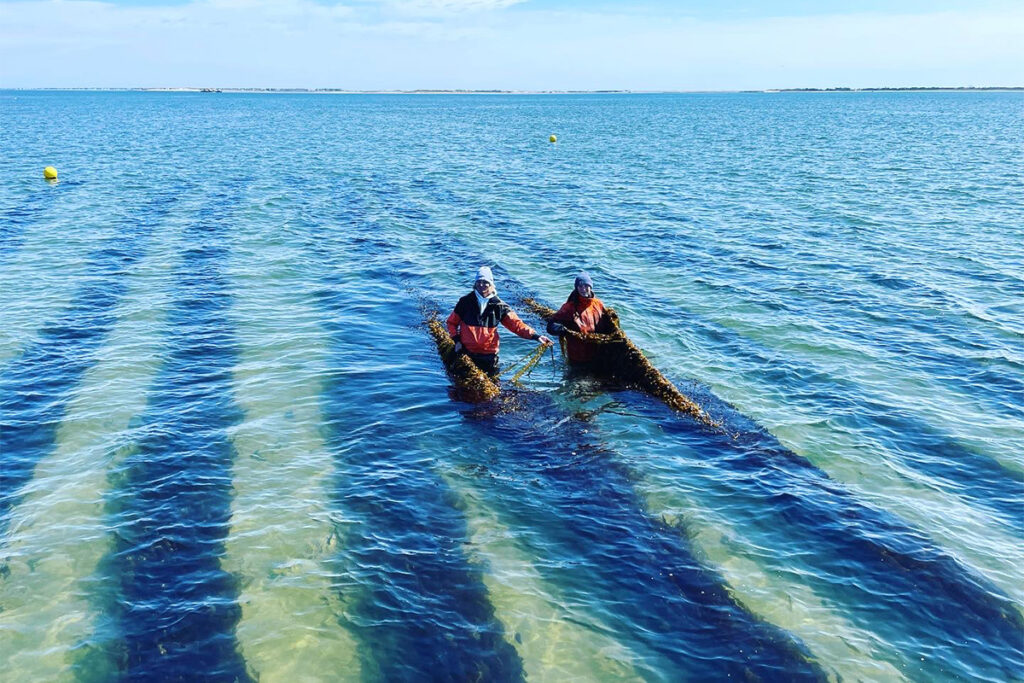
Meet the woman who’s pioneering commercial kelp farming in New York
Former professional basketball player Sue Wicks launches New York’s first commercial kelp farm, spearheading a growing industry for the state.
Intelligence
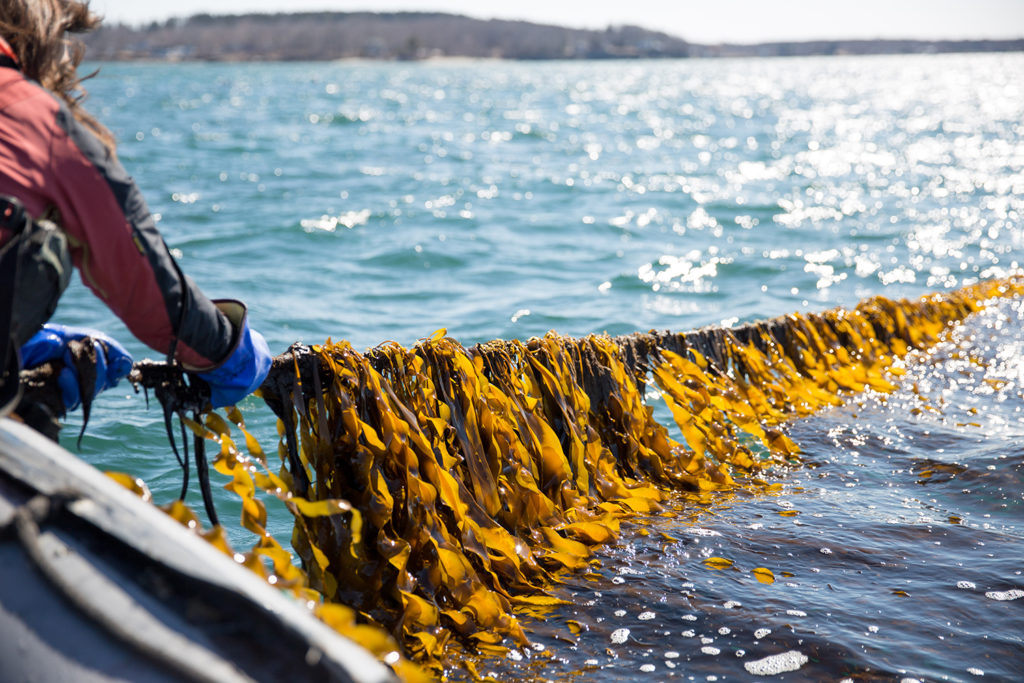
Kelp is the climate-friendly crop that could
Kelp aquaculture is poised for growth on both U.S. coasts, but one grower network in Maine is building a brand and demand for domestic seaweed.
Responsibility
Beefing up seaweed production to green up beef
Josh Goldman is on a mission to reproduce asparagopsis, a tropical seaweed that could have a significant impact on global greenhouse gas emissions.