


Do salmon lice from submerged cages produce larvae that swim deeper?

Findings suggest that vertical swimming behavior may be heritable
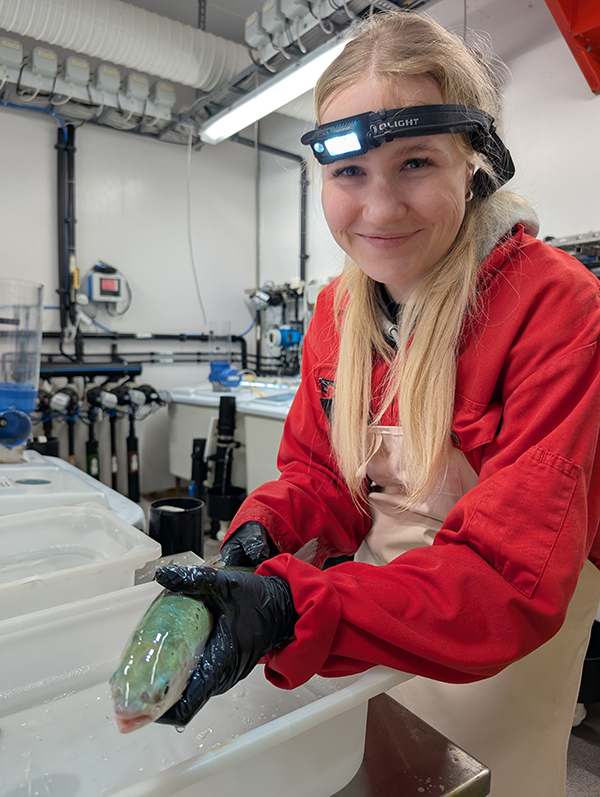
Salmon lice (Lepeophtheirus salmonis) are remarkably adaptable creatures that have given the global farmed salmon industry fits over decades of wide-ranging efforts to mitigate the pests’ impact.
Scientists from Australia and Norway presented evidence for the evolution of resistance to non-chemical parasite controls, showing that lice from submerged cages produce larvae that swim deeper. These findings suggest that vertical swimming behavior may be heritable, with submerged cages potentially selecting for deeper-dwelling lice over time.
The study provides the first evidence that the depth preference of salmon lice larvae may be influenced by their parents’ environment. Understanding this behavioral inheritance is vital to evaluate the long-term sustainability of submerged cage systems and to develop lice management strategies that anticipate evolutionary responses.
The findings could provide insight into whether submerged cages could select genotypes that favor deeper-swimming behavior, potentially influencing the evolutionary niche of pressure preference in sea lice populations and the long-term effectiveness of depth-based preventative technologies.
![Ad for [BSP]](https://www.globalseafood.org/wp-content/uploads/2025/07/BSP_B2B_2025_1050x125.jpg)
“Our study examined whether salmon lice exposed to deeper pressures – such as those in submerged cages (20 to 40 meters) – produce larvae that also prefer deeper water. In pressurized column trials, larvae from submerged-cage parents consistently swam deeper than larvae from standard cages near the surface, suggesting that depth preference might be influenced by parental environment,” corresponding and first author and Ph.D. candidate Lowri Anghara O’Neill told the Advocate.
“Submerged cages remain highly effective and are currently used by fewer than 10 percent of farms in Norway, so any potential evolutionary change would take decades. Such change would require both widespread adoption of the technology (likely more than 50 percent of farms using submerged systems) and confirmation that depth preference is heritable – since we showed only that larvae from submerged cages swim deeper like their parents, not that this behavior is genetically inherited. Still, identifying depth preference as a possible pathway for future adaptation is important for safeguarding the long-term effectiveness of depth-based lice control. We are now investigating whether swimming behavior is indeed a heritable trait in salmon lice.”
Salmon lice pose a major challenge to salmon aquaculture due to their capacity to rapidly evolve resistance to parasite control methods. Their infestations severely compromise the health and welfare of farmed salmon, causing physical damage, skin erosion, reduced swimming performance, osmoregulation failure, secondary infections, immunosuppression, chronic stress and growth-related mortality. These infestations also exert spillback effects that harm wild salmonid populations. In Norway, where farmed salmon constitute more than 99 percent of available hosts, this dominance has eliminated natural host–parasite seasonality, turning farms into year-round high-density lice hotspots and imposing strong evolutionary selection pressure that drives rapid adaptation in salmon lice biology and behavior. As a result, many countries require mandatory anti-lice treatments when infestation thresholds are exceeded.
In this study, the authors examined differences in the vertical movements of copepodid larvae hatched from egg strings collected from adult lice sampled from standard and submerged salmon cages. It was hypothesized that copepodids from standard cages would show a stronger response to hydrostatic pressure by swimming toward the surface, while those from submerged cages would have a weaker response and be more likely to sink. It is known that hydrostatic pressure increases with depth and can influence the behavior and vertical distribution of copepodid larvae, but it remains unclear whether this response is influenced by parental origin or passed down to offspring. To investigate this, experiments were carried out in a laboratory using pressurized water columns to simulate ambient pressure at 10 meters. This setup allowed testing if parental origin, whether from standard or submerged cages, affects the vertical distribution and swimming behavior of larvae.
Cermaq Canada completes first salmon cycle with zero sea lice treatments
Results of this research show a significant interaction between larval depth distribution and the cage type from which the parental lice were sourced. Larvae from standard cages showed a greater tendency to ascend (35 vs. 23 percent) and were less likely to sink (19 vs. 27 percent) compared to larvae from submerged cages. Therefore, the vertical distribution of salmon lice larvae differs significantly based on the cage type occupied by their parental generation, with lice in submerged cages producing offspring with a stronger tendency to sink compared to those from standard cages.
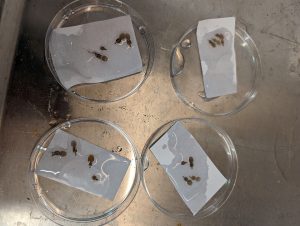
The findings suggest that vertical swimming behavior may be heritable, with submerged cages potentially selecting for deeper-dwelling lice over time. The consistent behavioral patterns of less upward movement at the 10-meter depth pressure level suggest that parental origin influences the response of offspring to hydrostatic pressure in natural environments. This presents the possibility that depth-based prevention methods could favor the selection of deeper-swimming louse genotypes, which may have an improved capacity to infect salmon in submerged cages. Further study is needed to determine whether these traits are heritable, how prevalent they may become, and their potential impact on the long-term effectiveness of submerged cages.
The observed bimodal swimming behavior, characterized by intermittent upward swimming followed by passive sinking, aligns with patterns seen in previous studies and in other planktonic crustaceans. The vertical distributions of plankton are driven by environmental pressures such as food availability and predator evasion, while in the case of lice, host availability has a key role. It is possible that swimming behavior in salmon lice is also influenced by chemical cues from salmon or conspecifics. This may be particularly significant in deeper environments, where host interactions are less common for lice and may present challenges, as they are not typically exposed to these conditions in surface waters.
“Our findings demonstrate that salmon lice larvae exhibit vertical movement patterns that reflect the depth environment of their parental origin,” the authors concluded. “Specifically, larvae from lice collected in submerged cages showed a weaker hydrostatic response, tending to sink more under pressure, while those from standard cages displayed a stronger response, actively swimming toward the surface. These consistent behavioural differences suggest that vertical swimming behavior and depth preference are traits that can be passed from parent to offspring.”
The study was authored by Lowri Angharad O’Neill, Andrew Coates and Tim Dempster of Deakin University (Australia) and Frode Oppedal of the Institute of Marine Research (Norway).
Now that you've reached the end of the article ...
… please consider supporting GSA’s mission to advance responsible seafood practices through education, advocacy and third-party assurances. The Advocate aims to document the evolution of responsible seafood practices and share the expansive knowledge of our vast network of contributors.
By becoming a Global Seafood Alliance member, you’re ensuring that all of the pre-competitive work we do through member benefits, resources and events can continue. Individual membership costs just $50 a year.
Not a GSA member? Join us.
Author
-

Editor Emeritus
Related Posts

Health & Welfare
A shocking innovation: Electric fences show promise in sea lice prevention
Electric fence technology could block sea lice at the infectious stage, boosting fish welfare and cutting costs for salmon farms.
Intelligence
All the way back and then some: The Faroe Islands’ salmon comeback story
Faroe Islands producers say geography, research and efforts to improve environmental sustainability make it ideal for salmon farming.
Health & Welfare
Chem-free fixes emerging in sea lice saga
Salmon farmers, using emerging technologies, are exploring new methods of sea lice mitigation in an effort to overcome one of the industry’s most persistent problems. New chemical-free innovations show an industry eager to adapt and adopt environmentally safe practices.
Health & Welfare
Ballan wrasse offer efficient, environmentally friendly sea lice control
The Ecofish project is developing the commercial rearing of Ballan wrasse and methods for use of the fish to control sea lice in cod and salmon cages.