
GOAL 2018 presentation: Robert Jones, The Nature Conservancy
From the exciting session, "Thoughts on the Future of Aquaculture" at GOAL, is Robert Jones, global aquaculture lead at The Nature Conservancy.
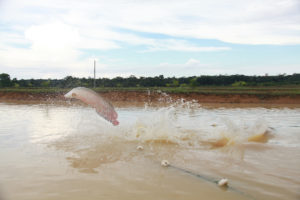
Studies in Brazil over the last five years addressed the challenges facing commercial producers of the important, air-breathing, freshwater fish pirarucu in order to support and expand production.
From the exciting session, "Thoughts on the Future of Aquaculture" at GOAL, is Robert Jones, global aquaculture lead at The Nature Conservancy.
Matthew Thompson of the Anderson Cabot Center for Ocean Life at New England Aquarium speaks as part of the "Thoughts on the Future of Aquaculture in the PechaKucha Style" at GOAL 2018.
Author discusses the development of commercial production of artemia biomass in Peru and Ecuador as an important feed for maturation of shrimp broodstock in hatcheries.
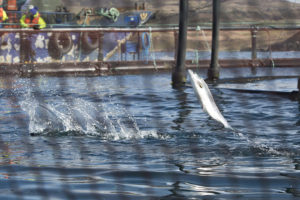
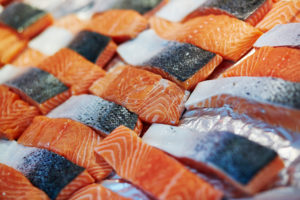
Salmon farms are quite different from terrestrial farms in providing both nutrition and calories. They produce stunningly more of both than their land-based counterparts.
The major sources of ammonia in aquaculture ponds are fertilizers and feeds, and problems with high ammonia are most common in feed-based aquaculture.
Poaching has plagued South Africa’s abalone to the point of decimation. Aquaculture is putting the shellfish back in the water, and back on menus.
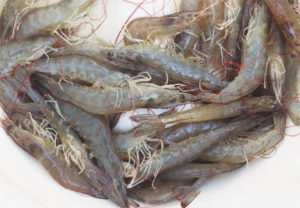
Guatemala’s shrimp-farming growth is due to a highly intensive system of small ponds and shorter cycles. Production of close to 25,000 metric tons is expected in 2018.
Pond microbial communities are a critical and often overlooked component of aquaculture ecosystems. Bacterial amendments like probiotics provide significant support to shrimp farmers around the world.
Researchers based in California are urging the global aquaculture industry to take proactive measures to protect global food security in the face of climate change.
Shrimp hatcheries are highly dependent on continuous availability of clean water and proper treatment of effluents using sedimentation and biofiltration.
Microalgae – an important live feed in shrimp and fish hatcheries – can be produced in both open and closed systems, with the latter having some advantages.
Prof. Claude Boyd discusses the importance of pH for farmed fish and shellfish, the normal and natural fluctuations and how aquaculture systems can manage it.
Despite the positive outputs of the global salmon farming business it remains a target for sharp criticism. In Scotland, the industry’s battle against misleading and inaccurate information reaches a new level.
The Texas Parks and Wildlife Department’s southern flounder stock enhancement has stocked more than 400,000 fingerlings into Texas bays and estuaries.
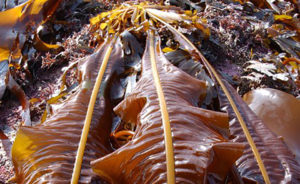
Grown for hundreds of years, seaweed (sugar kelp, specifically) is the fruit of a nascent U.S. aquaculture industry supplying chefs, home cooks and inspiring fresh and frozen food products.