
Evaluating effects of organic acids in Nile tilapia feed
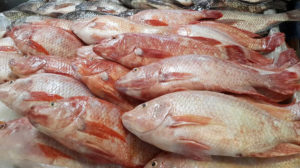
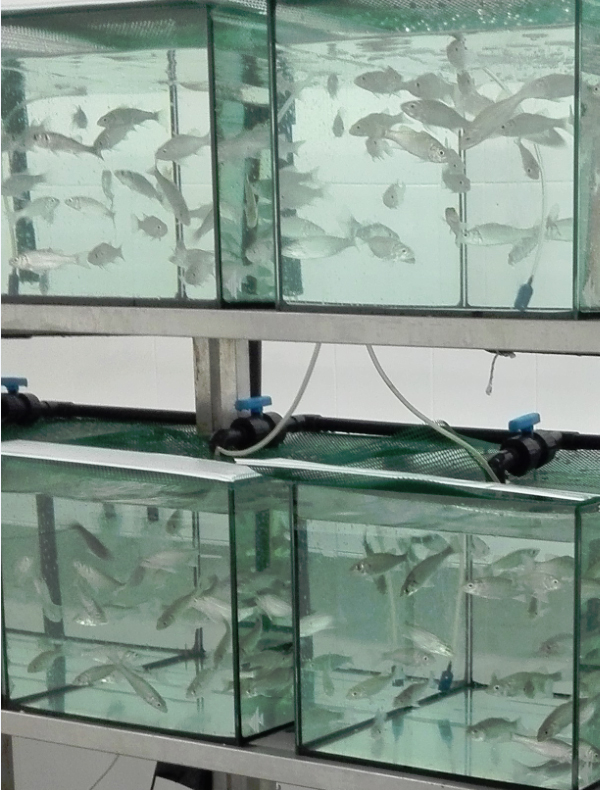
A study tested the effects of a commercial product that includes three organic acids incorporated into a commercial feed for Nile tilapia fingerlings.
This study evaluated the relationship between the molting stage, age and osmotic stress in Pacific white shrimp postlarvae. The results indicate that osmotic stress tests should be done only with at least PL12 at the intermolt stage and that were cultured at 35 ppt salinity and 29 degrees-C.
A study tested the effects of a commercial product that includes three organic acids incorporated into a commercial feed for Nile tilapia fingerlings.
In the second Pecha Kucha presentation from the Global Aquaculture Alliance's annual GOAL conference in Dublin, Ireland, Fanny Giudicelli of Marine Akwa talks about how marine probiotics, derived from seaweed, can help the industry's efforts in combatting infectious diseases.
A look at economic implications of predatory birds on commercial tilapia facilities, and the various control technologies – mostly non-lethal, such as frightening techniques – used by the industry to protect its farmed fish.
At the Global Aquaculture Alliance's annual GOAL conference, held last month in Dublin, Ireland, we introduced a series of Pecha Kucha presentations about the future of aquaculture. We'll feature all seven on the Advocate, starting with Neil Manchester's rapid-fire view at how genetics are improving breeding techniques for aquaculture.
Predatory birds can cause major losses for tilapia farms. As some bird species are protected by law, fish farmers must use non-lethal control techniques.
The Scottish salmon industry is facing criticism following the release of sea lice statistics and acknowledgement that up to 10 million salmon – a quarter of all stocks – were thrown away last year as a result of disease, parasites and other issues.
In this third and final part, authors present recommendations to help reduce the incidence of Zoea-2 Syndrome, which is not caused by any known infectious agents in P. vannamei hatcheries in India.
Indian shrimp hatcheries have experienced larval mortality in the zoea-2 stage, with molt deterioration and resulting in heavy mortality. Authors considered biotic and abiotic factors. Part 2 describes results of their study.
Indian shrimp hatcheries have experienced larval mortality in the zoea-2 stage, with molt deterioration and resulting in heavy mortality. Authors investigated the problem holistically.
A major goal of selective breeding program for Nile tilapia (Oreochromis niloticus) in Egypt is to select for fillet color and fillet weight in response to consumer preferences.
Many shrimp producers give only perfunctory attention to routine biosecurity at hatcheries and farms. A cost-effective biosecurity program for farmed shrimp requires reliable diagnostic tools to make timely decisions to control or exclude pathogens.
In eight genetic improvement programs in seven different countries, growth improvements have been constant in all programs, with annual improvement rates between 5 and 12 percent. Improvements in survival rates are less predictable and less consistent.
Phytoplankton has several important effects on water quality, including removing ammonia nitrogen from water and absorbing nutrients from the water for its growth. Abundance of blue-green algae tends to increase as nutrient inputs in aquafeeds or fertilizers increase.
Stocking the best quality shrimp postlarvae, healthy and free of pathogens, is a critical management step with significant effects on the production and profitability of a shrimp farm.
DNA barcoding and nucleic acid sequencing technologies are important tools to build and maintain an identification library of aquacultured and other aquatic species that is accessible online for the scientific, commercial and regulatory communities.