


BioMar more than doubles vitamin D levels in its farmed salmon diets

Company’s research showed benefits to the nutritional value for consumers
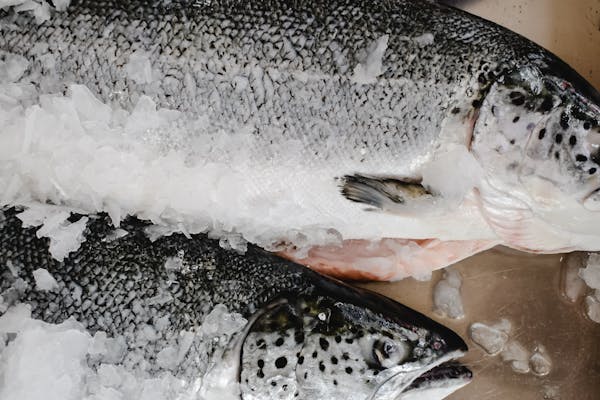
Aquafeed giant BioMar has more than doubled the vitamin D3 levels in all of its farmed salmon feed diets, a move backed by new research showing benefits for both fish health and human nutrition.
The change follows a 2019 decision by the European Union to raise the allowable vitamin D3 limit in salmonid feed from 2,500 to 60,000 IU per kilogram.
Research by BioMar found that higher levels of the vitamin led to a proportional increase in the salmon fillet’s nutritional content without affecting fish growth, feed intake or efficiency.
“Vitamin D is crucial for fish health, supporting bone development, calcium regulation and immune function,” said Pedro Gómez Requeni, senior R&D scientist at BioMar. “Our research confirms that feeds with optimized vitamin D3 levels enriched fillet vitamin D content while maintaining an optimal fish performance.”
![Ad for [membership]](https://www.globalseafood.org/wp-content/uploads/2025/07/membership_web2025_1050x125.gif)
By adopting the higher permitted levels of vitamin D3, BioMar has integrated the change across all salmon diets, meaning farmers will now receive feed that supports optimal fish performance while also enhancing the nutritional profile of the final product. The shift is expected to help producers meet growing consumer demand for nutrient-rich foods and offer greater market differentiation for farmed salmon.
“Consumers are becoming more aware of the importance of vitamin D for their health,” said Simon Wadsworth, R&D director at BioMar. “By formulating feeds that naturally enrich fish fillets, we are helping farmers offer products with added value and supporting public health goals.”
The increased vitamin D3 levels in salmon fillets are expected to contribute to higher dietary intake among consumers, offering a potential nutritional benefit at a time when vitamin D insufficiency remains common in many populations.
“This is a practical formulation improvement with wide-reaching impact,” said Wadsworth. “It supports healthier fish, helps farmers differentiate their products, and offers consumers an improved nutritional profile.”
Now that you've reached the end of the article ...
… please consider supporting GSA’s mission to advance responsible seafood practices through education, advocacy and third-party assurances. The Advocate aims to document the evolution of responsible seafood practices and share the expansive knowledge of our vast network of contributors.
By becoming a Global Seafood Alliance member, you’re ensuring that all of the pre-competitive work we do through member benefits, resources and events can continue. Individual membership costs just $50 a year.
Not a GSA member? Join us.
Author

Related Posts

Aquafeeds
Yield10 and BioMar to commercialize omega-3 oil made from camelina
BioMar and Yield10 are set to commercialize a camelina crop containing enriched levels of EPA and DHA on par with fish oil.

Aquafeeds
BioMar sources new ingredients to cut carbon emissions in supply chain
BioMar is sourcing Benson Hill ingredients as part of its commitment to cut carbon emissions and build restorative soy supply chains.

Aquafeeds
BioMar and Deep Branch team up to trial single cell protein in salmon feeds
Deep Branch and BioMar will test the performance and digestibility of Proton, a single-cell protein for salmon feeds.
Aquafeeds
BioMar adopts microalgae into aquafeed, hits ‘major sustainability milestone’
Aquafeed supplier BioMar hits a major sustainability goal by reaching 1 million metric tons of salmon feed containing microalgae.