


‘Balancing the conflict’: How Nobify’s AI-powered bird deterrent tech can protect fish farms
Innovation aims to protects aquaculture farms, reduce losses and boost yields in a humane way
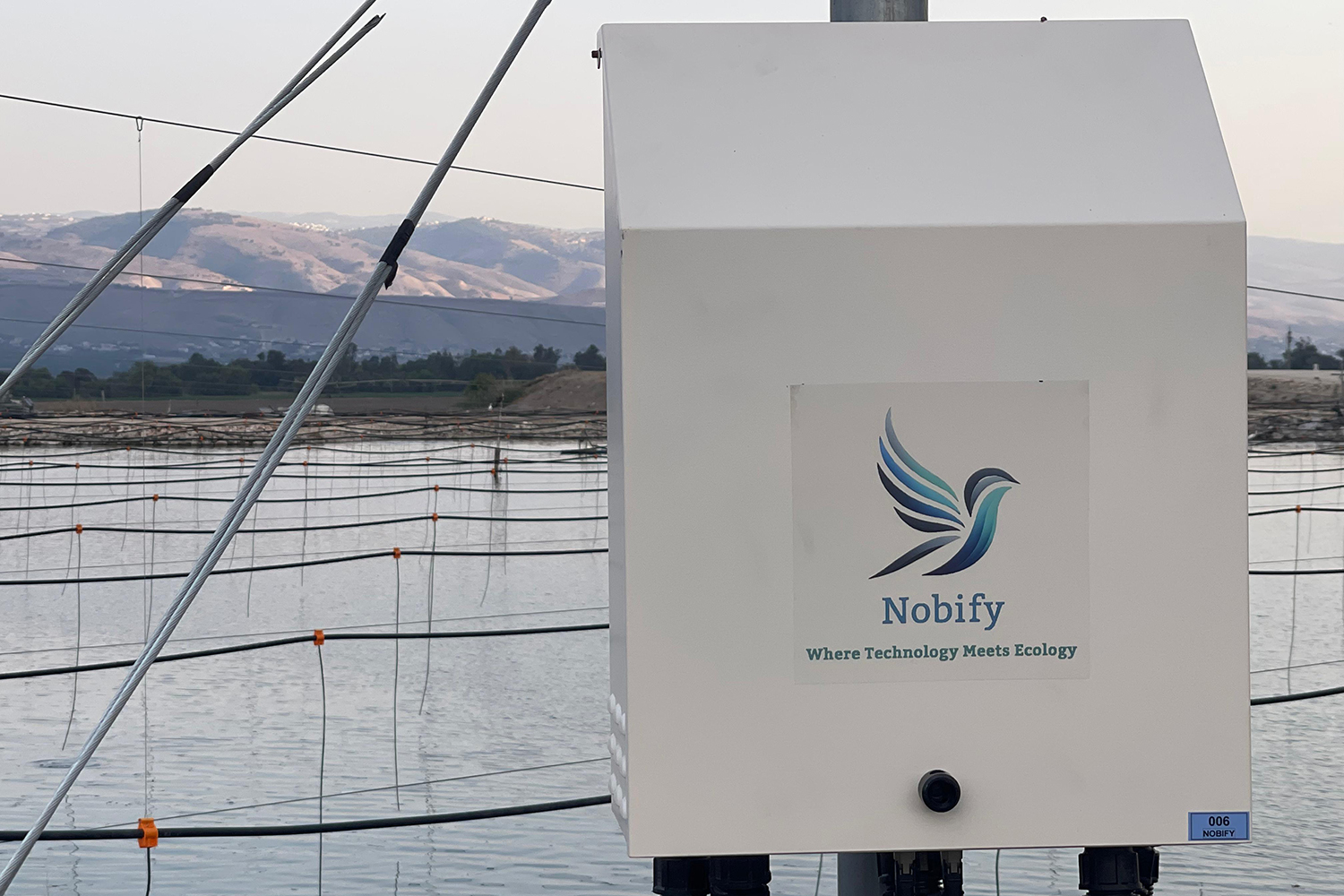
Imagine a bird swoops down toward an aquaculture pond, eyeing an easy meal. But just as it lands, hoses dangling from overhead lines spring to life, blasting air near the bird. Startled, the bird bolts before it can snatch a fish or foul the water with droppings.
That scenario illustrates the high-tech bird deterrent system developed by Nobify, an Israeli startup using environmentally conscious technology to address one of aquaculture’s primary challenges: bird predation. Nobify’s current system protects fish farms, but the company will soon roll out technology to guard shrimp farms.
“Nobify deters birds very, very efficiently from fish farms,” said CEO and co-founder Ofir Tessler told the Advocate. “We prevent damage. We are boosting our customers yields, and we are strengthening global food security.”
Birds pose a triple threat to aquaculture: by eating fish, shrimp or other stock; consuming fish feed; or leaving waste that can contaminate the water. The impact can be significant. The loss from birds feasting on an aquaculture pond can be as high as 45 percent, Tessler said.

The fish eater list includes cormorants, osprey, egrets, herons and ducks, but crows and grackles – species not usually considered a problem – also prey on fish, according to Pennsylvania State University.
Bird waste also presents issues, even when what’s produced by an aquaculture operation isn’t something birds eat. For instance, birds roosting on gear used in oyster farming pose a problem – one that regulators mandate the aquaculture industry address.
“If your shellfish gear may attract birds or mammals, then you have to have a plan to deter them because they might foul the waters,” said Robert Rheault, executive director of the East Coast Shellfish Growers Association. The organization represents more than 2000 shellfish farmers from Maine to Florida and the Gulf states, with bird interactions a top topic among growers.
Toolkit aims to curb bycatch of threatened seabirds in APEC economies
Rheault noted the association has investigated a range of bird deterrents, a category that includes active technologies (like lasers, sound cannons and guards) and passive approaches (like nets, monofilament fibers, bungee cords and streamers). Most approaches don’t work, Rheault said, partly because birds adapt over time.
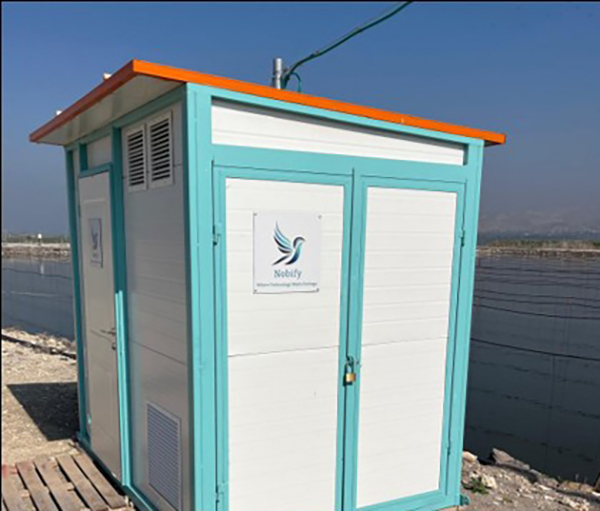
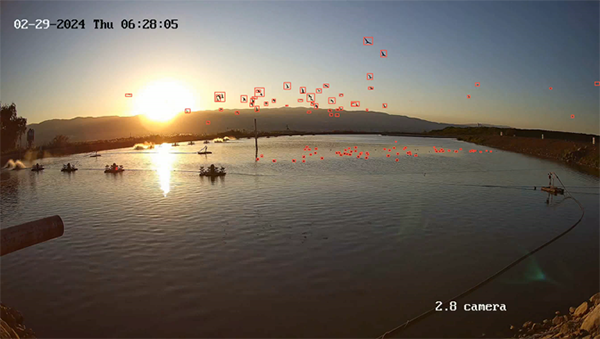
Nobify offers an alternative approach – one based on bird behavior in real time. The company’s system consists of overhead tubing strung across ponds, with hoses dangling at regular intervals from each line. Onshore, a computer housed in a small control unit runs an artificial intelligence (AI) algorithm that analyzes footage from cameras. When a bird appears in the frame, computer models dissect its behavior. If the bird lands, air rushes out of the appropriate hoses, startling the bird and causing it to flee.
According to Tessler, a key part of the company’s “secret sauce” lies in its behavioral models and the system’s operation. The hardware is self-contained, aside from requiring electricity from an external source and intermittent connectivity for over-the-air updates and the like.
When asked about the effectiveness of Nobify’s technology, Tessler pointed to two studies. The first, conducted in December 2024 at the Maoz Haim fish ponds in Israel, assessed bird activity. While nearby fish ponds had 500 to 8,400 birds, a Nobify protected fishpond only had 100.
A second study looked at fish losses over two growing seasons, starting in June 2022, at the Ein HaNatziv fishery. Researchers compared fish losses across three ponds: one protected by the Nobify deterrent system; another covered with bird nets (which Tessler described as Nobify’s main competitor) and a third unprotected pond.
The unprotected pond saw losses as high as 37 percent, while both protected ponds – Nobify and netted – reported no losses. Additionally, the feed conversion ratio of the protected pond was higher, partly due to lower stress from less predation. The system not only protected the fish, but also prevented birds from eating floating fish feed pellets, improving overall efficiency.
Discussing cost, Tessler said that the company uses materials designed to withstand sun and water exposure, with a 10- to 15-year expected lifespan. The open-air design minimizes wind damage – an advantage over traditional netting systems. To optimize efficiency, Nobify operates in segments, activating groups of hoses instead of sending air through each individual hose.
While not divulging exact figures, Tessler said the cost of Nobify’s solution would be comparable to traditional nets, while offering environmental benefits and broader coverage. He estimated the payback period would be under three years, and said that the system is optimal for raising small, high-value fish.
“You need to have a very efficient solution,” he said. “This is the place where Nobify comes and gives a great solution.”
The company plans to launch its products locally in Israel before expanding internationally, starting with the United States and India. Initial targets will be on fish farms, followed by shrimp farms. The global roll out and expansion is set to unfold over the next few years, with pilot demonstrations scheduled this year.
Tessler said the company’s technology reflects a broader vision about what a responsible solution to bird predation should look like.
“Balancing the conflict between birds and fish, birds and men, with fully sustainable ways – we believe this is the right way,” he said.
Now that you've reached the end of the article ...
… please consider supporting GSA’s mission to advance responsible seafood practices through education, advocacy and third-party assurances. The Advocate aims to document the evolution of responsible seafood practices and share the expansive knowledge of our vast network of contributors.
By becoming a Global Seafood Alliance member, you’re ensuring that all of the pre-competitive work we do through member benefits, resources and events can continue. Individual membership costs just $50 a year.
Not a GSA member? Join us.
Author
-
Hank Hogan is a freelance writer based in California who covers science and technology. His work has appeared in publications ranging from Boy’s Life to New Scientist.
Related Posts
Health & Welfare
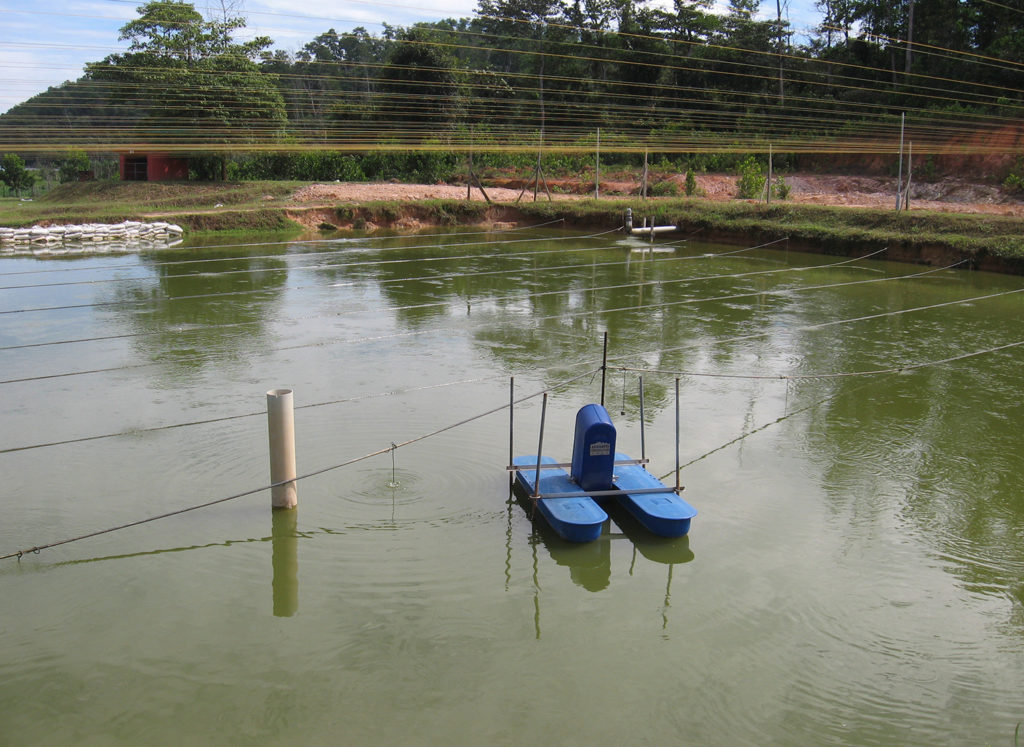
Advice for managing predatory birds, part 1
Predatory birds can cause major losses for tilapia farms. As some bird species are protected by law, fish farmers must use non-lethal control techniques.
Fisheries
‘A world down below’ – Deeper fishing insights lead to better tools for bycatch reduction
High-tech bycatch reduction devices – data analytics, cameras and sensors – are in play but SafetyNet Technologies says the secret is collaboration.
Innovation & Investment
‘AI ticks all the boxes’ and is proving to be a perfect match for aquaculture
Artificial intelligence (AI) is rippling through the aquaculture industry, promising greater efficiencies and insights, as well as investor interest.
Fisheries
‘We were just looking for a way to fish better’: How one partnership is reinventing commercial fishing nets to reduce bycatch and improve animal welfare
Precision Seafood Harvesting’s novel reimagining of commercial fishing nets provides innovative solutions to both bycatch and animal welfare issues.