

As seafood demand rises, Morocco ramps up aquaculture expansion with World Bank support
Morocco to scale up aquaculture through new investments, regulatory reforms and World Bank-supported programs
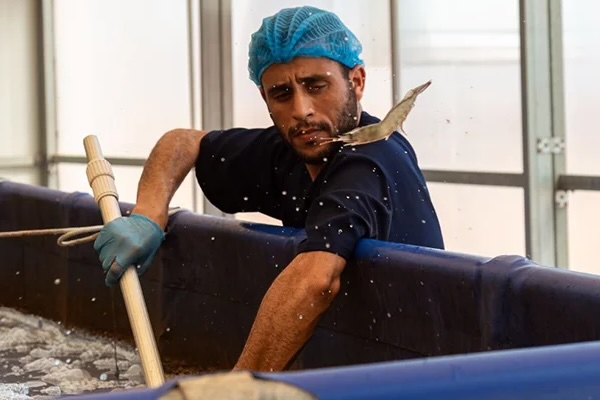
As seafood demand rises, Morocco is working with the World Bank and other partners to expand its aquaculture sector, aiming to lift production capacity and build out coastal infrastructure.
The government plans to raise aquaculture output to 300,000 tons and create 30,000 jobs within the next decade, according to officials and development partners. Current production is about 3,600 tons, but authorities say the country has the capacity to support significantly higher volumes with sustained public and private investment.
Production already includes fish, clams, mussels, oysters, seaweed and shrimp. The government has identified marine areas suitable for aquaculture, introduced updated regulations and increased efforts to connect producers with international markets. Morocco has licensed 322 aquaculture farms, which together target a combined annual production of more than 124,000 tons.
Domestic seafood consumption is rising, driven by population growth and increased awareness of seafood’s nutritional value. Investment opportunities in aquaculture are expected to exceed $1 billion this year, and sector officials say expanded production could reduce reliance on seafood imports.
![Ad for [BSP]](https://www.globalseafood.org/wp-content/uploads/2025/07/BSP_B2B_2025_1050x125.jpg)
“The World Bank Group stands ready to support the Kingdom of Morocco and the National Agency for the Development of Aquaculture in advancing aquaculture as a national priority,” said Ahmadou Moustapha Ndiaye, World Bank Division Director for Maghreb and Malta. “We support streamlining regulations, reducing investment risks and mobilizing financing – leveraging the International Finance Corporation’s leadership to boost private sector participation in this promising sector.”
The World Bank is providing support through a $350 million Program for Results and a $5 million grant from the PROBLUE Multi-Donor Trust Fund. According to the organization, early outcomes include improved management of marine and coastal resources, restoration of coastal forests and dunes and measures designed to reduce flooding and erosion risks.
Additional technical assistance is being delivered through the North Africa Blue Economy Program Phase II, which supports the National Agency for the Development of Aquaculture. The assistance includes research, training in sustainable shrimp production, guidance for aquaculture site selection and the development of a roadmap for expanding seaweed farming.
Morocco hopes its first fish hatchery will advance the aquaculture sector
Some private ventures have received targeted investment under these programs. VitaminSea Morocco, a shrimp farm operating as part of the Blue Economy Program for Results, reports annual production of about 60 tons for local markets.
“With the right investment, we can scale up fivefold to 300 tons per year,” said Driss Krafess, co-founder of VitaminSea Morocco. “While we are still importing larvae from the United States, our goal is to establish a full local production unit and position our company as a competitive player in regional and global shrimp markets.”
Other operators, including seaweed producer SETEXAM, have also received support.
“We are building on the lessons learned since 1960 and experimenting with e-commerce to widen our market,” said Rachid Lebar, director of SETEXAM. “With the right investment, we can scale up production and fully unlock the potential of Morocco’s marine resources.”
According to the Food and Agriculture Organization (FAO), global marine and coastal aquaculture produced 71 million tons in 2022. Morocco’s planned expansion would position it to participate more broadly in that market. Remaining hurdles include limited hatchery capacity, feed production, cold storage and processing infrastructure, according to government and development partner assessments.
Morocco’s aquaculture initiatives continue to develop through a combination of regulatory reforms, investment programs and partnerships with domestic and international stakeholders.
Now that you've reached the end of the article ...
… please consider supporting GSA’s mission to advance responsible seafood practices through education, advocacy and third-party assurances. The Advocate aims to document the evolution of responsible seafood practices and share the expansive knowledge of our vast network of contributors.
By becoming a Global Seafood Alliance member, you’re ensuring that all of the pre-competitive work we do through member benefits, resources and events can continue. Individual membership costs just $50 a year.
Not a GSA member? Join us.
Author

Related Posts
Responsibility
World Bank loan to Morocco will help launch its Blue Economy program
With the loan, Morocco will develop institutional frameworks, improve natural resources management and build a climate-resilient blue economy.
Aquafeeds
Sunlight, seawater and wind: A simple recipe for ambitious algae grower Susewi
Utilizing proven large-scale pond engineering, Susewi aims to become the world’s largest producer of algal biomass, with its sights set on aquafeeds.
Innovation & Investment
Report: Sustainable aquaculture could create more than 20 million jobs by 2050, but investment gaps remain
Sustainable aquaculture could create 22 million jobs, but scaling it requires major investment, policy reform and public-private collaboration.
Innovation & Investment
World Bank releases investment guide for developing sustainable aquaculture
The World Bank has released a guide designed to boost investment in sustainable aquaculture, the world’s fastest-growing food sector.