

Mind the gap: Smart cameras are pushing aquaculture performance into a new phase

Once regarded as mere monitoring tools, autonomous farming systems offer cost reductions, optimize revenue and drive sustainable practices
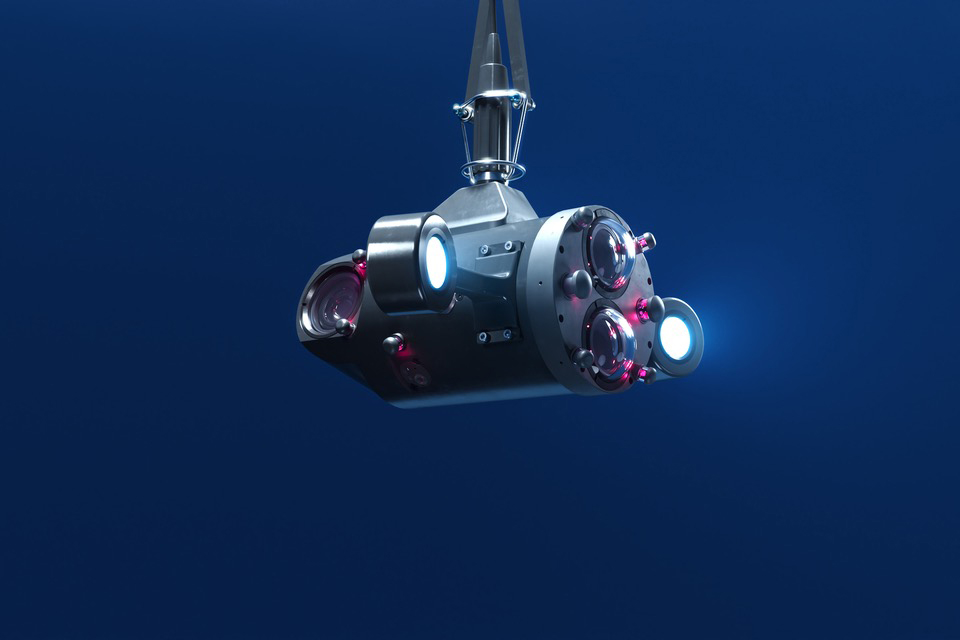
Smart camera technology in aquaculture has crossed a critical threshold. What began as a tool for observation is now embedded in many daily farm operations, driving decisions, automating processes and increasingly intervening in biological systems.
Within the aquaculture space, the salmon farming sector’s adoption of camera systems has been especially speedy. Only a few years ago, smart cameras were just being tested across different farming formats. Today, they are effectively ubiquitous – deployed across ocean net pens, post-smolt systems and increasingly in enclosed and submerged production environments.
This shift has changed their role too. Cameras are no longer peripheral monitoring tools; they are part of core workflows, with farmers relying on them to anticipate problems, adjust feeding and to monitor fish welfare in real time. Essentially, they’ve moved from providing data to delivering decision support.
With this change up, the performance gap between farms with and without these systems is becoming harder to ignore. Continuous monitoring allows operators to track tens of thousands of fish daily rather than relying on small sample sizes, improving both accuracy and responsiveness.
![Ad for [BSP]](https://www.globalseafood.org/wp-content/uploads/2025/07/BSP_B2B_2025_1050x125.jpg)
At a high level, it’s widely recognized that smart camera systems deliver three core benefits:
- Cost reduction: By enabling earlier detection and better monitoring, farmers can reduce treatments and interventions, lowering operational costs.
- Revenue optimization: Accurate biomass and weight estimation, combined with insights into fish distribution and welfare, allows for improved harvesting decisions.
- Sustainability gains: The systems support more efficient, lower-impact farming.
While the smart camera market remains in a growth phase, Olve Christophersen Byre, commercial director at solutions provider ScaleAQ, believes it’s moving quickly toward maturity.
“There are some drivers in the market like submerged pens that require smart cameras to be able to count lice,” he told the Advocate. Byre also pointed to government regulations that he said are leaning more toward smart camera requirements.
“It is still the traditional feeding cameras that are holding the highest volumes, but better technology and increased demand for smart solutions is currently driving the development toward more advanced camera systems,” he said.
Technology that acts
Camera system developers offer many key capabilities to the aquaculture space. These include sea lice detection at scale, with greater consistency than manual sampling, high accuracy biomass estimation, early identification of welfare issues, and feeding support.
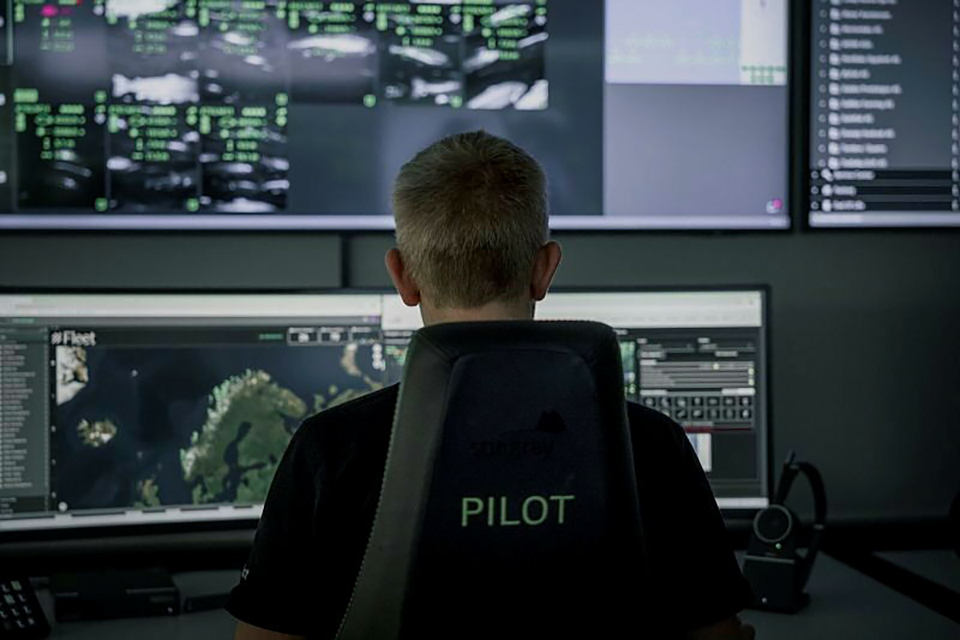
The technology is also now moving from insight to intervention. Norwegian company Stingray Marine Solutions AS, for instance, has developed systems that don’t just detect sea lice – they remove them. Its in-pen laser technology operates continuously, targeting parasites on individual fish, zapping them mosquitos in the back yard.
“This is continuous delousing of fish – 24/7,” said John Harald Pettersen, Stingray’s head of production efficiency.
Stingray has scaled rapidly, reaching more than 30 percent adoption across Norwegian salmon sites. At that level, the impact may be extending beyond individual farms. Indeed, in regions with high uptake, lice pressure appears to be declining more broadly – suggesting that intervention technologies can influence ecosystem-level dynamics.
The most immediate value comes from the reduced need for delousing treatments, which in turn lowers direct costs – operations, logistics, fish handling – and indirectly improves fish welfare and survival, Pettersen explained, adding that many farmers also see benefits through more stable growth and fewer production disruptions.
“In terms of timeframe, customers typically start seeing operational effects relatively quickly – often within the first production cycle – as lice pressure is reduced and treatment frequency drops. However, full ROI is usually realized over one to two production cycles, since the biggest gains come from cumulative effects like improved survival, better growth performance, and avoided treatments over time.”
Consistency, he added, depends on several factors, including:
- Correct system dimensioning and placement.
- Overall lice pressure in the region.
- Integration with other control measures.
- Operational follow-up and maintenance.
Where the system is well implemented and used as part of an integrated lice strategy, the economic benefits tend to be both measurable and repeatable, Pettersen said. “But it’s important to position this realistically: Stingray is not a standalone silver bullet – it’s a continuous control tool that delivers the strongest financial impact when combined with good farm management practices.”
The limits of camera-assisted laser technology are mostly where a system’s core assumptions are challenged, Pettersen said. The camera must see the fish and lice clearly, fish must pass within effective range, and there must be enough installed capacity relative to biomass and infection pressure.
As such, it may be less effective under conditions that create poor visibility, heavy fouling, extreme turbidity, strong currents, unusual fish distribution, very high lice pressure, suboptimal node placement, or operational downtime. Biological factors also matter: Fish size, swimming behavior, welfare status and the location of the lice on the fish can all affect detection and targeting.
Adding capabilities
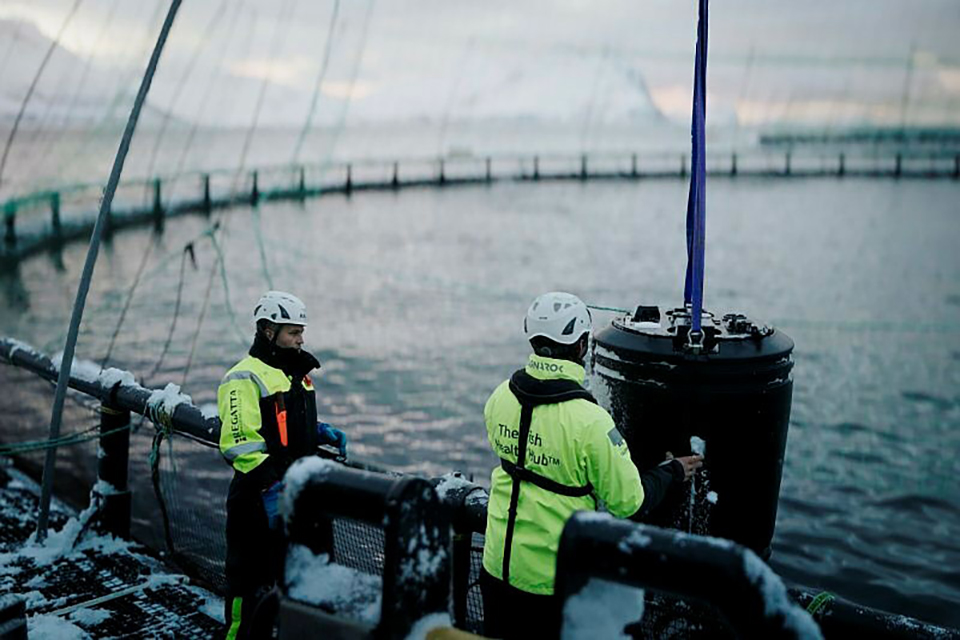
With delousing now well established as the core value proposition, it’s expected that Stingray will evolve into a “fish health hub” – a platform that goes far beyond lice removal, Pettersen said.
“Already today, the system provides a wide range of biological insights. We measure weight, length and size distribution, detect and categorize wounds, identify mature fish, and both count and classify sea lice. Together, this builds a more complete and continuous welfare score for the fish, rather than focusing on a single parameter. We are continuously expanding this capability, with several new detectors in development, and we expect the platform to keep evolving with additional functionality over time.”
Looking ahead, a key shift will be from reactive to predictive control, he said. “By leveraging trends and historical data, we aim to develop forecasting models that can identify cages at risk, anticipate lice pressure and recommend actions before thresholds are reached.”
Integration will also play a central role. Today, customers can already integrate Stingray data into their own data warehouses via APIs (application program interfaces). But going forward, it’s envisioned this will become increasingly “bi-directional,” where data from customer systems – such as environmental data, feeding and biomass models – can also be integrated into StingrayOnline.
“This will enable more context-aware insights and better decision support across the entire farm operation,” Pettersen said.
“Ultimately, future differentiation will come from the combination of actionable data insights, predictive capabilities and seamless integration into the farmer’s digital ecosystem, with automation supporting these areas rather than being a goal in itself.”
In-pen consolidation
While Stingray represents intervention, ScaleAQ is targeting consolidation. Its bet is that the future is not more cameras, but fewer, more capable ones.
Its newly launched Orbit One integrates lice detection, biomass estimation, environmental monitoring and feeding support into a unit small enough to be handled by a single operator. Automated positioning via a smart winch allows it to move through predefined inspection points, reducing manual workload.
According to Byre, Orbit One has the most light-sensitive camera module on the market. As such, its performance in challenging conditions is “really good,” he said.
The new system also reflects a growing demand among farmers to simplify in-pen technology. Rather than deploying multiple standalone tools, the company is combining feeding cameras, environmental sensors and AI-driven analytics into a single platform.
“Our strategy is to replace multiple systems with one Orbit One in each pen,” Byre said.
“Until now, the specialist technologies have been a supplement to the traditional feeding cameras, but there has for many years been a wish among farmers to have an all-in-one solution. They would like to have less equipment in the pen and only one camera system in each pen.
“We believe Orbit One is the camera system that can fulfil our customers’ requirements. Built around 30 years’ experience of developing feeding cameras to the market.”
Byre said that while it’s still too early to share the data from Orbit One’s early deployments, all the tests performed so far are “looking really good.”
Long-term it will probably evolve into a more automated system, he added.
The feeding gap
Despite rapid progress, feeding continues to present the most significant challenge to smart camera systems. Cameras provide a partial view of fish behavior, but feeding decisions require a full understanding of how fish move, respond and distribute themselves throughout the pen.
“Feeding is a complex task to solve even [with] advanced camera technology,” Byre said. “We believe in semi-autonomous solutions (pellet detection) for the time being. Maybe a combination between different technologies would be the breakthrough for autonomous feeding – in the future.”
This also points toward the broader shift to fully integrated smart farming systems.
As for farmers’ expectations of camera systems, he said that first and foremost, they’re looking for excellent image quality and reliable systems.
“Then we see more expectations towards better understanding of the fish by monitoring the lice situation, weight, welfare and behavior.”
What’s already clear is that with Stingray scaling production from hundreds to thousands of units and ScaleAQ’s first Orbit One batch selling out, smart camera category is no longer emerging. Rather, it’s fast becoming the backbone of modern aquaculture – and probably the platform on which the next generation of farming systems will be built.
Now that you've reached the end of the article ...
… please consider supporting GSA’s mission to advance responsible seafood practices through education, advocacy and third-party assurances. The Advocate aims to document the evolution of responsible seafood practices and share the expansive knowledge of our vast network of contributors.
By becoming a Global Seafood Alliance member, you’re ensuring that all of the pre-competitive work we do through member benefits, resources and events can continue. Individual membership costs just $50 a year.
Not a GSA member? Join us.
Author
-

Jason Holland is a London-based writer for the international seafood, aquaculture and fisheries sectors. Jason has accrued more than 25 years’ experience as a B2B journalist, editor and communications consultant – a career that has taken him all over the world. He believes he found his true professional calling in 2004 when he started documenting the many facets of the international seafood industry, and particularly those enterprises and individuals bringing change to it.