


Using genomic models to evaluate meat yield of Pacific white shrimp

Multi-trait genomic models show that meat yield has low heritability
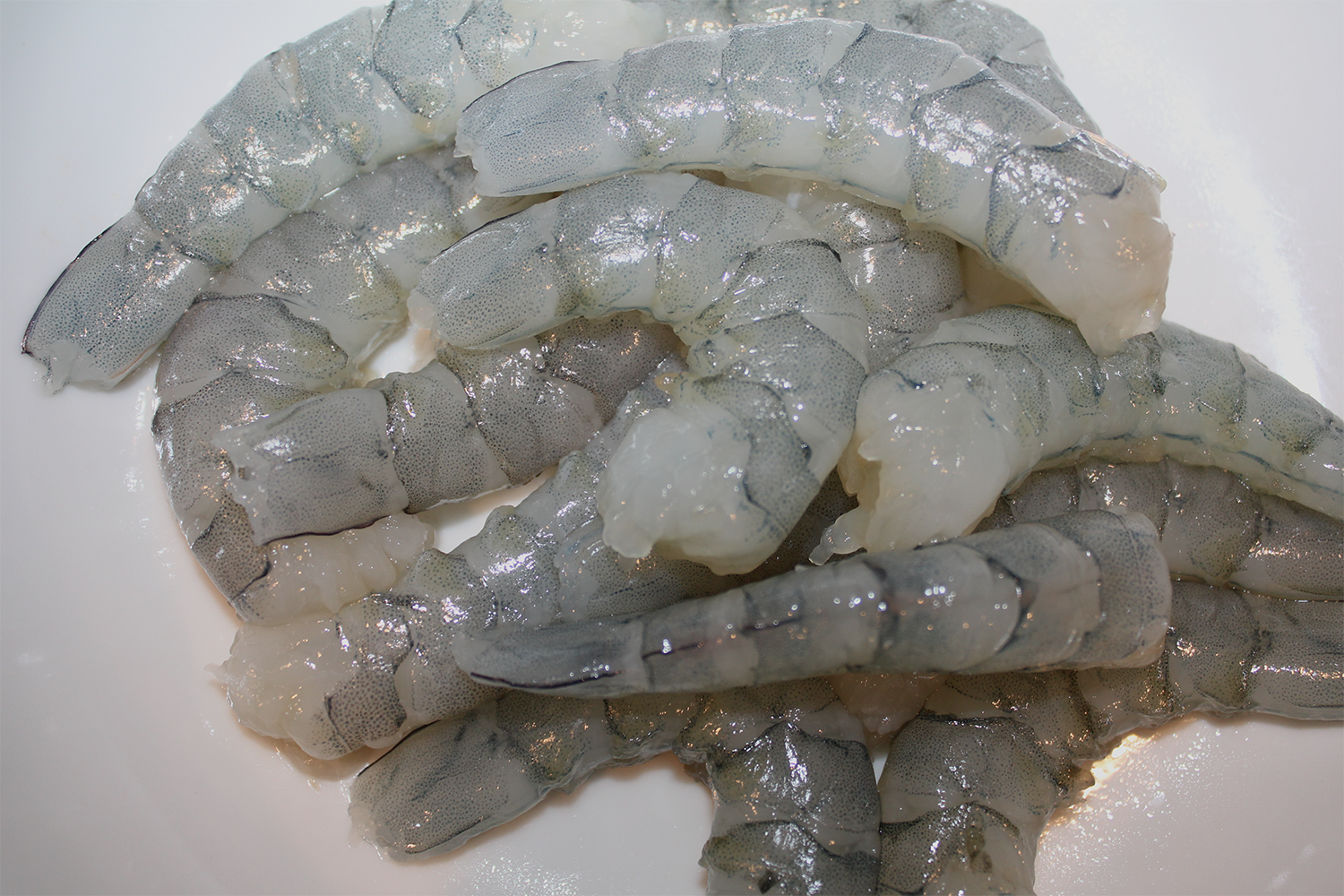
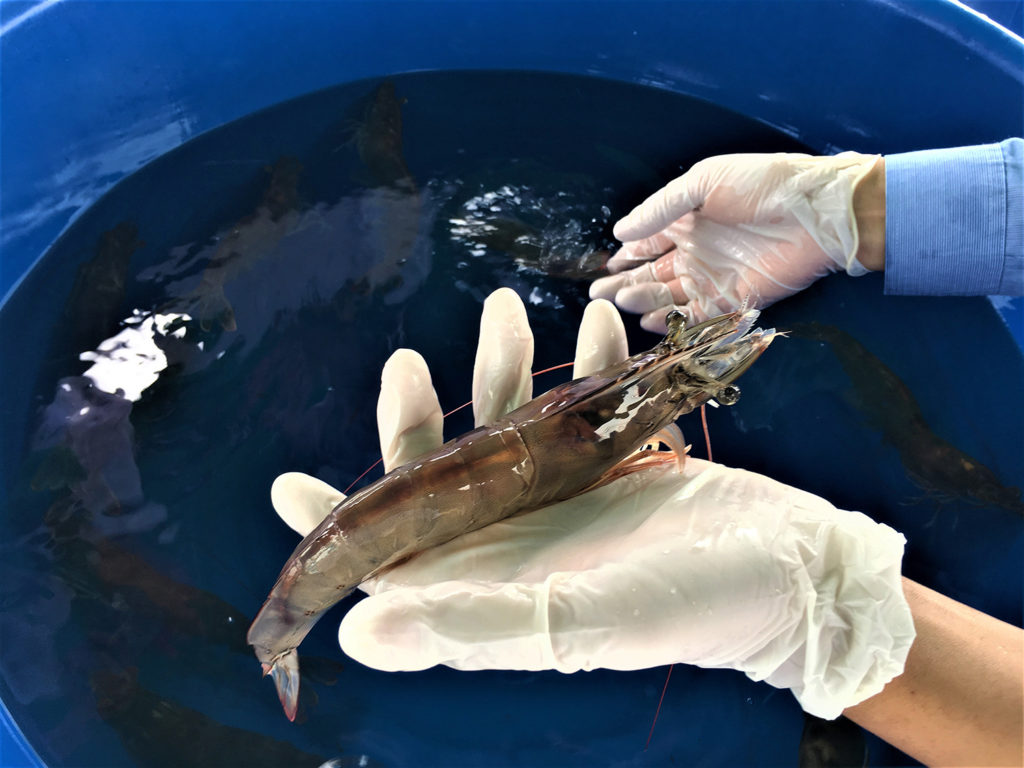
Among the many factors influencing the economic efficiency of shrimp farming – including for the Pacific white shrimp (Penaeus vannamei) – body weight (BW) is a primary economic trait and has been the target in selective breeding programs. However, because the shrimp head (cephalothorax) has relatively low edible value, the proportion of abdominal muscle becomes especially important. This proportion, commonly referred to as meat yield (MY), is defined as the ratio of abdominal muscle weight to the body weight. Increasing the meat yield can significantly enhance the market value and quality of shrimp products, and therefore, the meat yield has gradually become an important breeding criterion.
Most current evaluations of the meat yield still employ single-trait animal models, which directly assess the genetic potential of the meat yield and select individuals with higher breeding values. However, single-trait models do not harness the genetic correlations among different traits. In contrast, multi-trait animal models can simultaneously incorporate information from multiple traits, thereby improving the accuracy of genetic evaluations.
In P. vannamei, the genetic evaluations of meat yield thus far have largely relied on pBLUP (the Pedigree-based Best Linear Unbiased Prediction method has been widely adopted in aquaculture for predicting the estimated breeding value, due to its capability to account for shared family relationships), and there are no known studies that combine genomic data with multi-trait models for improving the meat yield.
This article – summarized from the original publication (Zhang, S. et al. 2025. Multi-Trait Genomic Prediction of Meat Yield in Pacific Whiteleg Shrimp (Penaeus vannamei). Animals 2025, 15(8), 1165) – presents the results of a study that used genomic information to evaluate the meat yield trait in P. vannamei, comparing the performances of single-trait and two-trait animal models.

We investigated single-trait (STGMs) and multi-trait genomic models (MTGMs) for predicting meat yield and related traits, using two cross-validation strategies reflecting different data-availability scenarios. A total of 899 individuals from 63 full-sibling families were phenotyped for MY, net meat weight (MW), body weight (BW), body length (BL) and abdominal segment length (AL). We estimated the genomic heritability and genetic correlations of meat yield and related traits in P. vannamei, followed by comparing the prediction accuracy of STGMs and MTGMs for MY and net meat weight (MW). Two validation approaches were then applied: CV1 retained auxiliary traits in the validation sets, and CV2 excluded both target and auxiliary traits. Refer to the original publication for detailed information on the materials and methods used.
Heritability estimates and influencing factors
Enhancing the meat yield is a key objective in shrimp breeding due to its direct impact on profitability and product quality. In this study, we compared STGMs and MTGMs for predicting the MY and related traits. This is the first study to evaluate the meat yield using a gBLUP (multi-trait genomic best linear unbiased prediction; a method that utilizes genomic relationships to estimate the genetic merit of an individual) model in P. vannamei. Our results provide valuable insights into the genetic architecture of the meat yield and highlight the advantages of incorporating auxiliary traits in genomic selection strategies.
A key finding was the relatively low heritability of the meat yield, estimated between 0.145 and 0.160, which is lower than the 0.231 reported by Dai et al. This discrepancy may stem from differences in shrimp populations, growth stages, or rearing conditions. Our population was older (~200 days) and heavier (mean BW ~27.29 grams) than that in Dai’s study (~60 days post-growth to 5 cm, mean BW ~11.87 grams), potentially reducing the proportion of genetic variance attributable to the meat yield. Some previous studies with other aquacultured species indicate that heritability estimates can vary across developmental stages.
Genetic correlations and multi-trait genomic predictions
Genetic correlations between the meat yield and related traits were consistently strong, with values of 0.783 for the MW, 0.636 for the BW, and 0.605 for the body length. These estimates align with previous studies on P. vannamei and are comparable to those reported in other aquaculture species.
MTGMs, which explicitly leverage these genetic correlations, demonstrated superior predictive accuracy over STGMs in our study. Notably, the MY–MW model achieved the highest improvement in MY prediction, increasing the accuracy by 58.8 percent compared to STGMs. Additionally, the MY–BW model improved the MY prediction from 0.187 to 0.204, while for the MW, the MW–BW and MW–BL models increased the prediction accuracy by 138.2 and 119.3 percent, respectively, over STGMs. Overall, these findings underscore the advantages of MTGMs in carcass trait prediction.
How a plant-based diet impacts genetic improvement, feed efficiency in Pacific white shrimp
Impact of validation strategies on prediction accuracy
To assess the impact of auxiliary traits on genomic prediction, we compared two validation strategies: CV1, where auxiliary traits were retained in the validation set, and CV2, where both target and auxiliary traits were excluded. Retaining auxiliary traits (CV1) significantly boosted the prediction accuracy (up to 138.2 percent), whereas excluding them (CV2) resulted in only marginal gains (≤8.6 percent). These results underscore the critical importance of maintaining comprehensive auxiliary trait records in breeding programs. Other authors have reported results consistent with our findings.
Given the high accuracy of the MTGM in trait evaluations, it is suggested that in practical breeding, the target trait and the trait with a high genetic correlation can be included in the MTGM model to enhance the evaluation accuracy. If both traits can still participate in subsequent breeding after testing, the CV1 scheme can be used, and if the tested individuals cannot be used for breeding, the CV2 scheme is suggested.
Perspectives
This study assessed the effectiveness of the STGM and MTGM for predicting the meat yield in P. vannamei. The heritability of meat yield was low (0.145–0.160), likely influenced by the growth stage and rearing conditions. Strong genetic correlations between the MY and MW, BW, and BL supported the use of MTGMs. MTGMs outperformed STGMs, with the MY–MW model improving MY prediction by 58.8 percent, while MW prediction was enhanced by 138.2 percent and 119.3 percent using MW–BW and MW–BL models, respectively. Retaining auxiliary traits in the validation set significantly boosted accuracy, underscoring the value of multi-trait records in breeding. These findings highlight the potential of MTGM for genomic selection in shrimp breeding.
Now that you've reached the end of the article ...
… please consider supporting GSA’s mission to advance responsible seafood practices through education, advocacy and third-party assurances. The Advocate aims to document the evolution of responsible seafood practices and share the expansive knowledge of our vast network of contributors.
By becoming a Global Seafood Alliance member, you’re ensuring that all of the pre-competitive work we do through member benefits, resources and events can continue. Individual membership costs just $50 a year.
Not a GSA member? Join us.
Authors
-

College of Fisheries and Life Science, Dalian Ocean University, Dalian 116023, China
-
State Key Laboratory of Mariculture Biobreeding and Sustainable Goods, Yellow Sea Fisheries Research Institute, Chinese Academy of Fishery Science, Qingdao 266071, China
-
State Key Laboratory of Mariculture Biobreeding and Sustainable Goods, Yellow Sea Fisheries Research Institute, Chinese Academy of Fishery Science, Qingdao 266071, China
-
State Key Laboratory of Mariculture Biobreeding and Sustainable Goods, Yellow Sea Fisheries Research Institute, Chinese Academy of Fishery Science, Qingdao 266071, China
-
State Key Laboratory of Mariculture Biobreeding and Sustainable Goods, Yellow Sea Fisheries Research Institute, Chinese Academy of Fishery Science, Qingdao 266071, China
-
State Key Laboratory of Mariculture Biobreeding and Sustainable Goods, Yellow Sea Fisheries Research Institute, Chinese Academy of Fishery Science, Qingdao 266071, China
-
State Key Laboratory of Mariculture Biobreeding and Sustainable Goods, Yellow Sea Fisheries Research Institute, Chinese Academy of Fishery Science, Qingdao 266071, China
-
State Key Laboratory of Mariculture Biobreeding and Sustainable Goods, Yellow Sea Fisheries Research Institute, Chinese Academy of Fishery Science, Qingdao 266071, China
-
BLUP Aquabreed Co., Ltd., Weifang 261311, China
-
College of Fisheries and Life Science, Dalian Ocean University, Dalian 116023, China
-
State Key Laboratory of Mariculture Biobreeding and Sustainable Goods, Yellow Sea Fisheries Research Institute, Chinese Academy of Fishery Science, Qingdao 266071, China
-
Corresponding author
State Key Laboratory of Mariculture Biobreeding and Sustainable Goods, Yellow Sea Fisheries Research Institute, Chinese Academy of Fishery Science, Qingdao 266071, China
Related Posts
Health & Welfare
Estimating heritability of WSSV resistance in Pacific white shrimp
A study in Vietnam showed that there was significant variation in WSSV resistance among Pacific white shrimp families evaluated.
Health & Welfare
Estimating heritability of ammonia tolerance in Pacific white shrimp
This study estimated the heritability of ammonia tolerance in Pacific white juveniles. Results suggest that rapid genetic gains could be obtained.
Health & Welfare
Evaluating heritability of growth, cold tolerance in Chinese white shrimp
Results of this study showed low heritability and a low correlation between growth and cold tolerance traits for Chinese white shrimp juveniles.
Health & Welfare
Pooled DNA genotyping with 2b-RAD method for Pacific white shrimp
Study uses the 2b-RAD pooled DNA genotyping method to compare the genetic make-up of four different, small, pooled gene libraries from L. vannamei shrimp.