


‘The power of impact is in all of us’: Day one of 2025 Responsible Seafood Summit charts a more sustainable future for a global industry

The 2025 Responsible Seafood Summit tackled big questions driving responsible fisheries and aquaculture industries
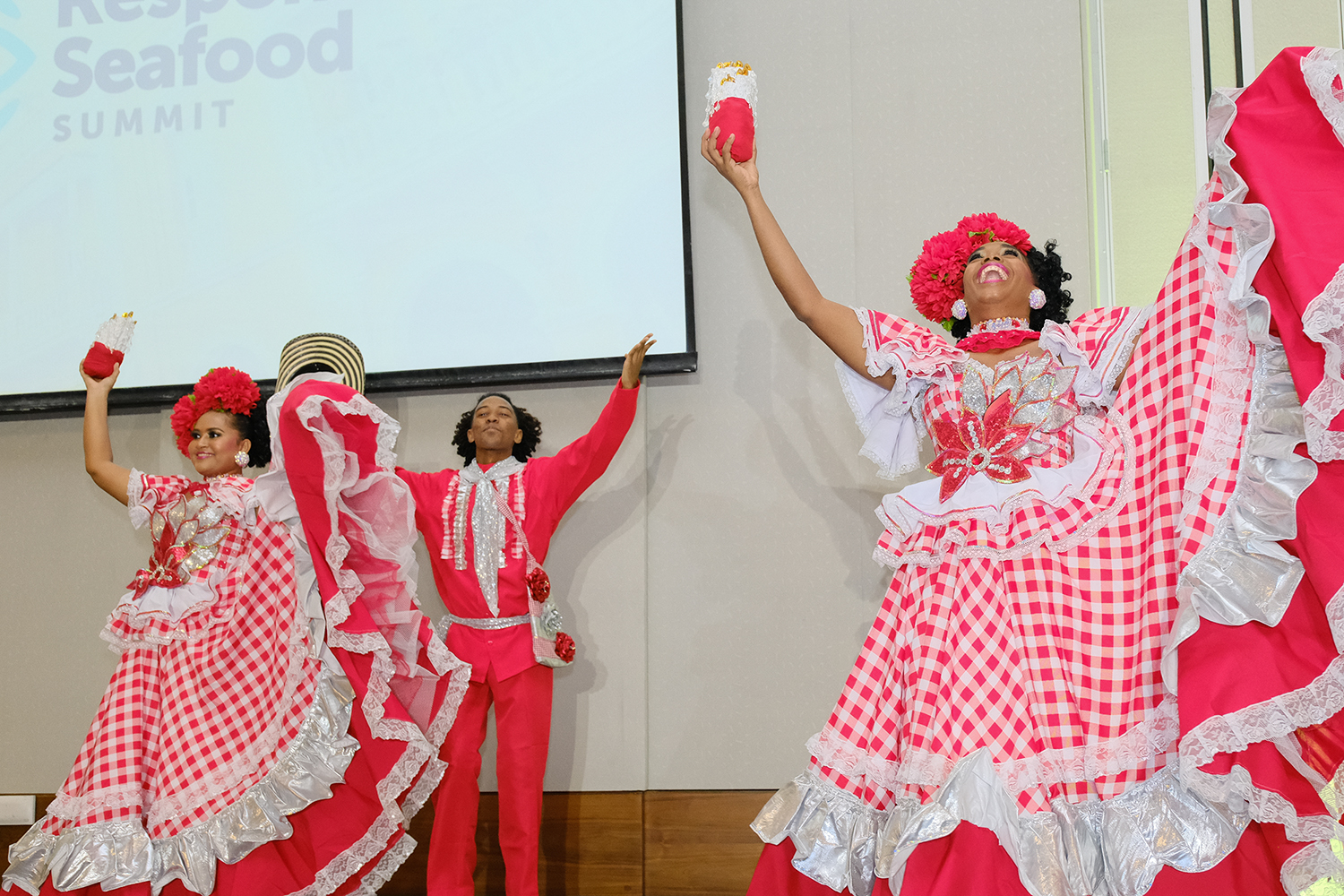
Industry leaders, scientists and professionals from around the world gathered last week in Cartagena, Colombia, for the Responsible Seafood Summit (RSS), an annual event focused on the future of responsible fisheries and aquaculture.
Hosted by the Global Seafood Alliance (GSA), the summit drew a broad range of participants – from supply chain executives and retail buyers to researchers and non-profit advocates – all focused on how the seafood industry can grow responsibly in the face of environmental and economic pressures.
Two days of keynotes, panels, workshops and breakout sessions explored innovative approaches to transparency, climate resilience and social responsibility, all aimed at advancing a more sustainable and equitable seafood sector. Featuring 70 speakers from 20 countries, attendees dug deep into how collaboration can turn sustainability goals into measurable action.
Kicking off with ‘magic of seafood’
The summit opened with a lively performance celebrating Cartagena’s coastal culture, followed by remarks from Mike Kocsis, chief executive of the Global Seafood Alliance. He expanded on the summit’s theme in his opening remarks, emphasizing the far-reaching impact of seafood on nourishment, livelihoods and community.

“It’s estimated that seafood provides over three billion people with at least 20 percent of their daily protein intake,” Kocsis said. “In some regions, that number exceeds 50 percent, with more than a billion people relying on seafood as their primary source of protein.”
Beyond nutrition, Kocsis pointed to the industry’s environmental advantages: “In some cases, this remarkable source of nourishment can be produced with the lowest carbon footprint and greenhouse gas emissions of any animal protein,” he said.
He went on to highlight seafood’s role as a major economic engine. Valued at roughly $500 billion today, the sector could nearly double in size within the next decade, supporting the livelihoods of some 60 million people worldwide.
“For some, [seafood] secures the necessities,” Kocsis noted. “For others, it secures a better future. It’s about the community impact of seafood – about culture, connectivity and bond with the environment, a place or each other. Seafood is the common thread.”
Kocsis closed by urging attendees to consider their own influence within this vast ecosystem.
“Impact isn’t limited to policy or production,” he said. “It’s distributed – in every choice, every action. Our collective impact is powerful when we work together toward a system that values nourishment, livelihoods and community. But that power is wasted without action.”
“This brings me back to you – what’s your impact?” he said. “I believe the power of impact is far more distributed – it’s in all of us, every day. We can touch the other side of the world with the work we do. That’s also why our collective [efforts] can be so powerful – the impact we make when we’re rowing in the same direction and when we choose to set a higher standard.”

The transformative power of aquatic foods
The morning keynote was delivered by Dr. Shakuntala Haraksingh Thilsted, director for Nutrition, Health and Food Security at CGIAR, who spoke about the transformative potential of aquatic foods in nourishing people and the planet. Dr. Thilsted, a pioneer in nutrition-sensitive aquatic food systems, emphasized the wide-reaching benefits of seafood.
“We’ve heard about the big facts already – fatty foods [like aquatic foods] give much more than just protein,” she said, noting their critical role in addressing “global hidden hunger” – the widespread deficiency of essential micronutrients.
She highlighted the scale of the sector, noting that 204 million tons of aquatic foods are expected to be produced by 2030 and that more than 800 million people around the world depend on aquatic food systems for their livelihoods. Yet, she cautioned, the benefits are not shared equally.
“One in every two workers in aquatic food systems is a woman and many more are unaccounted for,” she said. “The majority of women are not compensated for their efforts in the system, leaving many of them vulnerable. This is an area we should consider and talk about.”
Dr. Thilsted described aquatic foods, particularly pelagic small fish and seaweed, as “superfoods” rich in essential micronutrients and fatty acids. These “nutritional powerhouses” can help address nutritional challenges worldwide.
“Evidence has shown that consuming small fish, including the head, bones and viscera, allows children to meet much of their macro and micronutrient needs,” she said.
She shared examples from her work in Bangladesh, where she collaborated with local women to develop a fish chutney using dried small fish in place of mango – a simple, culturally resonant innovation that boosts dietary diversity and nutrition.
Her message extended beyond nutrition to sustainability and innovation, calling attention to the potential of small fish polyculture, waste-to-feed systems and the integration of traditional knowledge with modern technology.
“Everyone is moving forward fast with modern technology and AI,” she said. “But it is important to integrate traditional knowledge and shift processing and consumption patterns to reach more people.”
Dr. Thilsted also pointed to growing recognition of aquatic foods in global policy, including the latest EAT-Lancet 2.0 report.
“[The new report] recognizes aquatic foods as a food group of their own, not mixed with other animal-source foods,” she said.

Is it finally tilapia’s time?
The morning panel turned its attention to tilapia, a species that can be cultivated in a wide range of climates and production systems – and one many see as key to meeting the world’s growing demand for affordable, sustainable protein. Billed as “the world’s most versatile whitefish,” the discussion examined how this species could play a greater role in global food security.
Moderated by Advocate Editor Jamie Wright, the session brought together voices from across regions – Dr. Thilsted, Francisco Murillo (Tropo Farms), Murilo Quintiliano (FAI Farms), Elena Piana (Regal Springs Tilapia) and Angel Rubio (Expana) – to explore tilapia’s nutritional, economic and environmental potential.
Panelists highlighted tilapia’s ability to thrive in diverse climates and production systems, noting its efficiency in converting feed to protein and its accessibility to small-scale farmers.
“For feed conversion, not many species can do what tilapia does,” said Quintiliano. “It’s resilient and adaptable in different environments and waters, and it allows small-scale producers to be part of the supply chain.”
Murillo underscored the fish’s contribution to local diets, noting that about 95 percent of tilapia produced worldwide is consumed locally. In Africa alone, he said, roughly 400 million people live on less than $2 a day, making affordable protein sources essential to food security.
“Tilapia was once called the ‘poor man’s fish,’” he said. “But it’s high-quality protein. We need more affordable protein to feed these people – and the other 800 million who also need it.”
Still, despite its nutritional value and adaptability, tilapia’s reputation has lagged behind its potential. In markets like the United States and Europe, consumers have been slower to embrace this flaky whitefish – a reality that panelist Elena Piana described as both a challenge and an opportunity.
“Tilapia in Europe has a bit of a bad reputation, and it’s also largely an unknown species,” Piana said. “But that offers a fantastic opportunity – a chance to educate consumers on the value of this fish and the protein it can provide.”
Piana added that outdated perceptions and misinformation – including confusion and concerns about farming practices, nutrition and safety – continue to cloud consumer understanding.
“When [misinformation] gets out, people make decisions based on fear,” she said, referring to studies on mercury levels in fish and dietary guidelines for pregnant people. “That’s pushing many pregnant [people] to eat far less seafood than recommended, and that’s affecting children’s sight and brain development.”
Rubio and Murillo acknowledged that consumer perception remains a hurdle, particularly in Western markets where outdated views persist.
“There has to be a movement to change that image,” Rubio said. “With better communication and transparency, we can show consumers the true value of tilapia.”
Yet the panelists expressed optimism that responsible production, transparent communication and improved market education could reposition tilapia as an accessible, sustainable choice for health-conscious consumers.
“We need more affordable protein,” Murillo said. “Tilapia can provide that for the people who need it most.”

Science is on seafood’s side – but the story needs work
Following the discussion on seafood’s role in global food security, the focus turned to health – and how the industry can better communicate seafood’s proven benefits to consumers. In a recorded interview, Dr. Dariush Mozaffarian, a cardiologist, public health researcher and director of the Tufts Food is Medicine Institute, discussed why seafood deserves its reputation as a “health food,” and what it will take to keep it that way.
“Seafood is clearly one of the foods associated with better nutrition and health,” he said. “I think of seafood as a superfood – these are foods that are really essential for everyone.”
Mozaffarian emphasized that omega-3 fatty acids, found primarily in fish and other seafood, are among the most well-studied nutrients in all of nutrition science. Long-term research shows that omega-3s can lower triglycerides and blood pressure, improve vascular function and reduce inflammation.
“I encourage people to get their omega-3s from their diet,” he said. “Supplements can help, but the strongest evidence for long-term benefits comes from diet.”
While Americans have become increasingly focused on protein, Mozaffarian warned that “not all proteins are the same.” Among animal foods, he said, fish ranks at the top for its health benefits, ahead of poultry, eggs and red meat. While the science is on seafood’s side, he warned that many consumers are still stuck in fear and misinformation that too often surrounds seafood.
“There’s been too much focus on potential contaminants, particularly harmful mercury,” he said. “You’re talking about a thousand to one of health benefits versus health risks.”
‘The forecast is uncertainty’: Adapting South America’s seafood trade
As conversations turned from global nutrition to regional trade, three leaders from South America’s top seafood sectors discussed how producers are navigating market volatility, shifting tariffs and sustainability pressures.
Like other parts of the world, Camanchaca’s Alfredo Tello said U.S. tariffs have created “a lot of uncertainty,” forcing companies to diversify markets while maintaining strong relationships with long-time buyers.
Similarly, Clemente Pino of RedFishCo outlined how the company is leveraging “customized presentations and packages” and storytelling to help customers understand the community impact of their seafood.
Yahira Piedrahita from Cámara Nacional de Acuacultura emphasized that price fluctuations and shifting demand make forecasting difficult: “Plans cannot be long-term if things change over time. The forecast is uncertainty.”
Tariffs and trade aren’t the only challenges facing the industry. Over three sessions, attention turned to another major challenge for global seafood: antibiotic use and resistance. Experts from science and aquaculture warned that while progress is being made, antimicrobial resistance (AMR) remains one of the most serious threats to the industry and human and ocean health.
Rolando Ibarra of the Monterey Bay Aquarium explained that antibiotic use in aquaculture is declining overall, but remains difficult to track because most data is based on sales, not actual farm use. “The future isn’t written yet,” he said. “We can choose the right course.”
Andrea Caputo Svensson, a global health advisor with AMS Experts, noted that antibiotic-resistant bacteria caused 1.2 million deaths worldwide in 2021 – a toll on par with malaria and HIV/AIDS. Up to 80 percent of antibiotics used in aquaculture, he said, may be misused, spreading resistance through water, trade and food supply chains.
Yet Svensson pointed to success stories: Norway’s salmon sector has cut antibiotic use by 99 percent through vaccines, and Ecuador’s shrimp farms have slashed usage by 60 percent via biosecurity and probiotics.
From the producer side, Daniel Montoya of BluMar described Chile’s move toward antibiotic-free salmon as “a big change” that “doesn’t just happen overnight.” As he explained, the process isn’t just technical, but involves a shift in corporate culture. Companies have had to elevate the issue “from the veterinarian level to the top executive and shareholder” levels and collaborate across the sector.
“It impacts cost, income, investment, but it goes beyond that,” said Montoya. “It’s about values – our social and environmental responsibility. I think collaboration, transparency, innovation are pillars of the process.”

Shrimp’s slow rebound, led by Ecuador, meets a market reshaped by tariffs
Driven by good demand in the US and Europe, the global shrimp industry is edging back to growth, said Gorjan Nikolik, senior global specialist at Rabobank. Global supply is expected to expand about 3 percent this year and a similar amount next year – modest by historical standards, but a turn in the right direction, nonetheless.
“Global supply is growing again, but [it’s] modest compared to the 7 percent average growth we used to see,” said Nikolik. “It shows the sector is adjusting to new realities.”
The center of gravity is now in Latin America. Ecuador, after a brief lull, has snapped back with double-digit export gains, with growth projected at around 10 to 16 percent this year. Nikolik called the recovery “phenomenal” and said Ecuador is “back in a big way,” reaffirming its status as the world’s top shrimp aquaculture producer.
Mexico, he added, is on track to regain its 2020 production peak by 2026 and – crucially in today’s trade climate – is the only country now shipping to the United States at a zero tariff. Brazil continues to climb with about 11 percent growth in 2024, while Venezuela’s earlier “stellar” rise has stalled amid industry upheaval.
Across Asia, the picture is more subdued. India’s vannamei output has flattened as some farmers pivot to black tiger shrimp. China’s production remains strong, but official figures are debated. Vietnam’s supply seems to be slipping, but official data is difficult to verify. The upshot, Nikolik said, is a shrimp industry that’s growing again – just not at the 7 percent clip the sector once took for granted.
On the demand side, the United States and Europe are doing more of the lifting. New analysis from Kontali shows the U.S. imported roughly 1.1 million metric tons (MT) of live-shrimp-equivalent (LSE) in 2024.
“It’s not only the front-loading because of the tariff situation, it’s also actually good demand within the U.S. market,” said Erwin Termaat, shrimp analyst at Kontali. “The demand in food service and retail affects a big part of the increase in the U.S. market.”
China imported about 974,000 MT of LSE in 2024, while the total domestic supply reached 1.76 million MT. The European Union (EU) imported about 404,000 MT LSE. Most of the world’s demand for black tiger shrimp remains centered in Asia, where consumption has held steady this year.
“The EU is seeing a strong demand, and we expect that to continue until the end of the year, especially with the [upcoming] holiday season,” said Termaat.
Prices and policy are now inseparable. Angel Rubio, lead analyst at Expana, said importers have front-loaded shipments “to beat the tariffs,” leaving U.S. inventories elevated and new shipment costs rising, especially for peeled shrimp.
“If you look [back to] 2022, that’s exactly what happened,” said Rubio. “People imported so much shrimp that they had to hold that inventory all the way through 2023, finally getting rid of the [excess] inventory in 2024 and into 2025.”
Overall, shrimp producers seem cautiously optimistic. Rabobank’s annual survey shows sentiment “nudging to the right,” with more respondents expecting firmer markets and cheaper feed by 2026. Still, the main concerns haven’t changed – market prices and disease remain top risks, with trade barriers moving up the list.
After several sessions defined by data, a panel discussion turned to what comes next.
“Time is up for talking about quality, not just quantity,” said Claudia Salem of Santa Priscila, calling for tighter carbon and water footprints, attention to biodiversity and deeper collaboration across the chain.
Afternoon spotlights traceability, labor issues and regional priorities
Afternoon breakout sessions tackled some of the seafood industry’s next big tests – traceability, fair labor and regional growth. One session explored how companies can move beyond technology toward a “traceability mindset,” embedding transparency into corporate culture and daily operations. Others focused on human rights due diligence and workforce protections across seafood supply chains, while a regional discussion in Spanish highlighted market access, collaboration and modernization as shared priorities across Latin America.
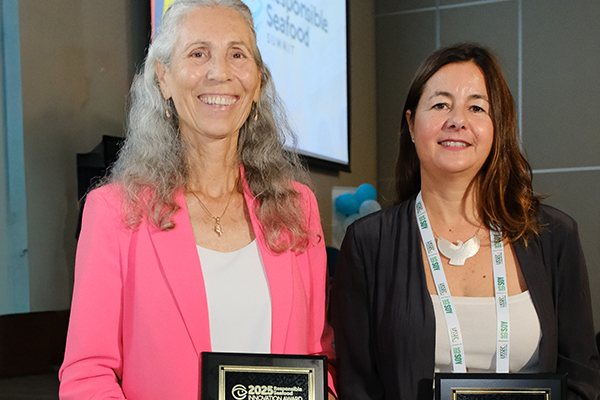
The day wrapped up with the Responsible Seafood Innovation Awards, sponsored by the U.S. Soybean Export Council (USSEC). FAU’s Queen Conch Lab and the ISSF’s Jelly-FAD earned top honors for advancing sustainable aquaculture and fisheries. Read the full coverage of the 2025 Responsible Seafood Innovation Awards.
Now that you've reached the end of the article ...
… please consider supporting GSA’s mission to advance responsible seafood practices through education, advocacy and third-party assurances. The Advocate aims to document the evolution of responsible seafood practices and share the expansive knowledge of our vast network of contributors.
By becoming a Global Seafood Alliance member, you’re ensuring that all of the pre-competitive work we do through member benefits, resources and events can continue. Individual membership costs just $50 a year.
Not a GSA member? Join us.
Author
-

Lisa Jackson is a writer based in Hamilton, Canada, who covers a range of food and environmental issues. Her work has been featured in Al Jazeera News, The Globe & Mail and The Toronto Star.
Related Posts
Innovation & Investment
FAU’s Queen Conch Lab and ISSF’s Jelly-FAD win the 2025 Responsible Seafood Innovation Awards
FAU’s Queen Conch Lab and ISSF’s jelly-FAD win top honors at the Responsible Seafood Summit, advancing sustainable aquaculture and fisheries.
Innovation & Investment
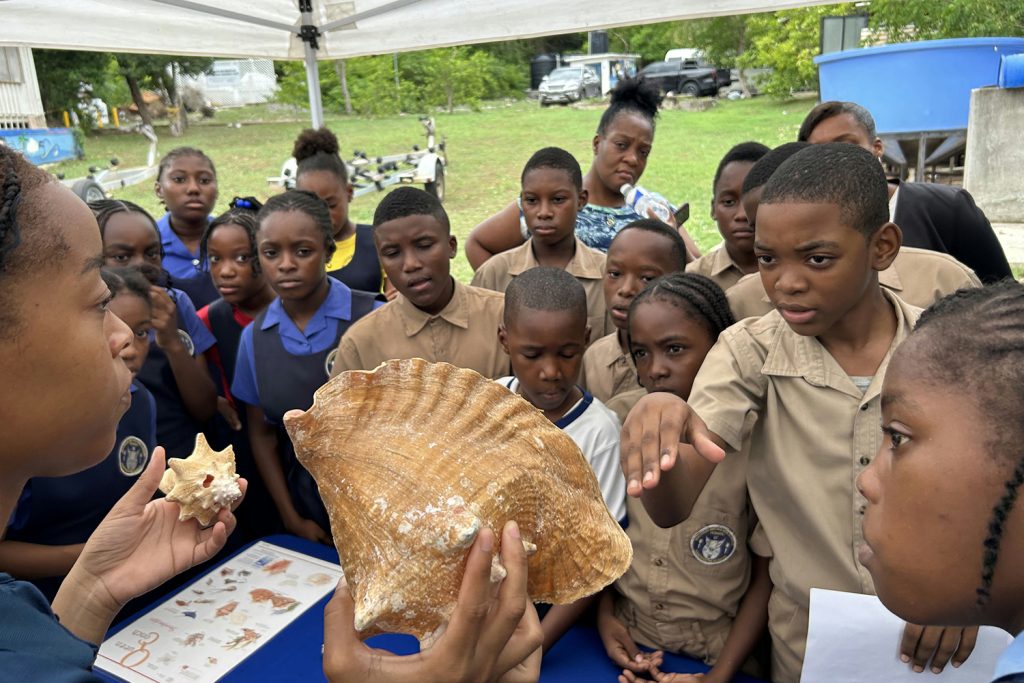
Responsible Seafood Innovation Award finalist: How FAU’s mobile hatcheries could save the Caribbean queen conch – one trailer at a time
FAU’s mobile hatcheries help restore queen conch, protect Caribbean ecosystems and support local communities through sustainable aquaculture.
Health & Welfare
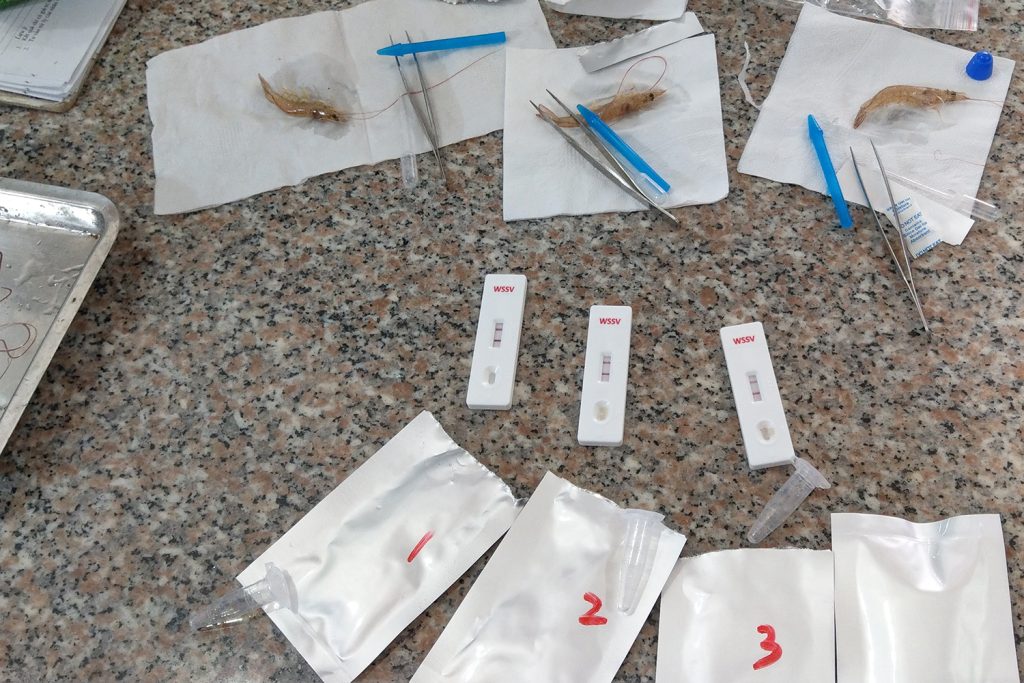
Responsible Aquaculture Innovation Award Finalist: Can InnoCreate Bioscience completely reform pondside white spot syndrome virus detection on shrimp farms?
InnoCreate pioneers the first rapid test for white spot syndrome virus (WSSV), giving shrimp farmers fast, affordable on-site detection.
Aquafeeds
Responsible Seafood Innovation Awards: Blue Food Performance wants the industry to speak the same language on fish-in:fish-out metrics
Blue Food Performance’s FIFO Performance Tool standardizes fish-in:fish-out metrics to strengthen aquaculture, improve transparency and counter misinformation.