


With water treatment tech, has Japanese collaborative cracked the code on sockeye salmon farming?

Collaborative water treatment technology enables the world’s first land-based sockeye salmon production
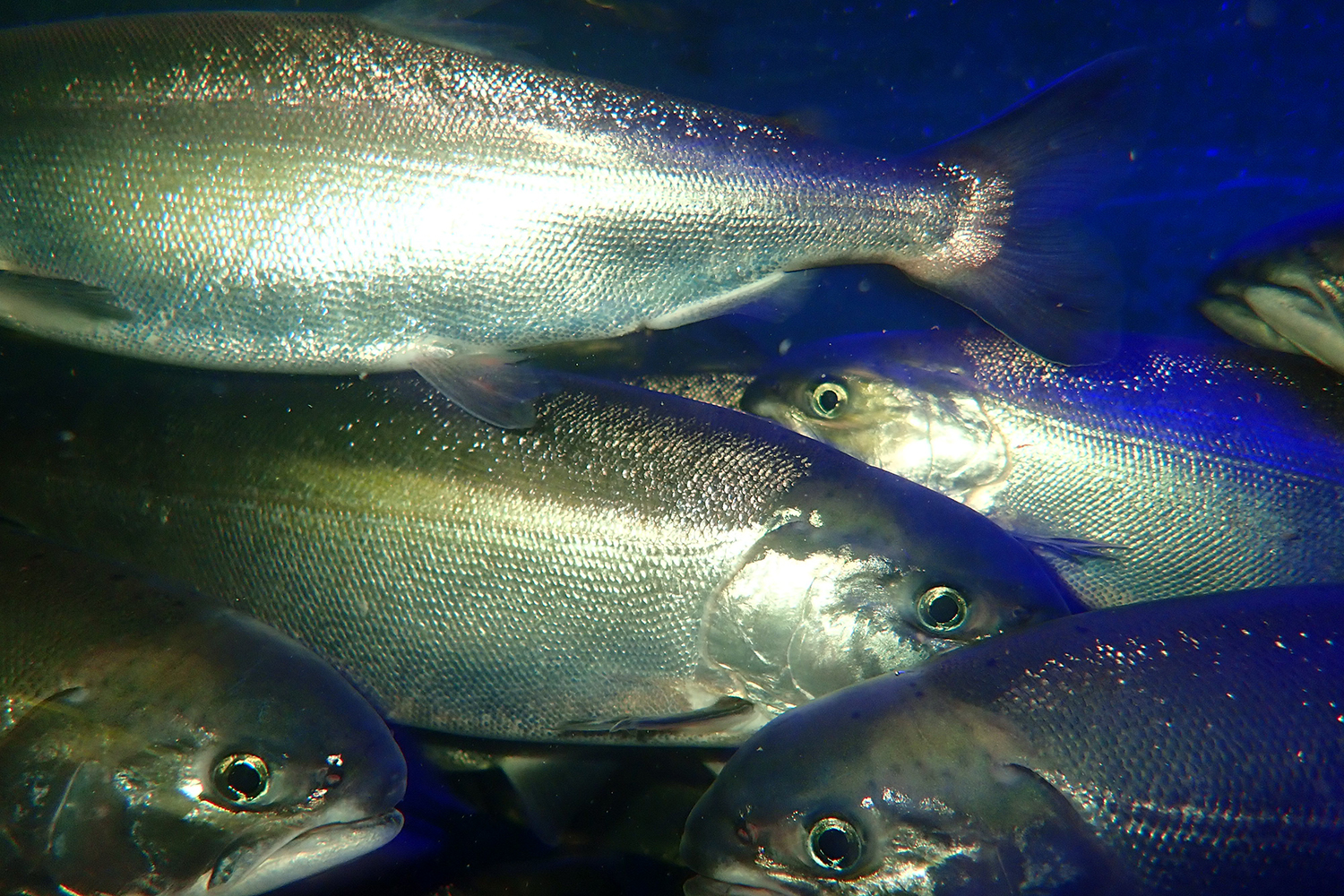
For decades, farming sockeye salmon has been a distant summit for the aquaculture world to climb. The species (Oncorhynchus nerka) is highly susceptible to disease and requires water temperatures below 59 degrees-F (15 degrees-C). Its demands for cold, tightly controlled conditions make it one of the most difficult fish to cultivate.
That might soon change. In Fukushima prefecture, Japan, researchers and industry partners have achieved a global first: a fully land-based sockeye salmon farm. As countries like Japan search for resilient, sustainable aquaculture solutions to address climate change and declining wild fish stocks, the breakthrough could mark a turning point for its aquaculture industry.
The farm relies on new water treatment technology developed by a team at Okayama University of Science (OUS), telecommunications firm Nippon Telegraph and Telephone East Corporation (NTT East), and Ichii Inc., a local supermarket in Fukushima. Work began in 2022, when supermarket employees conducted a customer survey to identify which species to farm. With salmon topping the list, the team decided to go one step further – attempting to raise a species that had never before been successfully farmed, using a precisely engineered rearing system to meet the species’ needs.
“Government statistics also confirm that salmon is the most frequently purchased fish in Japanese households,” Associate Professor Toshimasa Yamamoto at OUS told the Advocate. “While overall household purchases of fresh fish have been declining, the consumption of salmon species continues to rise. There are no separate government statistics for imported sockeye salmon, but we believe that its popularity stems from its vibrant color, fatty meat and rich flavor. Our goal is to revitalize Fukushima prefecture, and we wanted to do this by trying something different.”
![Ad for [Aquademia]](https://www.globalseafood.org/wp-content/uploads/2025/07/aquademia_web2025_1050x125.gif)
Experimental aquaculture of sockeye salmon was conducted for several years in parts of Hokkaido, northern Japan, but had to be suspended due to disease outbreaks. To the best of their knowledge, Yamamoto and his team believe that their farm is the world’s first successful sockeye salmon farming operation.
The team has gotten a helping hand from Third WaterTM – an optimized rearing water developed by Yamamoto. It’s made by selecting a few key elements from the roughly 60 components in seawater and precisely adjusting the ionic balance to create an aquatic environment that supports the health and optimal growth of farmed fish.
Sockeye salmon are born in rivers and migrate to the ocean as smolts, said Yamamoto. Third Water makes it possible to raise the species without seawater, which eliminates the need to transfer the fish between different environments, allowing them to be raised from fry to adult in the same optimized environment. The team identified an ideal water temperature for the rapid growth of the fish and optimized the feeding method.
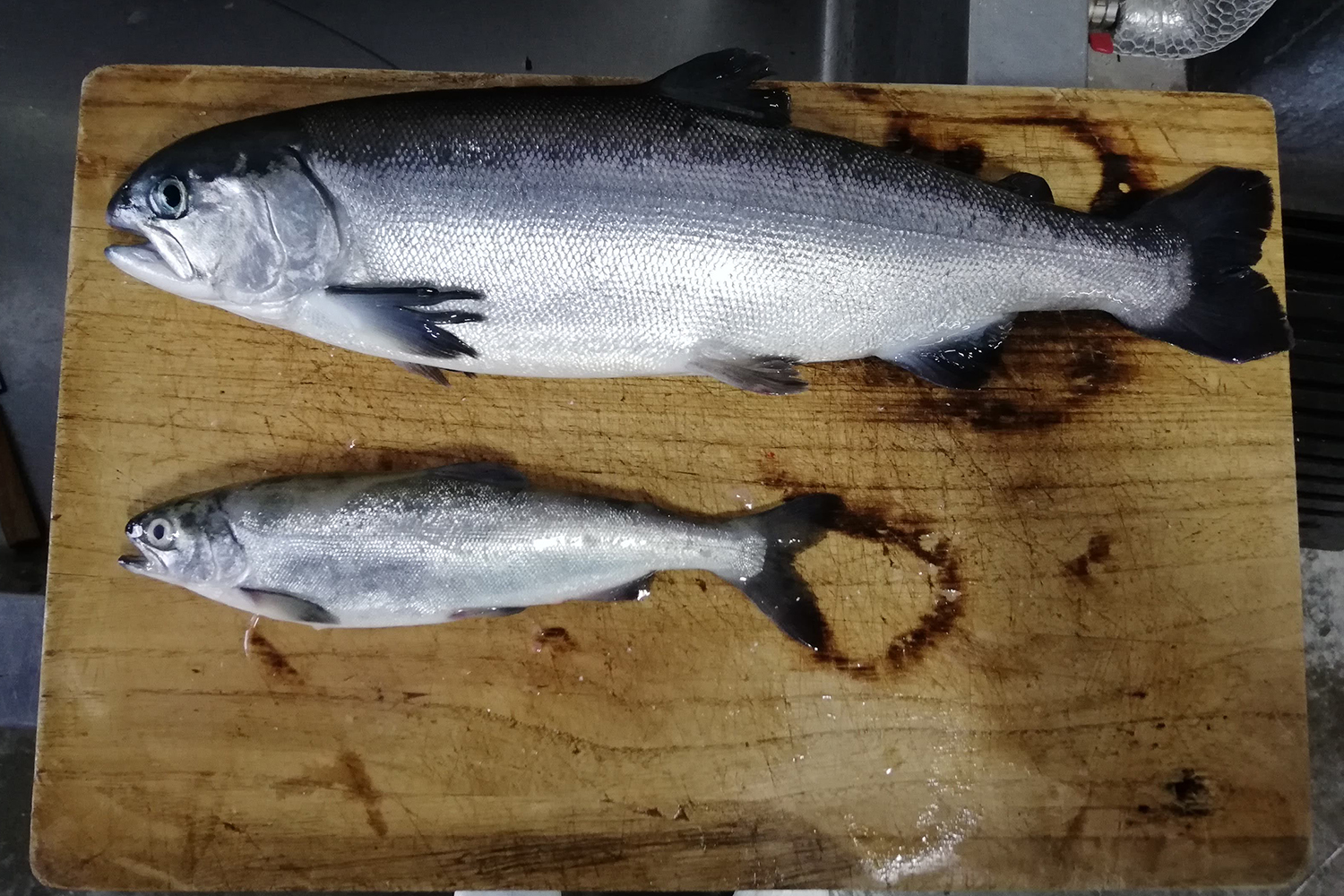
“Third Water is highly filterable and retains its quality over extended periods, making it ideal for long-term use,” said Yamamoto. “We have challenged the conventional belief that freshwater fish must be raised in freshwater and saltwater fish in saltwater and have been researching this concept for nearly 20 years.”
Land-based farming enables effective disease control, is unaffected by weather conditions and provides a stable growth environment with consistently high productivity, Yamamoto believes. However, the initial investment in production equipment can be substantial, while the largest cost factor is electricity, which accounts for nearly half of total operational expenses. Nevertheless, this form of aquaculture is likely to remain important in Japan amidst climate change and the need for a more stable food supply.
“Wild fish, including salmon, are no longer being caught off Japan at levels seen in the past,” said Yamamoto. “Despite strong consumer demand, poor catches of salmon and trout have persisted recently, so there is a growing need for rearing techniques that are resilient to environmental changes like rising sea surface temperatures.”
Can artificial intelligence help solve sturgeon farming riddles in Japan?
“In addition, incidents of farmed salmon escaping in countries like Norway have raised concerns over genetic disruption due to possible interbreeding with wild populations, especially when genetically modified strains are involved,” Yamamoto continued. “Land-based systems are isolated from natural waterways, eliminating the risk of genetic contamination from escaped fish and significantly reducing the environmental impact of marine aquaculture.”
The new farm has a particular resonance for Fukushima prefecture, whose primary industries were rocked by the 2011 Great East Japan Earthquake and Tsunami and ensuing nuclear disaster. This still has ramifications for the prefecture, but hopes are high that farmed sockeye salmon will have positive impacts.
In July 2023, the species was sold at retail locations over a trial period in various forms from sushi and sashimi to fillets and burgers. This drew many visitors and received highly positive feedback, said Yamamoto, with consumers impressed with the texture and flavor of the fish. Based on the results of these sales, Yamamoto and his team are now planning to support the design, construction and operation of a large-scale facility.
The technology and innovations in the sockeye salmon farm, together with the increasing focus on land-based farming across the world, could highlight a significant shift in aquaculture in Japan. For now, however, Yamamoto and his team are looking beyond Japan as they embark on a new, albeit quite unusual, mission.
“As exemplified by the Artemis Program in the United States, our laboratory is now entering an era of space exploration,” said Yamamoto. “Fish farming on the Moon is expected to become a necessary step toward achieving food self-sufficiency. To prepare for this, we have begun hatching experiments involving fish and crustaceans under simulated gravitational and microgravity conditions, with the goal of cultivating them using Third Water on the Moon or Mars. By 2030, we plan to conduct aquaculture experiments aboard the International Space Station.”
Now that you've reached the end of the article ...
… please consider supporting GSA’s mission to advance responsible seafood practices through education, advocacy and third-party assurances. The Advocate aims to document the evolution of responsible seafood practices and share the expansive knowledge of our vast network of contributors.
By becoming a Global Seafood Alliance member, you’re ensuring that all of the pre-competitive work we do through member benefits, resources and events can continue. Individual membership costs just $50 a year.
Not a GSA member? Join us.
Author
-

Correspondent Bonnie Waycott became interested in marine life after learning to snorkel on the Sea of Japan coast near her mother’s hometown. She specializes in aquaculture and fisheries with a particular focus on Japan, and has a keen interest in Tohoku’s aquaculture recovery following the 2011 Great East Japan Earthquake and Tsunami.
Related Posts
Fisheries
‘It’s been done for decades’ – How the upcoming Fukushima water release could impact Japan’s fishing industry
In Japan, discussions continue and concerns grow as authorities prepare for the Fukushima water release into the Pacific Ocean.
Intelligence
Artificial intelligence is taking fish farming (and sushi) in Japan to greater heights
From artificial intelligence to remotely operated vehicles, new technologies offer Japanese aquaculture improved efficiency and insights into fish farming.
Responsibility
Is a Japanese volcano offering us a sneak preview of ocean acidification?
Shikinejima is a scenic getaway for tourists but the seas surrounding its volcano offer a glimpse of how the ocean could behave in the future.
Responsibility
In Japan, aquaculture is deployed in the defense of endangered species
Tokyo University researchers have learned to spawn fish from germline stem cells in vitro, a method that can be deployed to help endangered species.