


Structure and dynamics of southern Gulf of Mexico yellowtail snapper stocks

With increasing catch volumes, study results suggest that a management plan that considers the species population structure is urgent
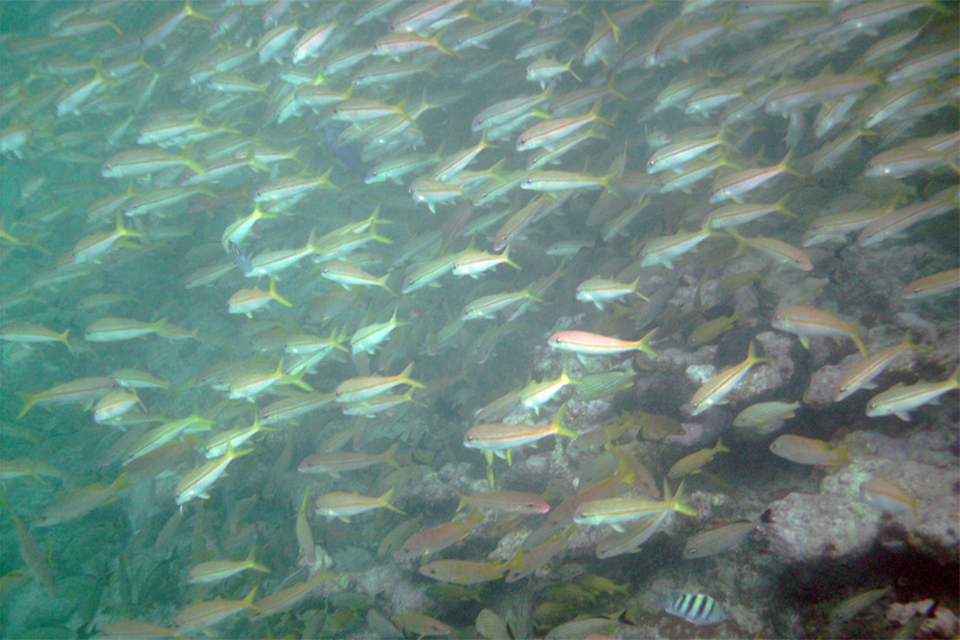
The yellowtail snapper (Ocyurus chrysurus) is a demersal species found in western Atlantic Ocean from Massachusetts to southern Brazil, including the Bahamas, southern Florida, Caribbean Sea and Gulf of México. In the southern Gulf of México (GoM), it has a long reproductive season with a spawning peak from March to June. Females reach sexual maturity at 21.3 cm fork length (FL) and males at 19.4 cm (FL).
Together with the lane snapper and the northern red snapper they comprise the main targets in the snapper fishery of the southern GoM, contributing 85 percent of the annual landings volume and are the main export species to US markets. Before 2018, the O. chrysurus fishery was classified as healthy, but now the southern GoM stock is considered as experiencing overfishing and with increasing exploitation pressure.
Information on stock complexity is essential for understanding stock dynamics and the differential response of a population or subpopulation to anthropogenic and environmental pressures. Analysis of individual growth and otoliths (hard, calcium carbonate structures located directly behind the brain of bony fishes) morphometry are used to describe population structure linked to exogenous and endogenous variables.
Fish growth rates exhibit wide intraspecific ranges under different environmental factors such as salinity, water temperature or depth, and feeding conditions, due to the energy and nutrient supply available to the individual. On the other hand, individuals inhabiting different habitats have unique, spatially identifiable otolithic chemical and shape signatures reflecting the characteristics of the environment and the time the fish occupied a certain area, which can be used to distinguish different stocks.
![Ad for [BSP]](https://www.globalseafood.org/wp-content/uploads/2025/07/BSP_B2B_2025_1050x125.jpg)
The description of population structure based on age and growth for yellowtail snappers is imperative for the quantification of the population’s productivity. Determining the population structure of O. chrysurus in the southern GoM – using age-based life history (age, growth rate, lifespan, natural mortality and age at maturity) and otolith morphometry – will help to better understand the species responses to potential negative repercussions caused by fishing, such as a progressively younger reproductive population and decreased productivity, and support stock assessments and management of these snappers.
This article – summarized from the original publication (Renán, X. et al. 2025. Population structure of yellowtail snapper using age-based life history and otolith shape in southern Gulf of México. PLoS ONE 20(4): e0320012) – presents the results of a study on the structure and dynamics of stocks of yellowtail snappers (Ocyurus chrysurus) in the Gulf of Mexico.
Study setup
Fish samplings were conducted at three fishing sites with the highest landings volumes in the Yucatán Peninsula: Celestún, Dzilam de Bravo, and Río Lagartos. A total of 1,449 O. chrysurus individuals were collected. In the laboratory, length and weight data were collected for each individual. Each pair of sagittal otoliths was extracted and processed. Age of maturity was calculated using individual sex and maturity condition data from previous gonad histological analysis results for the same individuals. Age and growth parameters were generated with the von Bertalanffy growth model via annuli counts in otolith thin sections from 1,124 selected individuals.
For detailed information on the experimental design, sample and data collection, and analyses, refer to the original publication.
Results and discussion
Size and weight of O. chrysurus (n = 1,499) from the southern GoM ranged from 16.3 to 41.8 cm (FL) and from 72.0 to 1,135.0 grams, respectively. Age and growth were estimated using 1,124 otoliths, of which 560 were from females (17.4–38.6 cm FL) and 564 from males (16.3–39.0 cm FL). The largest female and male were 38.6 and 39.0 cm FL, respectively, and the smallest female and male were 17.4 and 16.3 cm FL, respectively.
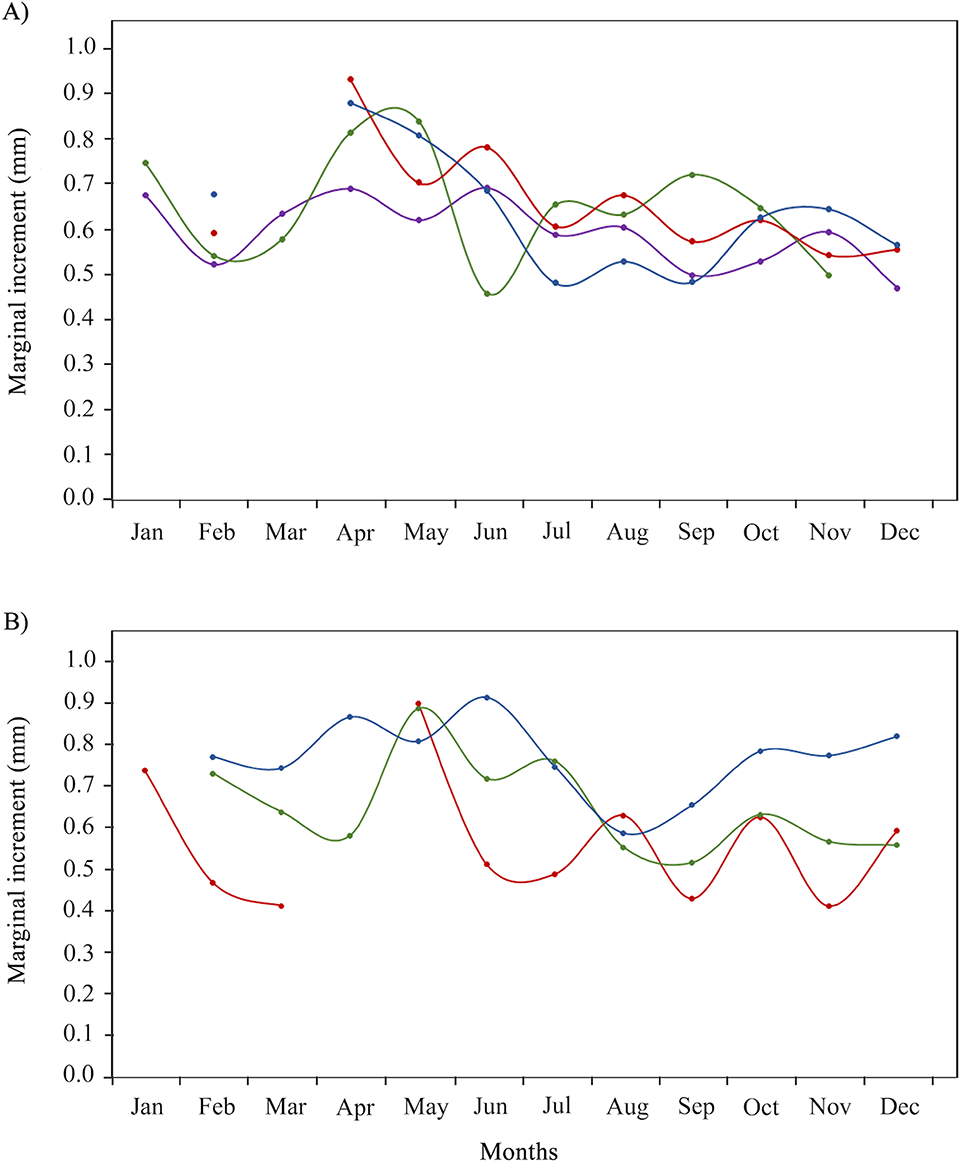
O. chrysurus captured in the southern GoM ranged in size from 16.3 to 41.8 cm FL (mean ± SD = 25.1 ± 3.9 cm); this size range is indicative of the selectivity of the main fishing gears used for this resource. The smallest individuals were captured in the western part of the Yucatán Peninsula, towards Celestún, whereas the largest were captured towards the East, in the area of Río Lagartos. Individuals exceeding 46 cm (FL) are seldom encountered in Yucatán, yet individuals up to 60 cm TL have been documented in the central GoM in the state of Veracruz. Consequently, variations in size can be attributed to the selectivity of the fishing gear employed in specific GoM fishing areas. To date, the largest size recorded for O. chrysurus was 75 cm TL in the Bahamas and 86.3 cm TL in Venezuela.
Ages determined ranged from 0+ to 12 years, the highest recorded age for this species in the southern GoM, with no differences between sexes. The number of 10- to 12-year-old fish in the present study is higher (n = 49; FL = 31.2 – 40.0 cm) than reported in other studies of the species. The oldest reported age for O. chrysurus is 23 years in Florida and the GoM, and 19 years in Brazil. In contrast, individuals aged 2 to 4 years are the most abundant in age and growth studies of this species. In the present study, these age groups represented 65 percent of the samples, and in other populations close to 70 to 88 percent are reported in these age groups. These values are consistent even in samples collected in fishery-independent contexts. Size-at-age in O. chrysurus varies widely in this and other studies, regardless of sex. Clearly, length is not an accurate predictor of age in this snapper species, and therefore estimating age via length frequencies is not recommended.
A common issue in fisheries is the paucity of age-length data from young or old fish. In the absence of data form young individuals, the representation of the youngest animals in the “early” part of the von Bertalanffy growth model (VBGM; a type of growth curve for a time series) curve will be compromised. Similarly, without older fish it may be difficult to characterize the asymptote of the VBGM curve. Growth estimation is of particular importance for population dynamics and fishery management, since species with faster growth rates tend to support higher exploitation rates, than slow-growth species. Growth misspecification can affect the age structure of the population and thus can bias natural and fishing mortality, biomass estimates and the associated reference points and stock status.
Growth estimates for O. chrysurus were statistically significant. The growth parameters and curves for females and males were very similar (Fig 2A). According to the growth estimates for both sexes, 95 percent of the maximum length is reached around 15 years of age. The growth parameters estimated for Celestún presented a wide statistical variability. Specifically, the estimated value of maximum length (41.59 cm FL) and its upper confidence interval (59.72 cm FL) were 22 and 75 percent higher than the maximum size observed for the species at this site (34 cm FL; Fig 2B).
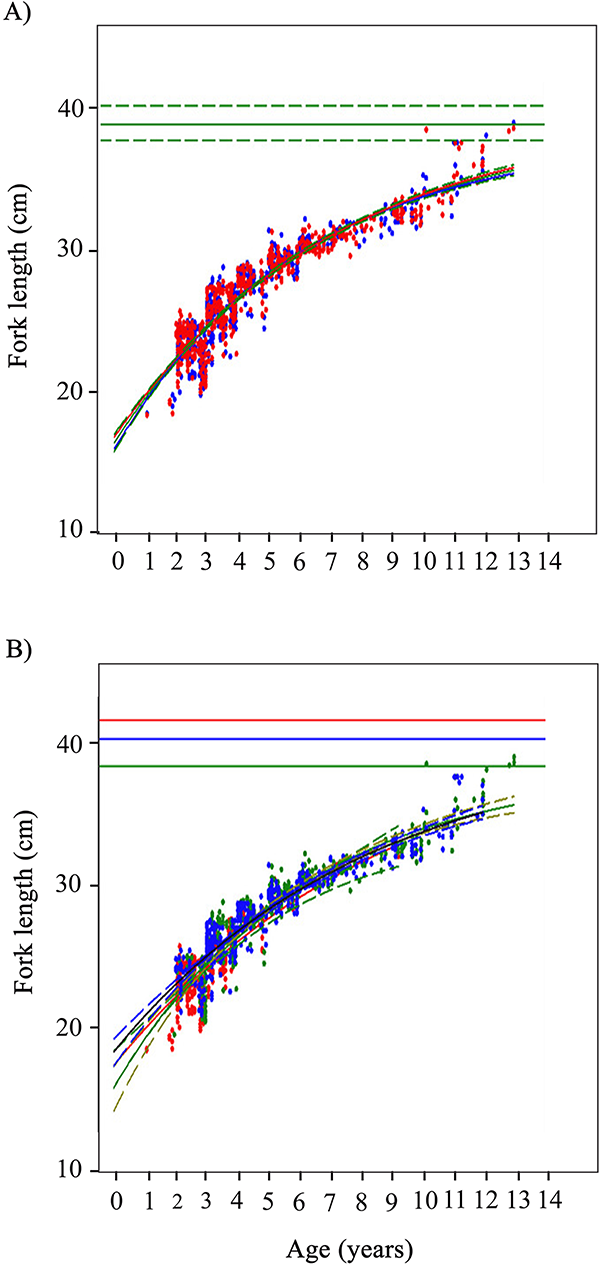
Our growth estimates may be biased based on the underrepresentation of younger individuals (<2 years), as evidenced by the data evaluated. When size-at-age data is analyzed, it is important to consider the nature of the sample and in particular, how it may have been affected by gear selectivity (based on size or age. Therefore, since fishing gear has an important effect on size-based selectivity for O. chrysurus, a fishery-independent sampling is necessary in future research.
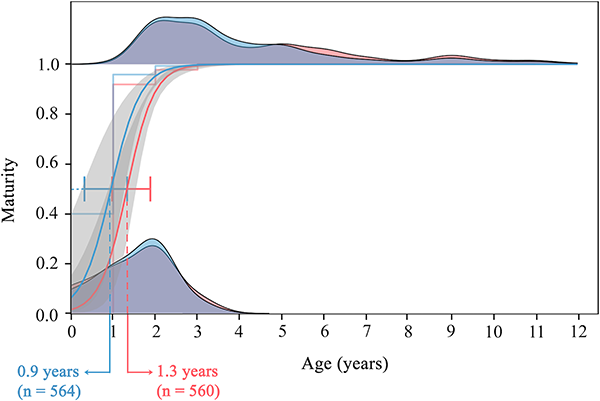
Age at maturity was 1.3 years for females and <1 year for males (Fig. 3). The youngest mature female was one year old (19.9 cm FL), and the youngest mature male was <1 year (0+, 18.5 cm FL). All females were mature at 2 to 3 years, and males at 2 years. Due to the early sexual maturation of the species, there were not enough immature individuals to meaningfully analyze possible differences in age at maturity by fishing site.
Age at maturity has not been reported extensively for O. chrysurus. The rapid changes in size-at-age may reflect the inability of an overfished or depressed population to absorb or respond to further decreases in population size. Data on overall natural mortality in O. chrysurus are limited. Reported values range from 0.19–0.40 per year, with the lowest value (0.19 per year) reported in Florida, and the highest in Cuba and the southeast US (0.40 per year) and the southern GoM (0.37 per year in this study). Natural mortality at age gradually decreases from the youngest (0+ to 3 years) to 10+ years, when mortality remains near 0.1 per year. This is characteristic of tropical fishes in which predation of juveniles is the main factor modeling mortality.
Otolith shape responds to genetic, biological and ecological factors. In snapper species, this parameter exhibits high intra- and interspecies variability derived mainly from the influences of sex, age, environmental and genetic characteristics. Environmental factors such as salinity, water temperature and depth are responsible for morphological differences such as area and otolith size.
In O. chrysurus, otolith shape differs between fishing sites, possibly due to environmental variations. In this study, the shape indices that distinguished between groups by site were fractal dimension index, roundness and ellipse, suggesting that some of the observed differences respond to specific environmental factors found at each site. Water temperature is also known to affect fish growth and therefore otolith shape.
Environmental conditions influence growth rate, thereby affecting otolith morphology. And otolith shape is directly linked to fish diet, in that different prey categories produce broad and fine variations in the contour, with the relative diet composition contributing more to this variability than the quantity of prey ingested. Otolith shape may also change in response to ontogenetic migrations from settlement areas to juvenile breeding areas and then to adult areas for reproductive aggregations. However, we think that these movements probably occur in different zones but within the same fishing site.
Perspectives
Growth characteristics are an integral component of fish stock assessments. By relating size to age, growth modeling can be useful to estimate life history parameters such as growth rate, maximum mean length, longevity, and natural mortality. Based on our study results, O. chrysurus is characterized by medium size, moderate-growth, early age-at-maturity and medium lifespan.
The observed inter-site differences in otolith shape suggest that the southern GoM O. chrysurus population has structural complexities not previously established for this species in this region. The incorporation of demographic data into harvest strategies can facilitate sustainable fishery management. Developing a management plan for the species in the southern GoM that considers its population structure is urgent due to constantly increasing catch volumes and the demographic changes in process at the studied fishing sites.
Overall, observed differences in growth rate, lifespan, natural mortality and otolith shape indicate that O. chrysurus in the southern GoM exhibits structural characteristics that suggest influences from fishing-induced demographic changes.
Now that you've reached the end of the article ...
… please consider supporting GSA’s mission to advance responsible seafood practices through education, advocacy and third-party assurances. The Advocate aims to document the evolution of responsible seafood practices and share the expansive knowledge of our vast network of contributors.
By becoming a Global Seafood Alliance member, you’re ensuring that all of the pre-competitive work we do through member benefits, resources and events can continue. Individual membership costs just $50 a year.
Not a GSA member? Join us.
Authors
-

Corresponding author
Centro de Investigación y de Estudios Avanzados del Instituto Politécnico Nacional, Departamento de Recursos del Mar, Mérida, Yucatán, México -
Instituto de Ciencias Marinas y Pesquerías, Universidad Veracruzana. Boca del Río Veracruz, México
-
Centro de Investigación y de Estudios Avanzados del Instituto Politécnico Nacional, Departamento de Recursos del Mar, Mérida, Yucatán, México
-
Centro de Investigación y de Estudios Avanzados del Instituto Politécnico Nacional, Departamento de Recursos del Mar, Mérida, Yucatán, México
-
Centro de Investigación y de Estudios Avanzados del Instituto Politécnico Nacional, Departamento de Recursos del Mar, Mérida, Yucatán, México
-
Centro de Investigación y de Estudios Avanzados del Instituto Politécnico Nacional, Departamento de Recursos del Mar, Mérida, Yucatán, México
-
Centro de Investigación y de Estudios Avanzados del Instituto Politécnico Nacional, Departamento de Recursos del Mar, Mérida, Yucatán, México
Related Posts
Fisheries
Artificial neural networks can predict age in Greenland halibut using otolith images
Deep learning technology can estimate individual ages and age distribution of Greenland halibut with more consistency than human estimations.
Fisheries
Machine learning approaches for fish age prediction in European hake
Strategy uses predictive equations for practical assessments and more sophisticated machine learning models for higher accuracy and automation.
Fisheries
Developing image-based methods to incorporate fishery-collected data for American lobster stock assessment
Image-based method to estimate the length of American lobsters provides high-quality data and helps engage fishermen in fishery management.