


Responsible Seafood Innovation Awards finalist: How the jellyfish inspired ISSF to design a net-free fish aggregating device

ISSF’s net-free fish aggregating device cuts bycatch, ghost fishing and ocean waste while sustaining tuna catches
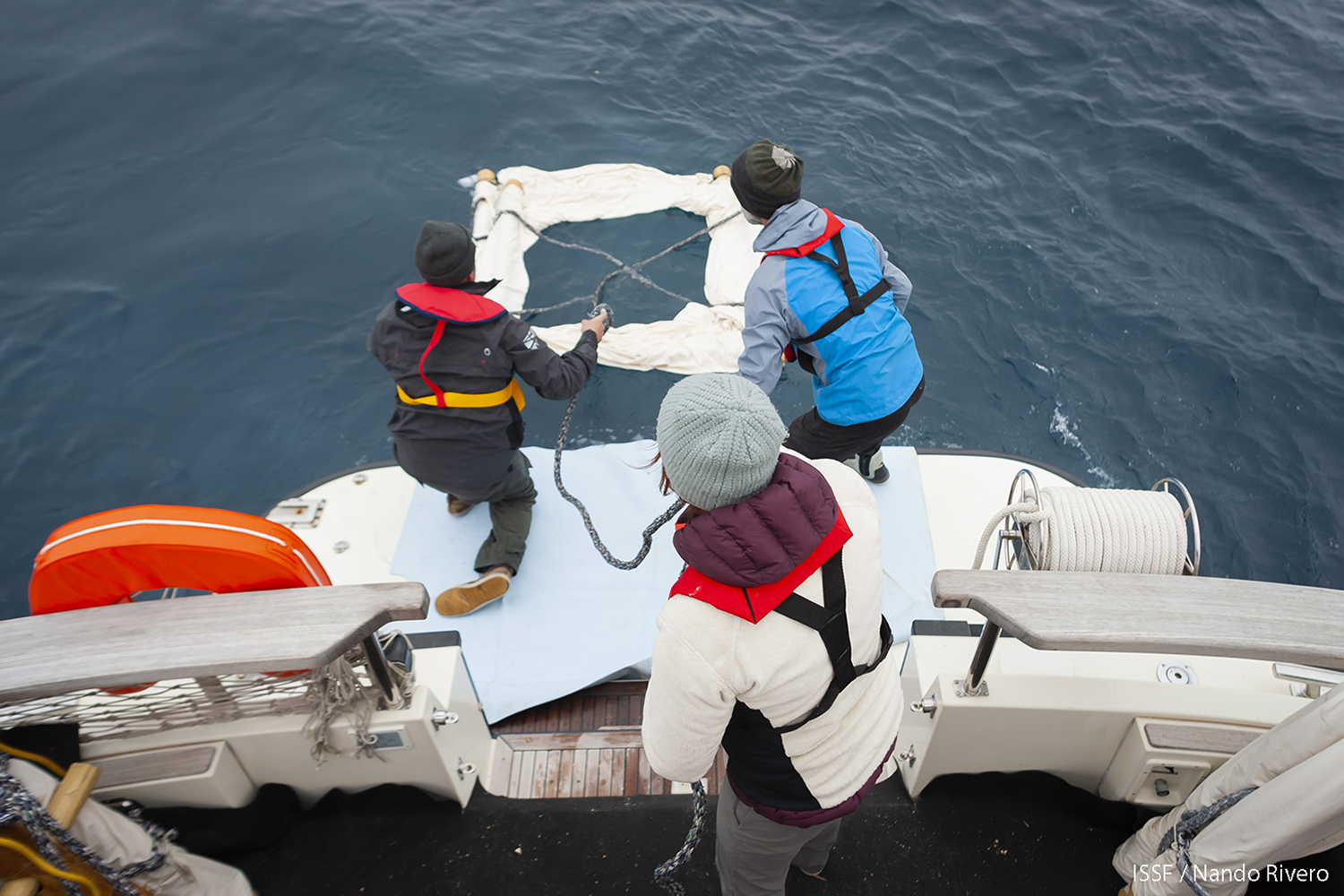
Bycatch, ghost fishing and ocean waste are some of the biggest challenges in tuna fisheries, causing harm to marine life and costing fisheries valuable catch. But a team from the International Seafood Sustainability Foundation (ISSF), in collaboration with oceanographers and fishing partners, has introduced a simple but transformative solution: the jelly-FAD.
Built from sustainable, locally sourced materials and free of netting, the fish aggregating device (FAD) eliminates bycatch and ghost fishing caused by net entanglement, reduces ecological impact and maintains fishing efficiency. For this breakthrough, the ISSF – a global coalition focused on sustainable tuna fisheries – has earned a spot as a finalist for the 2025 Responsible Seafood Innovation Award in the fisheries category.
“A FAD, a fish aggregating device, is just a floating object,” Gala Moreno, ISSF senior scientist and developer of the jelly-FAD, explained to the Advocate. “Tuna are attracted by floating objects.”
The reasons why tuna gather near FADs remains unknown. Still, fishers have used floating objects for centuries, setting them adrift in tuna-rich waters and later returning to harvest the fish that cluster around the FADs. Today, an estimated 100,000 FADs are deployed worldwide each year, accounting for about 38 percent of the global tuna catch, Moreno said.
![Ad for [BioMar]](https://www.globalseafood.org/wp-content/uploads/2025/07/BioMar_seabass_web2025_1050x125.gif)
Modern FADs are outfitted with echo sounders and other instruments that estimate biomass in real time, alerting fishers when to return. Most are built from metal, plastic and netting – with the latter often leading to bycatch, ensnaring sharks, turtles, other fish and even birds. Over time, these materials degrade, with debris washing ashore and adding to marine pollution.
“A high percentage of these fish aggregating devices end up lost or abandoned,” Moreno noted. “They end up on beaches.”
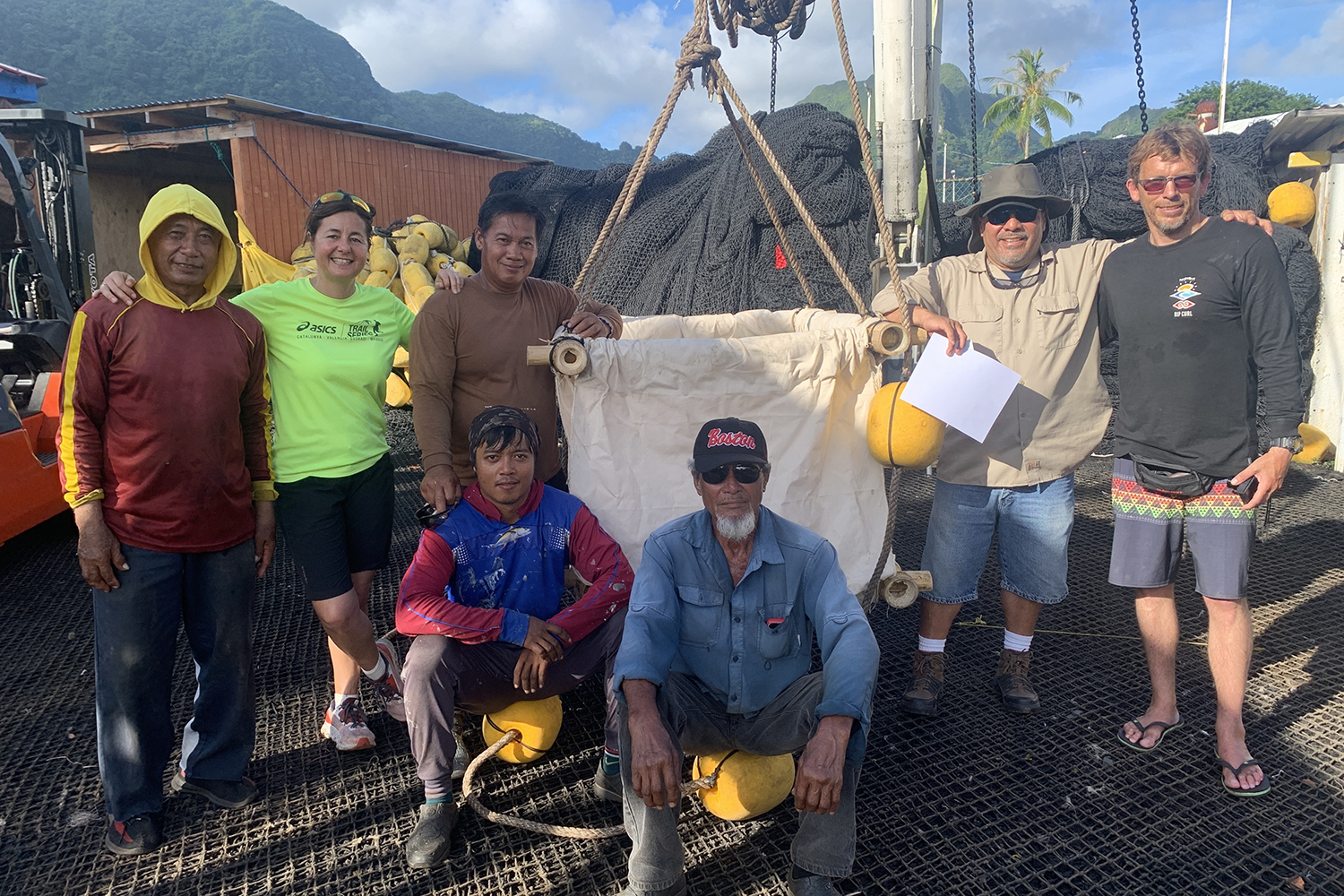
ISSF researchers have spent years working to improve FADs. Initial attempts swapped out metal and plastics for biodegradable materials. This approach worked, but the devices fell apart after two to three months, far short of the six- to 12-month longevity fisheries require from FADs.
Analysis revealed the reasons for this short lifespan: Waves put too much stress on the materials. To solve that problem, the ISSF team enlisted oceanographers and reimagined the design, using the jellyfish and its neutral buoyancy as an inspiration.
The resulting jelly-FAD is lighter and durable enough to remain in the water yet still drifts at the leisurely pace fisheries prefer. It’s collapsable for easier transport and consists of a surface float attached to a submerged raft a few meters down. The raft provides shade and an artificial reef effect, and is tethered by a line stretching tens of meters long and attached at the other end to a drogue that adds weight and stability.
ISSF scientists had to get creative in the design of the jelly-FAD, as well as the materials for its construction. Moreno pointed out that substantial weight in the drogue is needed during the initial deployment to sink the structure. But for the device to float like a jellyfish, the drogue should be lighter. The solution? Use clay, which provides weight but disintegrates quickly after submersion.
Fisheries in Focus: What are fish aggregating devices and why is there debate about banning them?
The choice of clay, bamboo, canvas, cord and cotton rope rather than other materials came down to three factors: environmental compatibility, widespread availability and cost.
“We had to do something that could be used in a remote island in the Pacific,” said Moreno. “So, you have to use bamboo, you have to use clay, something that anyone can find and is cheap.”
Development of the jelly-FAD started with tank trials, moved to testing in the Mediterranean Sea, and ultimately ended up in active tuna fisheries. Since then, ISSF and its tuna fishery partners have evaluated thousands of jelly-FADs in three oceans using different fleets, looking at the critically important metric: how the new devices affect catch compared to traditional FADs.
“The tuna catches were comparable, totally the same,” Moreno said, describing the results of this testing.
The next step is to get the jelly-FAD into wider use. To support that, ISSF has produced a how-to manual outlining how to build a jelly-FAD, along with other instructional guides and informational materials on FADs more broadly.
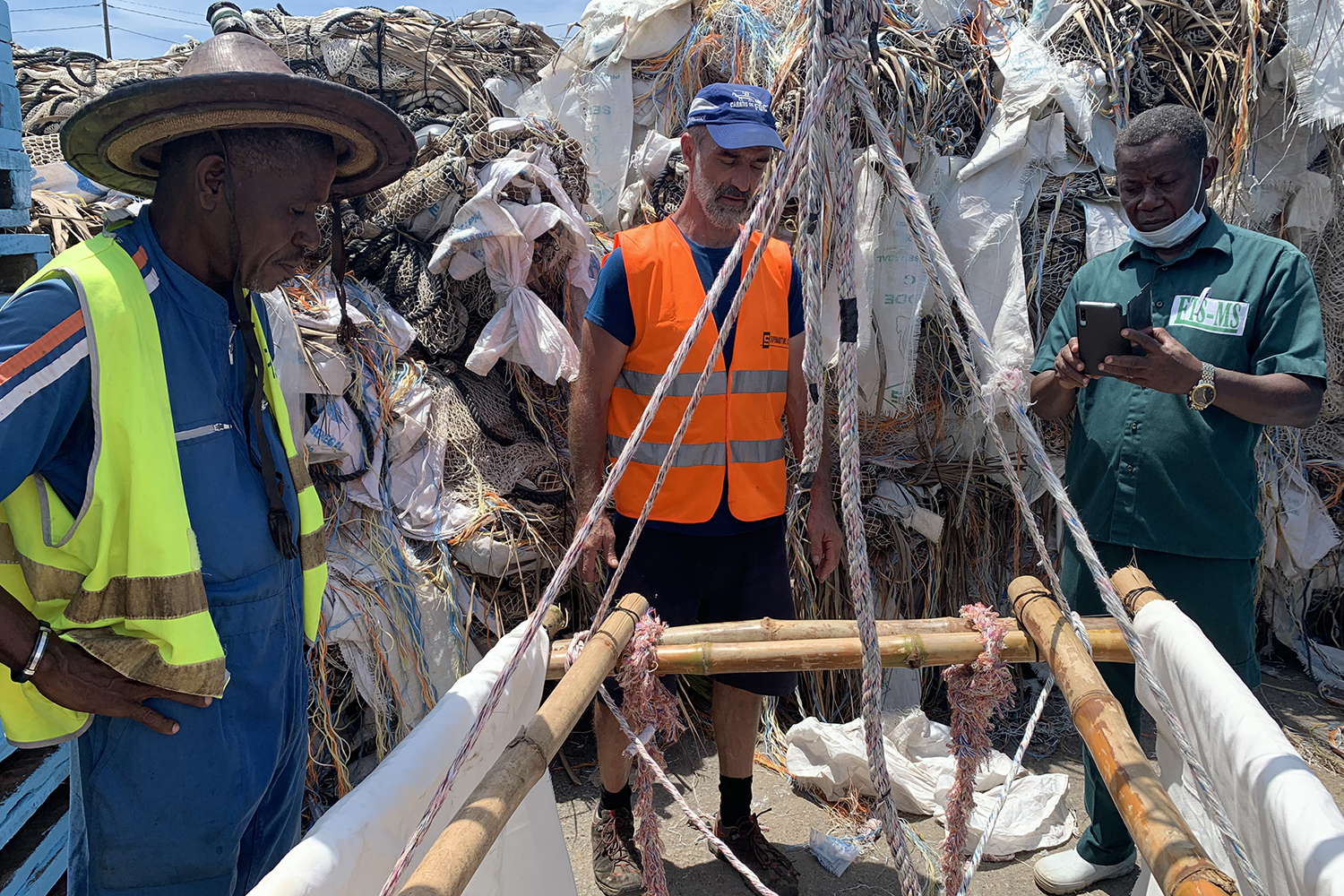
Moreno recalled that she has traveled to 40 countries as part of the development effort of the jelly-FAD and working with fisheries to put the technology into practice. Based on ongoing feedback from the field, she expects further refinements to both the technology and its implementation.
For Moreno, being named a finalist for the Responsible Seafood Innovation Award is recognition of the collective effort behind the jelly-FAD. The project involved not only the ISSF team, but also collaborating oceanographers and fisheries. Viewed in that light, she said the honor carries special significance.
“It’s really, really encouraging because they did a lot of the effort, the fisheries. So, it’s good to go to them and show that what we did had an impact,” Moreno said.
GSA’s Responsible Seafood Innovation Awards – sponsored by the U.S. Soybean Export Council – for the aquaculture and fisheries categories will be awarded at the Responsible Seafood Summit in Cartagena, Colombia, on September 30, 2025. The winner will be decided by an audience poll. Learn more about the Summit here.
Now that you've reached the end of the article ...
… please consider supporting GSA’s mission to advance responsible seafood practices through education, advocacy and third-party assurances. The Advocate aims to document the evolution of responsible seafood practices and share the expansive knowledge of our vast network of contributors.
By becoming a Global Seafood Alliance member, you’re ensuring that all of the pre-competitive work we do through member benefits, resources and events can continue. Individual membership costs just $50 a year.
Not a GSA member? Join us.
Author
-
Hank Hogan is a freelance writer based in California who covers science and technology. His work has appeared in publications ranging from Boy’s Life to New Scientist.
Related Posts
Fisheries
ISSF: Tuna fisheries improving, overfishing remains a challenge
New ISSF report shows 88 percent of the global tuna catch is from healthy stocks, signaling progress despite challenges with overfishing.
Fisheries
New fish aggregating device aims to reduce marine waste in tropical tuna fisheries
Trials are underway to validate a new fish aggregation device that is biodegradable, floating and submersible.
Fisheries
Project in Spain targets marine plastic pollution with circular fishing gear solutions
A new project seeks to develop circular fishing gear and port solutions to reduce marine plastic pollution and support responsible fisheries.
Fisheries
Artificial intelligence is already helping improve fisheries, but the trick is in training the tech
Artificial intelligence is providing valuable data to fisheries, cutting costs and the need for human review. Can the technology be perfected?