


Functional yeast aquafeeds offer new promise against Aeromonas salmonicida bacterial infections in Australian aquaculture

Yeast-fed fish had higher survival rates during bacterial challenges, mounted faster immune responses, and activated protective pathways that are conserved across fish species
Bacterial diseases are among the most persistent challenges facing aquaculture worldwide. Outbreaks of Aeromonas, Vibrio and Tenacibaculum bacteria cause significant mortalities, reduce growth and place pressure on farmers to use antibiotics. In tropical and subtropical systems, where high water temperatures accelerate bacterial growth, the risks are especially acute.
For Australia’s aquaculture sector – spanning barramundi in the North, yellowtail kingfish in the South, trout in cooler states, and emerging species like snapper and grouper – these diseases represent not just a production challenge but a barrier to sustainable growth. Reducing reliance on antibiotics while maintaining high survival rates is critical for food security, market competitiveness, and the long-term resilience of the industry.
One promising avenue is the use of functional feeds diets formulated to not only nourish fish but also to strengthen their immune systems. Yeast-based products are especially powerful, containing compounds such as β-glucans, mannans and nucleotides that prime immunity and support gut function. Yet strong scientific evidence is required to convince producers and regulators alike that these feeds deliver real-world benefits.
In a recently published paper in Fish & Shellfish Immunology, my colleagues and I tested autolyzed Cyberlindnera jadinii (ACJ) yeast –identified as a promising functional ingredient capable of modulating immune responses and improving the health status of fish – in zebrafish (a fast, ethical fish disease model) and Atlantic salmon (a globally important aquaculture species), and the results are summarized here.
![Ad for [BSP]](https://www.globalseafood.org/wp-content/uploads/2025/07/BSP_B2B_2025_1050x125.jpg)
Study setup: Bridging models and farm relevance
We designed trials to test whether ACJ could improve fish resilience against bacterial infection. Two diets were prepared: a standard control diet and a diet containing autolyzed ACJ yeast, chosen for its high bioavailability of immune-stimulating compounds. After two weeks of feeding, fish were challenged with Aeromonas salmonicida, a well-known bacterial pathogen.
Over the following week, we recorded survival rates, examined tissues by histology and immunohistochemistry to monitor immune cell recruitment, and conducted molecular and proteomic analyses to measure bacterial loads and immune pathways. This multi-level approach linked survival outcomes to underlying biological mechanisms, showing not just that ACJ worked but how it worked.
Findings
The results were clear and compelling: ACJ-fed fish had dramatically higher survival rates during bacterial challenges, mounted faster immune responses, and activated protective pathways that are conserved across fish species. This innovation has direct relevance for Australia, where functional feeds like ACJ can help build healthier, more sustainable aquaculture industries across multiple states.
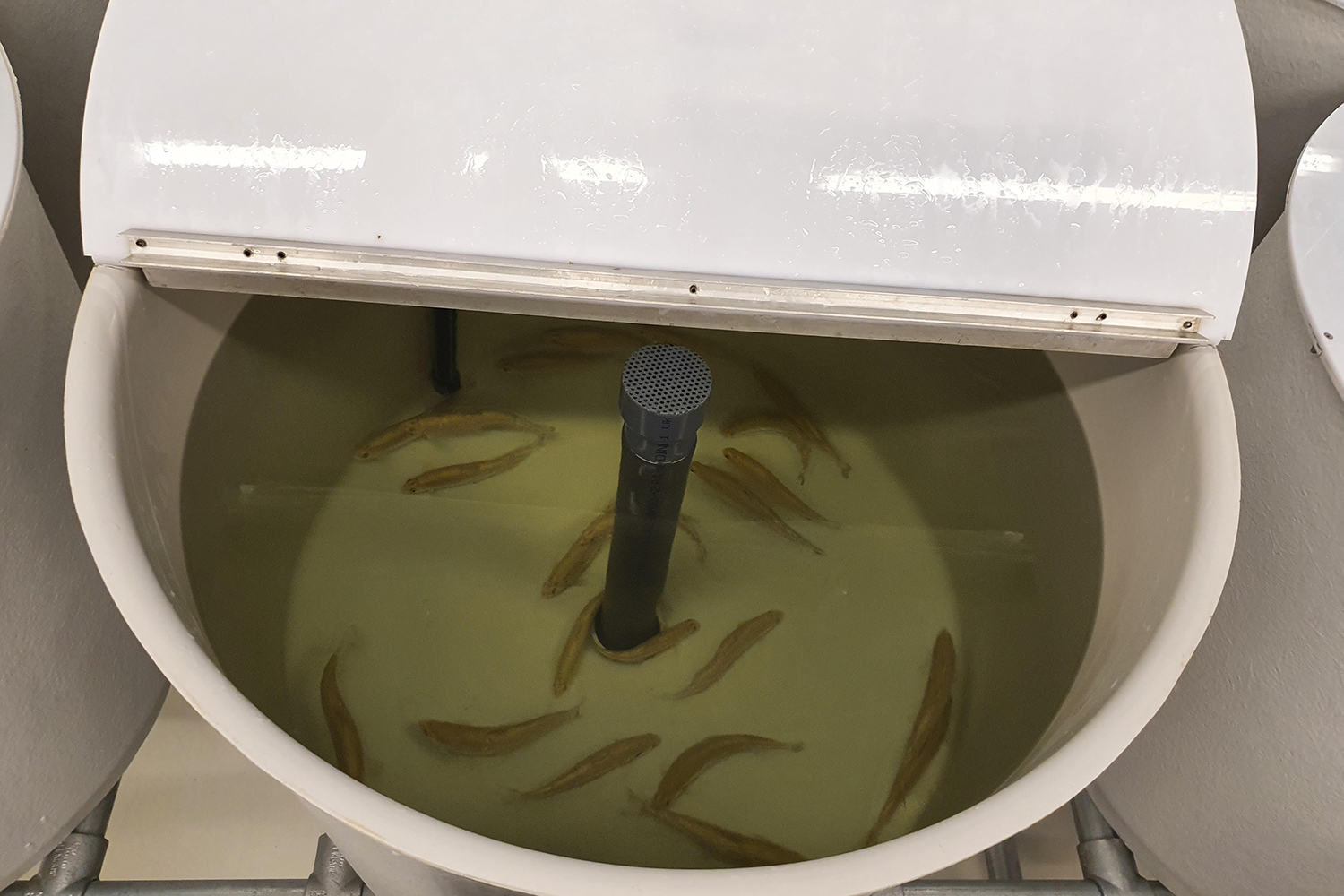
The survival outcomes were striking. In zebrafish, mortality in the control group reached 7.5 percent within a week of infection. In contrast, ACJ-fed fish had only 0.8 percent mortality, a ten-fold improvement. Salmon trials showed the same protective trend, proving that the effect was not species-specific.
When we looked deeper, the biological evidence explained why. Histology showed reduced tissue damage in ACJ-fed fish, with healthier gut epithelia and lower levels of necrosis. Immunohistochemistry revealed that macrophages and neutrophils were recruited earlier and in greater numbers, flooding infection sites before bacteria could spread. In control fish, these immune cells arrived later, giving pathogens valuable time to establish. Molecular assays confirmed this advantage: bacterial loads fell faster in ACJ-fed fish. Instead of lingering at high levels, the pathogen was cleared more quickly, reducing the risk of secondary infections.
Proteomics (evaluation of the function and structure of proteins to help understand an organism’s nature) revealed significant insights. ACJ-fed fish upregulated proteins linked to phagosome activity, confirming that cells were actively engulfing pathogens. Physiological pathways involved in helping to keep intestinal cells bound tightly together were also enhanced, indicating that the gut barrier was maintained under stress. Fish also showed increased activity of regulated cell death mechanisms such as necroptosis, which safely removed infected cells while avoiding uncontrolled inflammation. The enhanced tight junction activity observed under proteomics translates into stronger gut integrity, which is especially critical in high-density hatchery and nursery environments where pathogenic bacterial pressure is greatest.
This combination of mechanisms matters enormously for aquaculture. Fish that respond too slowly succumb to infection, while those that mount uncontrolled inflammation may survive but suffer stunted growth. ACJ-fed fish struck the balance a strong but measured defense that clears pathogens while preserving tissue health.
For farmers, these results translate directly into economic terms: lower mortalities, fewer antibiotic treatments, better growth, and stronger consumer confidence in the sustainability of their product.
These results represent significant opportunities for Australian aquaculture. Because the immune pathways activated by ACJ are conserved across teleosts (ray-finned fish; about 96 percent of current species), the findings apply broadly to Australian species. Each region has its own aquaculture profile where functional feeds could bring benefits.
Queensland and Northern Territory: Barramundi and red snapper
Northern Australia is the powerhouse of barramundi farming, producing fish in ponds, recirculating systems and sea cages. Warm waters favor outbreaks of Vibrio harveyi and related bacteria, which are especially destructive in hatcheries and nurseries. By priming immunity before these high-risk stages, ACJ could substantially reduce losses.
The region is also exploring farming of red snapper (Lutjanus malabaricus and related species). In Asia, farmed snapper species are plagued by Vibrio and Streptococcus. Using yeast-based feeds from the outset would allow Australia to promote farmed snapper production with stronger disease resilience and lower reliance on antibiotics.
South Australia: Yellowtail kingfish
South Australia’s Spencer Gulf hosts the country’s high-value yellowtail kingfish industry. Tenacibaculosis, caused by Tenacibaculum maritimum, remains a serious problem, producing lesions that affect fish welfare and reduce their market quality. By enhancing mucosal immunity and protecting epithelial barriers, ACJ feeds could complement vaccines and management strategies to reduce the impact of this disease.
New South Wales: Rainbow trout and Murray cod
Inland NSW has long been home to rainbow trout farming, which faces recurring Aeromonas and Flavobacterium columnare infections. Given ACJ’s proven effectiveness against Aeromonas, it could directly benefit this industry. Meanwhile, Murray cod, an iconic native species, is gaining popularity in aquaculture but faces bacterial disease risks where functional feeds could help improve survival and growth.
Victoria: Salmonids and native species
Victoria also produces trout and salmonids in cooler inland waters. Functional feeds like ACJ could support the health of fish in hatcheries and nurseries, reducing mortalities during vulnerable early life stages. As the state explores farming native species in warmer waters, functional feeds may provide resilience during industry diversification.
Western Australia: Barramundi and grouper
In WA’s Kimberley and Pilbara regions, barramundi aquaculture is expanding rapidly. These systems face bacterial threats similar to northern Queensland. Interest is also growing in groupers, which are notoriously vulnerable to Vibrio and Streptococcus. Functional feeds could provide a protective layer for these high-value but high-risk species.
Tasmania: salmon
Tasmania produces the majority of Australia’s Atlantic salmon, a globally significant aquaculture industry. While viral diseases often dominate headlines, bacterial infections such as Tenacibaculum and Aeromonas still occur. Our salmon results show direct relevance: ACJ feeds could help Tasmanian producers manage bacterial risks while reducing antibiotic use, strengthening their sustainability credentials.
By tailoring applications to each region –whether barramundi in Queensland, kingfish in South Australia, or salmon in Tasmania –Australia can benefit nationwide from functional feeds.
Does aquaculture really need a heat-tolerant salmon to adapt to rising ocean temperatures?
Practical farm applications
For producers, the pathway to using functional feeds is straightforward. Our findings suggest that ACJ is most effective when applied proactively, not reactively. Feeding ACJ diets for two to four weeks before predictable stress events such as grading, transfer, or seasonal warming allows fish to prime their immune systems. Continued feeding during these risk windows ensures protection.
In our trials, ACJ was included at around ten percent of the diet. Feed mills can refine this further, but as a yeast ingredient ACJ can be blended without altering feed processing. Hatcheries and nurseries are ideal starting points, followed by early grow-out stages when disease susceptibility is highest.
Farmers implementing functional feeds should track performance carefully. In addition to survival, growth and feed conversion ratios, lesion scoring and basic bacterial testing can show how well fish are responding. Collaboration with researchers will help build strong datasets that demonstrate impact under local conditions.
Broader significance for Australia
Functional yeast feeds are not a silver bullet. They must be used alongside vaccines, probiotics, genetics and biosecurity. But they are a powerful complementary tool that improves resilience, reduces antibiotic use, and enhances sustainability.
For Australia, this innovation has significance beyond fish health. By reducing antibiotic use, functional feeds protect the long-term effectiveness of medicines, safeguard export markets, and meet consumer expectations for safe, sustainable seafood. They also support regional economies by reducing production losses and improving profitability for farmers across Queensland, NSW, Victoria, South Australia, WA, the NT and Tasmania.
Most importantly, functional feeds strengthen the social license of aquaculture. By demonstrating proactive health management and lower antibiotic reliance, the industry can assure the public that it is committed to responsible practices. This positions Australian aquaculture as a leader in sustainability, with benefits for employment, exports and food security. This innovation also supports Australia’s national aquaculture growth strategy, positioning the country to expand production sustainably while safeguarding export competitiveness.
Perspectives
Our trials with zebrafish and salmon provide strong scientific evidence that autolyzed C. jadinii yeast can significantly improve fish survival under bacterial challenge. By priming innate immunity, accelerating bacterial clearance and maintaining tissue integrity, ACJ offers a balanced and effective nutritional defense.
The translation to Australian aquaculture is clear: from barramundi in Queensland and WA, to kingfish in South Australia, to trout in Victoria and NSW, to salmon in Tasmania and snapper in the NT, functional yeast feeds are a feed-mill-ready solution to improve fish health and reduce disease losses.
Functional feeds represent the next generation of aquaculture nutrition: feeds that not only nourish but also protect. With strong experimental evidence and broad applicability across regions and species, ACJ yeast has the potential to help Australian aquaculture grow sustainably, reduce antibiotic dependence, and meet the twin challenges of disease management and responsible production.
Now that you've reached the end of the article ...
… please consider supporting GSA’s mission to advance responsible seafood practices through education, advocacy and third-party assurances. The Advocate aims to document the evolution of responsible seafood practices and share the expansive knowledge of our vast network of contributors.
By becoming a Global Seafood Alliance member, you’re ensuring that all of the pre-competitive work we do through member benefits, resources and events can continue. Individual membership costs just $50 a year.
Not a GSA member? Join us.
Author
-

Adjunct Scientist at the Norwegian University of Life Sciences (NMBU), Norway.
Senior Research Fellow and Research and Development Manager at Republic Polytechnic, Singapore