


2024 marked most challenging sea lice season in more than a decade for Norway, report finds

Norway’s salmon farms saw worst sea lice season in a decade in 2024, with infestations 30 percent higher, driven by ocean warming
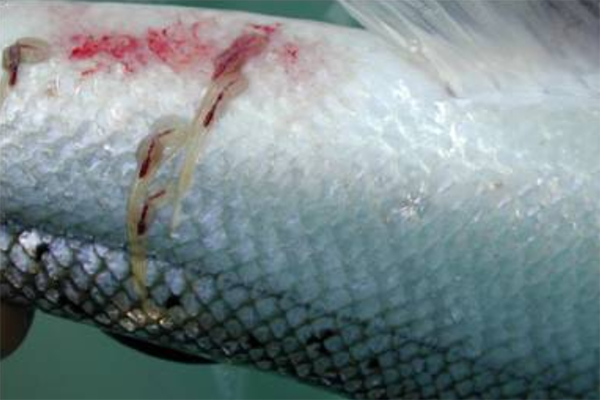
Norwegian salmon farms faced one of the most challenging sea lice seasons in more than a decade, with lice pressure peaking 30 percent higher than in recent years, according to a new industry report.
The Observer Report: Annual Sea Lice Performance, released by aquaculture data firm Manolin, shows that sea lice infestations surged to unprecedented levels, with an estimated 31 million more female sea lice than average across the country.
“Looking back at 2024, it was one of the most difficult sea lice seasons in over the last decade for Norway, and there isn’t a great picture of how challenging the situation was in the water,” said Tony Chen, CEO of Manolin. “By using our AI-powered platform, our team has produced a truly unique analysis of Norway’s sea lice situation with estimated sea lice pressure and the total number of cages treated per production area.”
The analysis points to spiking sea temperatures as the main driver of the outbreak. In May 2024, southern Norway saw early warming, which fueled lice activity in production regions 2 and 3. By August, the heat had crept north, sending sea temperatures above 15 degrees-C (59 degrees-F) in northern waters – conditions that accelerated lice reproduction and spread. The result was a prolonged, intense lice season that strained treatment efforts across nearly all production areas.
![Ad for [Aquademia]](https://www.globalseafood.org/wp-content/uploads/2025/07/aquademia_web2025_1050x125.gif)
The report also provides estimates of treatment capacity, measured by the number of cages treated per region. According to Manolin, this offers the first national-level view of how farms responded to shifting lice pressure and environmental conditions.
Sea lice, parasitic crustaceans that attach to salmon, are regarded as one of the industry’s most persistent challenges. They affect fish health, farming productivity and Norway’s multi-billion-dollar salmon export market.
Manolin said the Observer Report is the first in a quarterly series intended to provide farms, regulators and analysts with more comprehensive data on industry performance.
“We strongly believe it’s important to use the technology in areas with practical applications,” said Chen. “This report is one of those examples, which gives the industry a new level of depth into the sea lice conversation that hasn’t previously been available, and it’s just the beginning for us.”
Now that you've reached the end of the article ...
… please consider supporting GSA’s mission to advance responsible seafood practices through education, advocacy and third-party assurances. The Advocate aims to document the evolution of responsible seafood practices and share the expansive knowledge of our vast network of contributors.
By becoming a Global Seafood Alliance member, you’re ensuring that all of the pre-competitive work we do through member benefits, resources and events can continue. Individual membership costs just $50 a year.
Not a GSA member? Join us.
Author

Related Posts
Health & Welfare
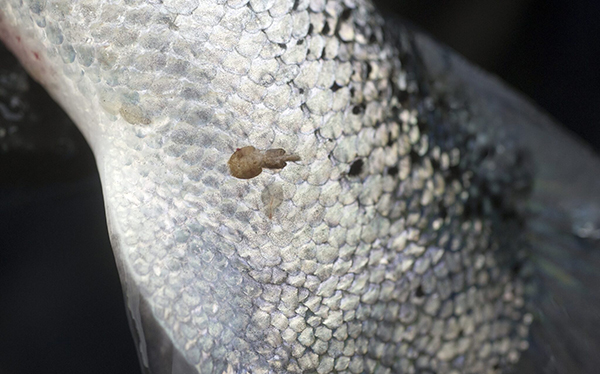
What can coho salmon teach us about sea lice resistance in Atlantic salmon?
Studying coho salmon’s sea lice resistance could lead to genetic advances to better protect Atlantic salmon, Nofima scientists say.
Health & Welfare
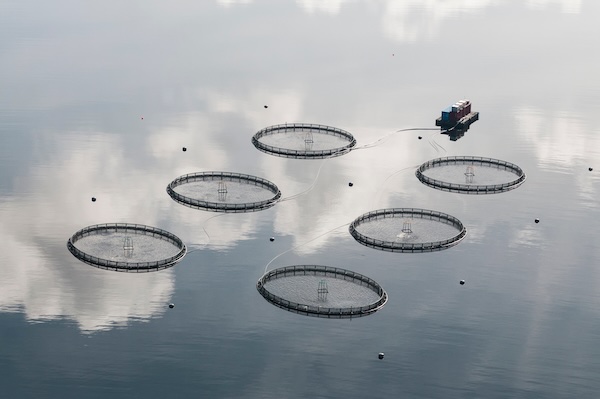
Tool in development aims to improve sea lice predictions and fish health
A new tool is being developed to improve sea lice predictions and enhance fish health with more reliable, consistent data.
Intelligence
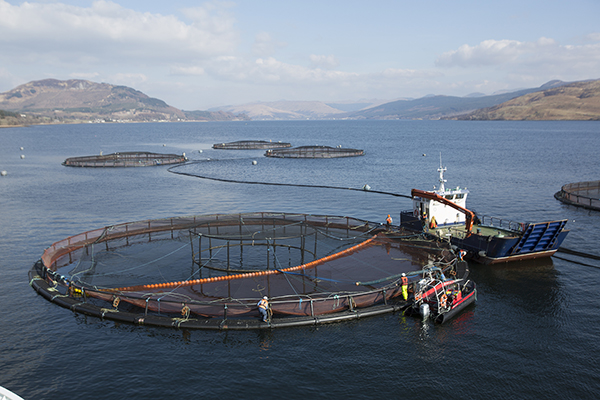
SAIC funds sea lice vaccination technology developed by Stirling and other partners
The Sustainable Aquaculture Innovation Centre (SAIC) has awarded funding to assess the efficacy of novel sea lice vaccine technology.
Health & Welfare
Scientists are developing a new ‘groundbreaking’ oral vaccine for sea lice in farmed Atlantic salmon
A new oral vaccine using reverse vaccinology and artificial intelligence may help with sea lice challenges faced by the aquaculture industry.