


Field Trials: Validating the efficacy and quality of a portable electric stunner for shrimp

Ace Aquatec: Thailand trials demonstrated effective, long-lasting stun of shrimp
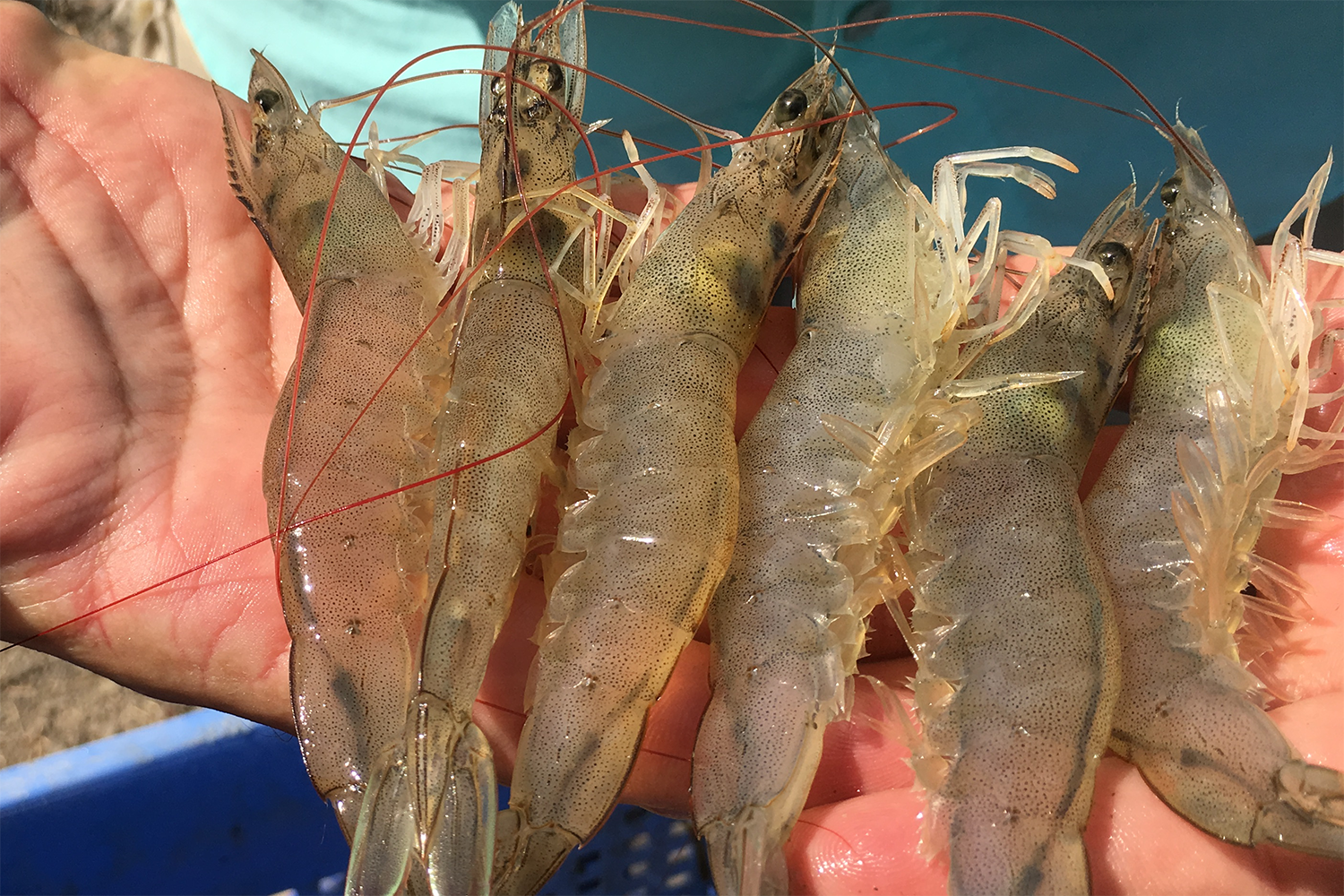
For field trials conducted in Thailand in October 2024, a portable electric stunner was installed at a processing site for Pacific whiteleg shrimp (Penaeus vannamei). The trials validated the viability of humane slaughter protocols using electric stunning in shrimp production and processing environments. The testing for Ace Aquatec’s Humane Stunner Universal (A-HSU®) was to gauge the efficacy and quality of the electric stun for shrimp aquaculture.
For the trials, shrimp were transported from the farm via truck to the processing center using water tanks for a transportation time estimated to be several hours. Upon arrival, the shrimp entered a metal trough that transported them in water onto a conveyor belt, where they were simultaneously dewatered. The shrimp moved along the conveyor belt for 10 to 20 seconds, then dropped into a tub of ice slurry where they remained for upwards of 10 minutes before processing.
A previous study showed that immersion of P. vannamei in ice slurry results in a reversible sedative effect, accompanied by a substantially reduced cardiac function within 30 seconds. Despite this decrease in heart rate, specimens would demonstrate the caridoid escape reflex (i.e., tail flipping, a vigorous escape behavior in response to noxious stimuli) within 1 minute of immersion in ice slurry. As stunning via ice slurry does not result in immediate insensibility, it is not classed as a humane stunning method by multiple animal welfare groups (e.g. Crustacean Compassion, Mercy for Animals), and a number of large retailers have committed to phasing out the use of ice slurry as a stunning method (e.g. Marks & Spencer, Waitrose, Tesco).
At present, electrical stunning is considered the most effective method for rendering decapod crustaceans insensible prior to being killed. However, electrical stunning can cause physical damage in vertebrates, and there is some concern that dry electrical stunning systems could cause burns to decapod crustaceans. The A-HSU system is a wet system and is unlikely to result in burn marks in P. vannamei due to the lack of contact points.
![Ad for [Aquademia]](https://www.globalseafood.org/wp-content/uploads/2025/07/aquademia_web2025_1050x125.gif)
This research addressed the following key validation questions:
- Does the stunner result in <5 percent coordinated shrimp activity immediately post-stun?
- Is there a difference in shrimp response between the ‘Vannamei high’ and ‘Vannamei normal’ settings?
- How quickly do shrimp recover post-stun?
- Does the stunner impact shrimp shell integrity, cephalothorax:abdomen adhesion strength, or flesh color?
The full report can be requested from the corresponding author.
Study setup
Two A-HSU stun settings were evaluated: ‘Vannamei normal,’ which is Ace Aquatec’s standard setting, and ‘Vannamei high,’ which applies a stronger electric field. Baskets of shrimp (5 kg basket weight) were taken directly from the transport troughs and put through the stunner system (water temp= 25 degrees-C, salinity 15 ppt). Shrimp were in the stunner tube for a minimum of 12 seconds (range= 12-17 seconds when 10 shrimp were put through, and 12–32 seconds for a 5 kg basket of shrimp). The shrimp were then collected in a basket at the end of the dewatering system and placed on their sides on empty green plastic trays in either air, ambient facility water (temp= 25 degrees-C, salinity 15 ppt), or ice slurry (~4 degrees-C) to monitor movement for 15 minutes. The control shrimp were placed in baskets within ice slurry for 15 minutes.
The total sample sizes are as follows:
- October 16 – 30 shrimp stunned using the ‘Vannamei normal’ setting and then placed in ambient water for 15 minutes. Note: These shrimp were not lively and had been in the transport trucks for several hours.
- October 17 – Shrimp were stunned using the ‘Vannamei normal’ setting and then kept either in air (n=72) or ice slurry (n=36) for 15 minutes. These shrimp appeared very lively, with many tail flipping in the transport trough and basket.
- October 18 – Shrimp were stunned using the ‘Vannamei normal’ setting and then kept either in ice slurry, ambient water, or in air, for 15 minutes (n= 24 for each group). A further 24 shrimp were stunned using the ‘Vannamei high’ setting and kept in ice slurry for 15 minutes. Forty-eight shrimp were killed via ice slurry according to farm protocol as a control comparison group.
Results and discussion
Stun efficacy
Here, we looked at response within 10 seconds of stunning as a means of evaluating immediate movement, and within 20 seconds of stunning to capture the types of behavioral responses demonstrated by conscious shrimp (i.e., tail flipping), if present.
Shrimp did not demonstrate any appendage movement (i.e., coordinated swimmeret or pereiopod movement) within 20 seconds that would be indicative of consciousness regardless of post-stunning media. No tail flipping was observed immediately post-stun, and this response was not recovered until several minutes after stunning, where observed. In comparison, 100 percent of the control (i.e., unstunned) shrimp demonstrated tail flipping within 20 seconds of entering the ice slurry. Note that the relatively low percentage of coordinated swimmeret and pereiopod movement by the control group is due to this group tail flipping for extended periods of time.
Although tail twitching was seen in a low proportion of shrimp, it is unlikely that this is a truly conscious response. It is included here to err on the side of caution.
‘Vannamei normal’ vs ‘Vannamei high’ setting
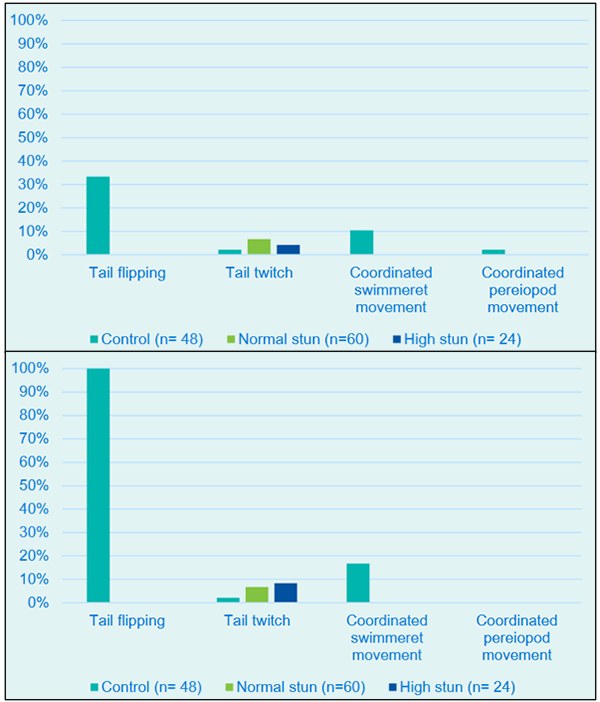
The Ace Aquatec A-HSU system has two potential settings; the standard ‘Vannamei normal,’ and the ‘Vannamei high,’ which applies a stronger stunning field. There was no significant difference in conscious movement between the normal and high settings; no coordinated swimmeret or pereiopod movement was seen in either group, and tail twitching was minimal (up to 7 and 8 percent, respectively; Fig. 1). In comparison, 100 percent of the unstunned shrimp demonstrated tail flipping within 20 seconds of entering the ice slurry. Within the control group, the coordinated movement of the swimmerets and pereiopods is relatively low throughout, as these movements are not demonstrated whilst tail flipping.
Non-conscious movement
It is important to distinguish between movement as a result of electrical stimulation and conscious, or coordinated, movement. Here, non-conscious movement is included to demonstrate the types, and frequency, of movement that may be seen as an artefact of electrical stunning. Note that the sample sizes here differ from the previous section, as the video quality on October 17 did not allow for detailed analysis of uncoordinated movement. The control group were excluded from analysis, as nonconscious movement was minimal and largely overshadowed by tail flipping.
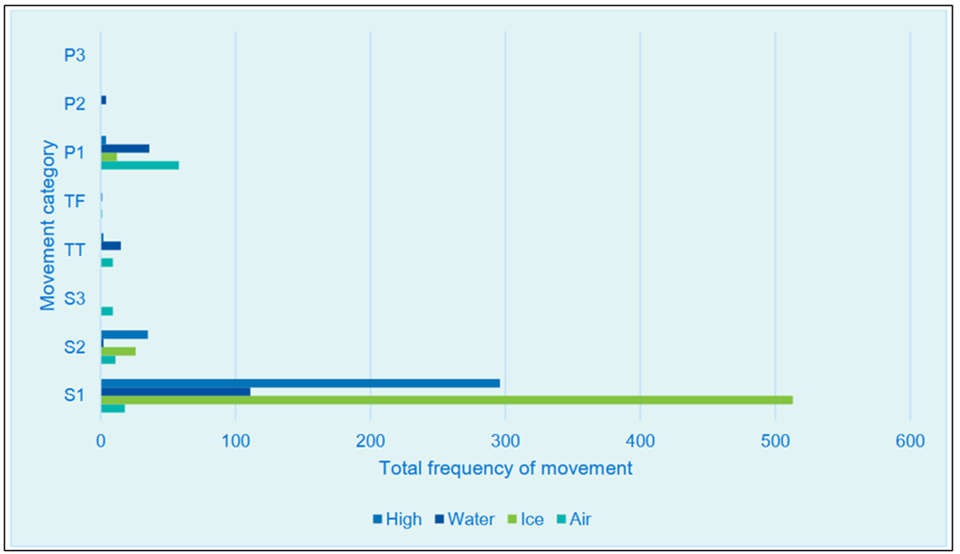
Substantially more swimmeret movement was seen in shrimp placed in ice slurry after being stunned using the ‘Vannamei normal’ setting than in ambient water or in air. It is likely that the water provides both stimulation and a media to allow faint movements, which would otherwise not be possible for stunned shrimp kept outside of the water. The shrimp stunned using the ‘Vannamei high’ setting were more likely to show medium strength swimmeret movements than those stunned using the ‘Vannamei normal’ setting, though the proportion of shrimp showing weak swimmeret movements were similar between the two groups.
Non-lively Vannamei
Non-lively shrimp did not demonstrate any coordinated movement (i.e., coordinated swimmeret or pereiopod movement, or tail flipping); additional movement was limited to the pereiopods and at low proportions. These movements generally presented as slow movements of a single pereiopod, or a relaxation movement.
Study calls for animal welfare improvements in global aquaculture
Time to recovery
Tail flipping, strong swimmeret movement, and strong pereiopod movement were used as key behavioral indicators of recovery. As expected, none of the shrimp that were placed in ice slurry showed signs of recovery, regardless of whether the normal or high setting was used.
Only a single individual that was placed in ambient water post-stun recovered, demonstrating tail flipping at 15 minutes after stunning. There were substantial differences between the response of the shrimp from October 17 and 18, which warrant individual description. On October 18, 3/24 shrimp (12.5 percent) demonstrated conscious movement. All demonstrated strong swimmeret movement (at 8.5, 12.5 and 15 minutes post-stunning, respectively); however, only one shrimp also tail flipped (swimmeret movement at 12.5 minutes, followed by tail flipping at 15 minutes post-stunning). In comparison, 5/72 shrimp (7 percent) stunned on October 17 tail flipped after stunning (mean: 6.4 minutes post-stunning; range= 4-9 min post-stunning). This difference in response may be due to the different energy levels of the shrimp; the shrimp on October 17 were notably lively.
Full behavioral repertoire
Here, we include an overview of the full behavior and timing of physical activity of the shrimp post-stunning across the 15 minutes observation period to demonstrate what is likely to be seen in future trials and commercial practice. Low level swimmeret movement (S1) is most commonly seen (Fig. 2), and ranges from barely perceptible movement to weak, uncoordinated swaying movement of the swimmerets. The high frequency of S1 movement seen in ice slurry is likely to be the byproduct of electrical stimulation combined with cold contractions. These S1 movements are markedly reduced in the ‘Vannamei high’ group in comparison to the ‘Vannamei normal’ group. P1 movements primarily present as twitching of a single pereiopod, or the upwards curling of 1-2 pereiopods towards the cephalothorax and is not a coordinated movement.
Quality measures
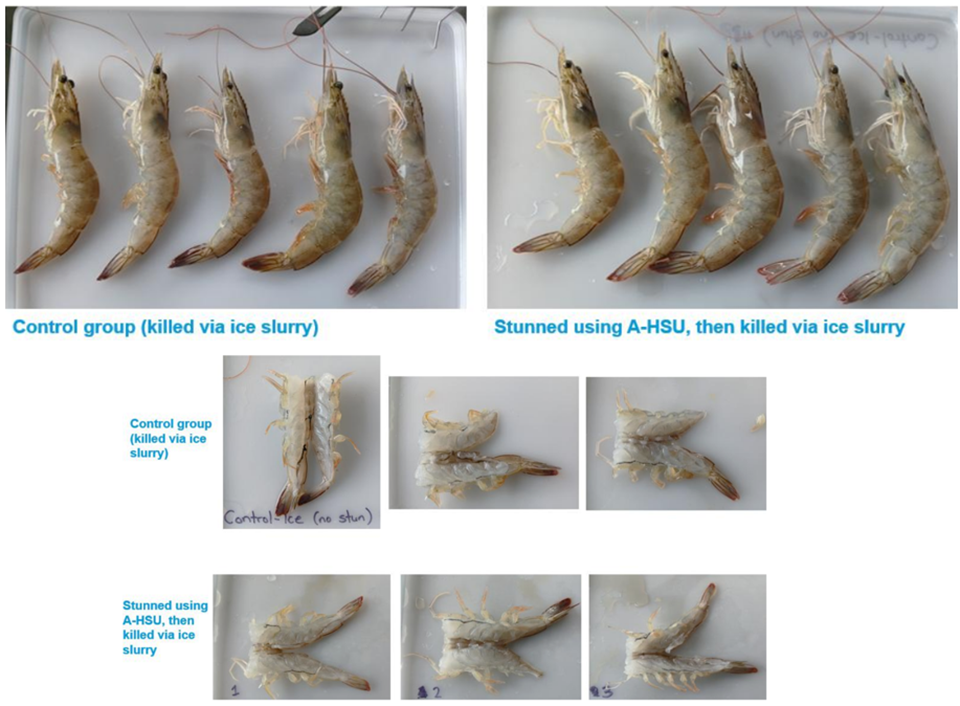
None of the shrimp tested showed any type of melanization or discoloration to the head or body of the shrimp, nor was there any change in flesh color. There is no significant difference in cephalothorax:abdomen adhesion between the three groups, indicating that the A-HSU does not impact membrane integrity, regardless of whether the ‘Vannamei normal’ or ‘Vannamei high’ setting is used.
Conclusion
In this study, Ace Aquatec achieved the key benchmark to deliver <5 percent coordinated shrimp activity immediately post-stun. Immediate stunning efficacy was 100 percent, where shrimp did not demonstrate any appendage movement (i.e., coordinated swimmeret or pereiopod movement) within 20 seconds that indicative of consciousness regardless of whether they were kept in air, ambient water, or ice slurry.
Although shrimp do show some movement post-stunning, these are not coordinated movements and appear to be artefacts of the electrical stimulation from the A-HSU stunner. Likewise, there was no difference in coordinated shrimp response between the ‘Vannamei high’ and ‘Vannamei normal’ A-HSU settings, with neither group showing any sign of coordinated movement immediately post-stunning. As both groups were placed in ice slurry after stunning, there was also no sign of recovery.
Only a single individual that was placed in ambient water post-stun recovered, demonstrating tail flipping at 15 minutes after stunning. Recovery response from those kept in air were low and mixed, where on the first trial day, 5/72 shrimp (7 percent) tail flipped after stunning (mean: 6.4 minutes post-stunning; range= 4-9 minutes post-stunning). In comparison, 3/24 shrimp (12.5 percent) stunned on the second trial day demonstrated coordinated movement in the form of strong swimmeret movement (at 8.5, 12.5 and 15 minutes post-stunning, respectively); however, only one shrimp also tail flipped at 15 minutes post-stunning. Although these recovery rates are very low, electrical stunning should be combined with a secondary killing measure within 4 minutes of stunning to ensure that shrimp remain insensible up until death.
This difference in response may be due to the different energy levels of the shrimp; the shrimp on the first trial day were far livelier than those on the following day. As this study was conducted at a factory processing site, after several hours of transportation, the A-HSU for shrimp should also be trialed at farm sites immediately after harvesting.
Lastly, the A-HSU has no impact on key quality indicators; there was no difference in shell integrity and coloration, cephalothorax:abdomen adhesion strength, or flesh color between the groups stunned with the A-HSU then transferred to ice slurry and those that were killed by ice slurry alone.
Now that you've reached the end of the article ...
… please consider supporting GSA’s mission to advance responsible seafood practices through education, advocacy and third-party assurances. The Advocate aims to document the evolution of responsible seafood practices and share the expansive knowledge of our vast network of contributors.
By becoming a Global Seafood Alliance member, you’re ensuring that all of the pre-competitive work we do through member benefits, resources and events can continue. Individual membership costs just $50 a year.
Not a GSA member? Join us.
Authors
-

Corresponding author
Ace Aquatec
Unit 1 Waters Edge, Camperdown Street, Dundee, DD1 3HY
-
Ace Aquatec
Unit 1 Waters Edge, Camperdown Street, Dundee, DD1 3HY
Related Posts
Health & Welfare
Ace Aquatec and Shrimp Welfare Project team up to promote humane stunning
Ace Aquatec and the Shrimp Welfare Project working together to improve shrimp welfare through humane stunning methods.
Health & Welfare
Fish producers benefit from humane slaughter techniques
EU legislation requires farmed fish be spared unnecessary pain, distress or suffering at slaughter, and efficient manual and automated systems have been developed to help achieve this goal. What’s more, longer shelf life and improved flesh quality have been reported.
Health & Welfare
Killing methods, post-slaughter quality, part 1
The methods used to kill fish depend on many factors, including fish size and species, aquaculture production system, fish quantity, market preferences and effects on product quality. Also, some methods may not be approved in some countries, as with the use of anesthetics and regulations concerning the ethical treatment of animals.
Health & Welfare
Ace Aquatec launches in-water portable prawn stunner to improve aquaculture welfare
The company's Prawn Humane Stunner Universal can stun prawns unconscious in less than one second, improving animal welfare in aquaculture.