
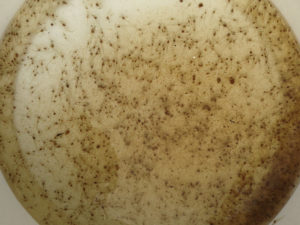
Construyendo un mejor pre-criadero de camarones, parte 2
Los sistemas de pre-criaderos de camarón ofrecen a la industria del camarón una oportunidad importante para aumentar los beneficios, ayudando a producir juveniles fuertes, sanos y uniformes con un potencial significativo para el crecimiento compensatorio después de su transferencia para el crecimiento final en estanques. La tecnología del biofloc y la calidad del agua son componentes críticos de los sistemas de vivero de camarón.
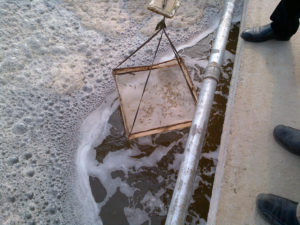
Construyendo un mejor pre-pre-criadero de camarones, parte 3
Los sistemas de pre-criaderos de camarón ofrecen un potencial significativo para el crecimiento compensatorio después de que los juveniles son transferidos a estanques para su crecimiento final. La selección de alimentos para pre-criaderos y su manejo son componentes críticos de estos sistemas.
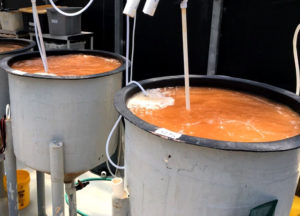
Global brine shrimp supply a potential bottleneck to aquaculture expansion, part 1
The brine shrimp artemia is critical for larval fish and shrimp diets. As aquaculture expands, an effective artificial replacement diet for artemia is a major consideration for the industry.

Parasite treatment reduces F. columnare infection in tilapia
The authors conducted a study to evaluate whether treatment of Trichodina-parasitized tilapia with formalin would improve fish survival and reduce F. columnare infection. Tilapia not treated with formalin showed significantly higher mortality than treated fish.
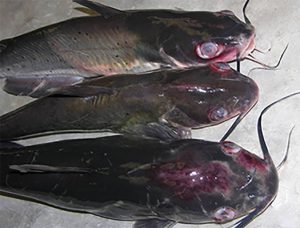
Virulent Aeromonas hydrophila in channel catfish
This study investigated factors that predisposed catfish to motile Aeromonas septicemia (MAS) caused by virulent Aeromonas hydrophila (vAh). Results revealed that wounding on fish body surface was important for vAh infection and disease development.
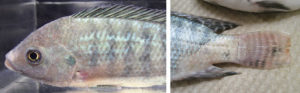
Parasitism enhances tilapia susceptibility to Flavobacterium columnare
The bacterium Flavobacterium columnare and parasite Ichthyophthirius multifiliis (Ich) are common pathogens that can cause heavy economic losses for fish culture. The authors conducted a study to evaluate the susceptibility of hybrid tilapia to F. columnare, including fish mortality and bacterial numbers in fish after parasitism by Ich.
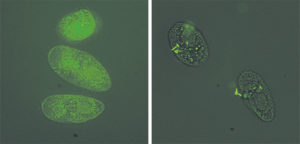
Ich parasite serves as vector to transmit bacteria to fish
The authors used Ichthyophthirius multifiliis (ich) and fluorescent-tagged Edwardsiella ictaluri to examine whether parasites vector bacteria into fish.
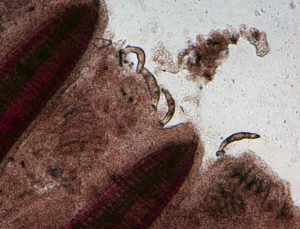
Parasitism enhances susceptibility to bacterial infection in tilapia
The authors conducted a study to evaluate whether tilapia infected with Gyrodactylus were more susceptible to Streptococcus iniae. The research found that fish with a solo infection of Gyrodactylus or Streptococcus had less than 7 percent total mortality.
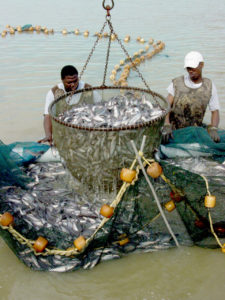
Common off-flavors in channel catfish following partial pond harvest
The authors conducted a study to determine whether channel catfish systematically develop off-flavors after partial harvest as well as the possible origins of the flavors.
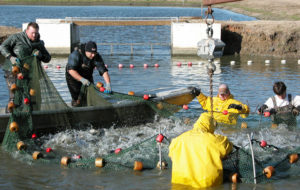
High-density split-pond systems offer high output, low maintenance
The split-pond culture system offers several advantages over traditional fish ponds. Aerating the small fish-confinement area is more effective at maintaining adequate levels of dissolved oxygen than in traditional ponds.

Antigens provide immunity against ich in channel catfish trials
Vaccination against the Ich parasite is an alternative to chemical treatment. Fish develop a humoral immune response to trophont antigens, with the degree of protection related to the immunizing doses of trophonts used.

Bath immersion, booster vaccination strategy holds potential for protecting juvenile tilapia
In a study, vaccination of juvenile tilapia by bath immersion followed by two booster vaccinations stimulated specific antibody responses and protection against S. iniae challenge.
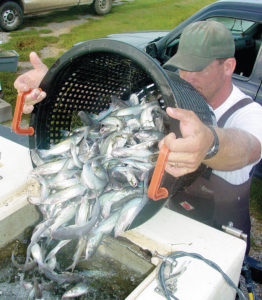
Misuses of sodium bicarbonate in pond aquaculture
Sodium bicarbonate is a useful chemical in recirculating aquaculture systems and fish transport tanks. However, two common uses of the compound in pond culture – to remove carbon dioxide and treat off-flavors – do not work.
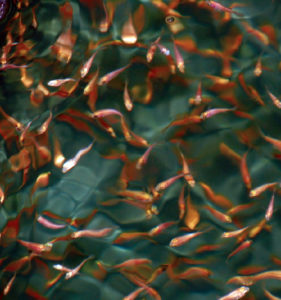
Tilapia vaccines: important disease prevention, biosecurity tools
Tilapia vaccines can protect the fish against infectious diseases by providing pathogen-specific acquired immunity that prevents recurring infections.
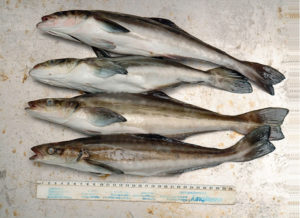
Low-salinity fish production technology can cut costs, aid biosecurity
Virginia Tech Aquaculture Research Group collaborated with MariCal to examine commercial feasibility of raising cobia in RAS under low-salinity conditions.
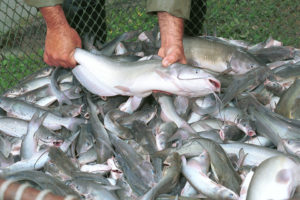
Managing pre-harvest off-flavors in pond-raised catfish
Although causes of pre-harvest off-flavors in catfish differ due to climate, water quality and pond hydrology, blue-green algae is a common culprit.

Water level management, BMPs cut water use, pond effluents
Pond water level management can reduce overflow volume and ground water use. Implementing BMPs reduces pollutant discharge.
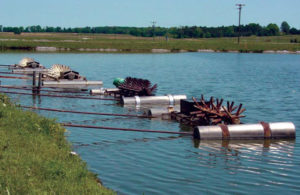
Limits of catfish production in ponds
The potential yield of catfish from earthen ponds is high, but several factors limit production under commercial conditions.